



Scandinavian Centre Table
These scandinavian centre table examples bring practical surface space and rich wood grains to a room, offering both utility and strong decorative presence.
Scandinavian Centre Table
A scandinavian centre table stands as a versatile freestanding piece designed to anchor a room or sit centrally within an interior layout. Most pieces encountered on this page date from the nineteenth century through to the early twentieth century, reflecting the classic forms of the region.
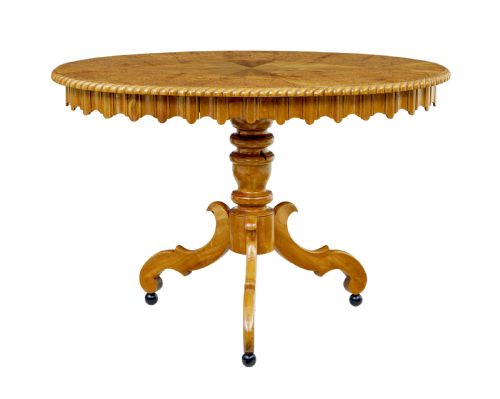
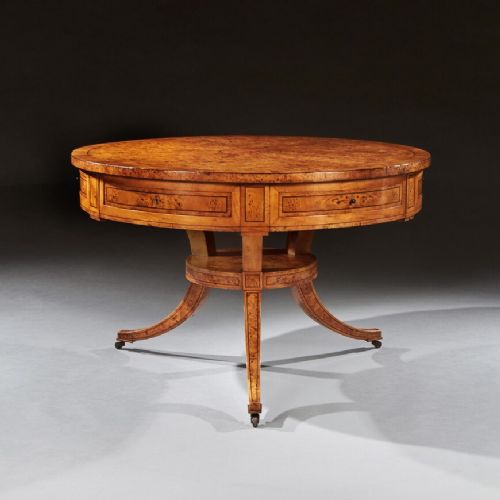
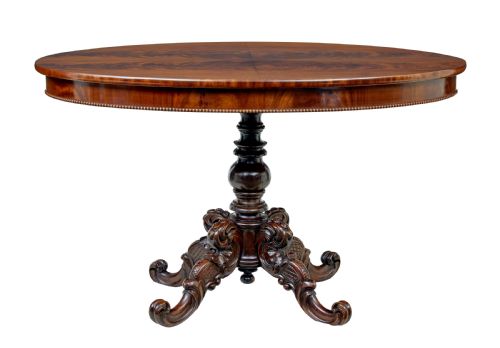
Buyers will find various forms under this heading, including oval centre tables, drum tables, and sofa tables. Styles range from Swedish Biedermeier and Gustavian to Scandinavian Neo-Classical and Art Deco, providing options for both formal and rustic settings.
The materials used across these tables lean heavily towards native Northern European timbers alongside painted finishes. Pine, birch, burr birch, and mahogany appear frequently, shaping forms that range from simple country tables to highly figured veneered designs.
How They Were Made
Cabinetmakers utilised native timbers like birch and pine, frequently applying burr birch veneer to create striking, figured surfaces on table tops. Selected pieces feature hand-carved details or inlay work that demonstrates high levels of joinery skill.
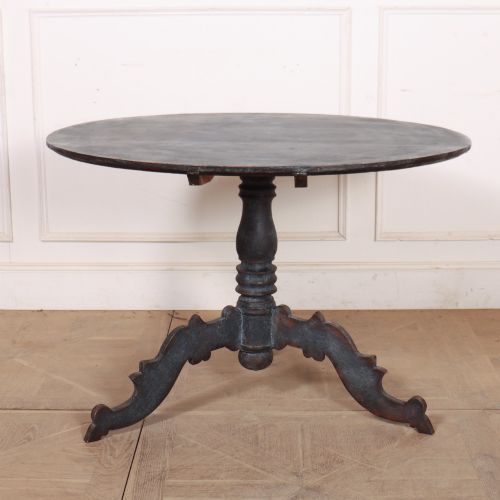
Painted finishes in muted tones appear on several tables, often applied over pine or softer woods to achieve the characteristic Scandinavian country or Gustavian aesthetic. Brass elements occasionally accent the structure on Empire Revival and later twentieth-century forms.
Pine, birch, and burr birch dominate the timber selections across the nineteenth and early twentieth-century listings.
What Varies in Quality
Quality rests upon the choice of timber figure and the precision of the veneer work across the top, particularly in burr birch examples. Tables with well-matched veneers and crisp hand-carving represent the higher tier of craftsmanship.
Structural integrity and the retention of original painted surfaces or polished finishes dictate the standing of a piece. Finer examples maintain their original proportions and timber patination without heavy modern alterations.
The Scandinavian Centre Table Glossary
- Biedermeier
- A central European style popular during the nineteenth century characterised by utilitarian comfort, clean lines, and an emphasis on rich wood veneers without excessive ornamentation.
- Burr Birch
- A timber harvested from birch tree growths that produces intricate, swirling grain patterns highly prized for decorative table tops.
- Gustavian
- The Swedish neoclassical style developed during the late eighteenth century, known for lighter proportions, symmetrical forms, and pale painted finishes.
- Drum Table
- A circular table with a deep skirt containing drawers, typically supported by a central pillar and tripod base.
- Parquetry
- A geometric mosaic of wood pieces used for decorative effect on furniture surfaces and table tops.
Scandinavian Centre Table: Frequently Asked Questions
Where should I place a scandinavian centre table?
These tables work well in the middle of a spacious room or as a central surface in a hallway, allowing access from all sides.
They also function effectively behind a sofa or against a wall depending on the specific table shape.
How do I care for a birch veneer top?
Keep the wood away from direct sunlight and excessive heat sources to prevent the veneer from drying out or cracking.
Dust regularly with a dry cloth and avoid harsh chemical polishes that might damage the historical finish.
Are painted tables original?
Many nineteenth-century pieces feature traditional painted finishes applied to pine or softer woods, which form an integral part of the regional style.
Examining the paint for appropriate wear helps determine whether the surface finish is period-correct.
What is the difference between a centre table and a sofa table?
Centre tables are designed to be viewed from all angles and typically feature a central pedestal or four independent legs.
Sofa tables often feature elongated proportions suited for placement against the rear of seating furniture.