



Scandinavian Bentwood Box
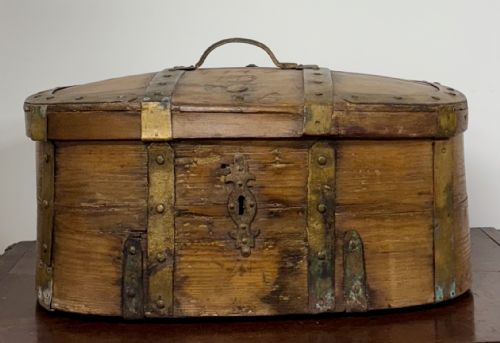
A Scandinavian bentwood box brings tactile rustic character into a room through historic painted surfaces and bent pine construction.
Scandinavian Bentwood Box
A scandinavian bentwood box represents historical storage forms originating from northern European folk traditions. These vessels include oval containers, tine food boxes, marriage boxes, and larger painted trunks spanning the eighteenth and nineteenth centuries.
The versions most commonly met on this page are nineteenth-century hand-painted pine and folk art boxes showing traditional Scandinavian country styles. Examples range from small decorative storage boxes to metal-bound strong boxes and dome-top trunks.
Makers utilised local timbers and organic pigments to create utilitarian containers that doubled as household decoration. Such pieces reveal the domestic heritage and rural craftsmanship of historical Swedish and Norwegian communities.
How they were made
Construction relies on flexible timber such as pine or birch root bent around a rigid frame and secured with traditional bindings. Iron, brass, and wrought iron fastenings reinforce the structures of stronger boxes and trunks.
Surfaces frequently display hand-painted decoration, patinated finishes, and occasionally pokerwork detailing. The combination of bentwood architecture and applied folk art defines the distinct material identity of these items.
Scandinavian Bentwood Box Retail Price Guide 2026
Typical asking prices for scandinavian bentwood box among the pieces listed under this phrase on Sellingantiques today, from the lower quarter to the upper quarter. They describe what is for sale here now, not the wider market.
Materials recorded on this page include pine, iron, paint, brass, wrought iron, wood, bentwood, and birch root.
What varies in quality
The distinction between ordinary and exceptional examples rests upon the preservation of original painted decoration and surface patination. Boxes retaining their early pigments and untouched folk art motifs command greater interest than those with later repainting.
Structural integrity also separates the tier of pieces, particularly the survival of original metal bindings, hinges, and woven pine elements. The finesse of the initial bending technique and the clarity of folk art designs complete the evaluation.
The Scandinavian Bentwood Box Glossary
- Bentwood
- Wood that has been shaped by steam or moisture to form curved structural elements. This technique allows containers to achieve rounded, seamless profiles without traditional corner joints.
- Tine
- A traditional Norwegian wooden box featuring a bentwood body and characteristic finger-jointed overlapping seams. These historic containers were principally used for storing and carrying food.
- Folk Art
- Artistic expression created within traditional rural communities, often by self-taught makers. In these listings, the style is defined by hand-painted motifs and decorative surface treatments.
- Patinated
- The surface appearance acquired by materials through age, wear, and exposure to light over centuries. A genuine patinated finish adds depth and historical character to antique pine.
- Pokerwork
- The technique of decorating wood by burning designs into the surface with heated metal tools. This method creates contrasting dark linear patterns on wooden objects.
Scandinavian Bentwood Box: Frequently Asked Questions
How do I care for a painted wooden box?
Keep wooden boxes out of direct sunlight and away from rapid temperature fluctuations to protect the aged pine and delicate pigments. Dust them gently with a dry, soft cloth rather than using liquid polishes or chemical cleaners.
Maintaining stable indoor humidity prevents the historic wood from drying out or splitting. Gentle handling preserves the original painted surfaces and metal bindings.
How can I tell the age of these boxes?
Dating relies on examining the construction methods, tool marks, and the chemical composition of the paints and fasteners. Eighteenth-century examples often feature heavier iron bindings and distinct regional folk motifs compared to later periods.
Wear patterns around the handles and feet also offer clues to the age and intensity of use. Comparing the construction style to dated archival pieces helps confirm the era.
Are all these boxes Scandinavian in origin?
The inventory comprises items originating primarily from Sweden and Norway, reflecting regional Scandinavian country traditions. Specific geographic markers appear in descriptions referencing Swedish baroque influences or Norwegian tine construction.
Local timber choices, such as birch root and pine, further anchor the objects to their northern European provenance. Each region developed distinct painting techniques and box forms.