


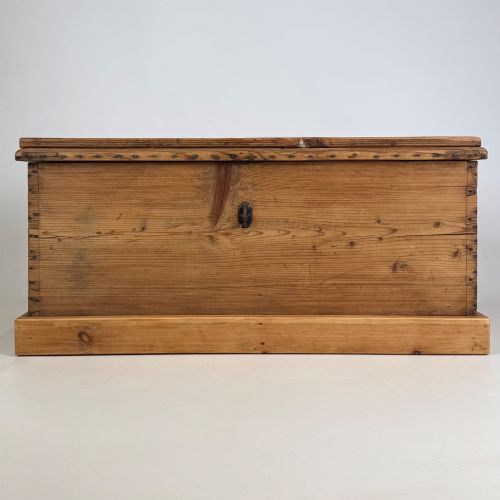
Rustic Wooden Storage Coffer
A rustic wooden storage coffer brings centuries of utilitarian craftsmanship and robust timber into a modern interior.

Rustic Wooden Storage Coffer
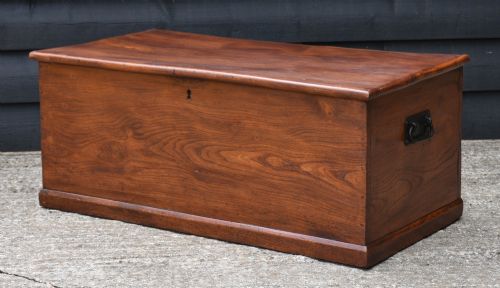
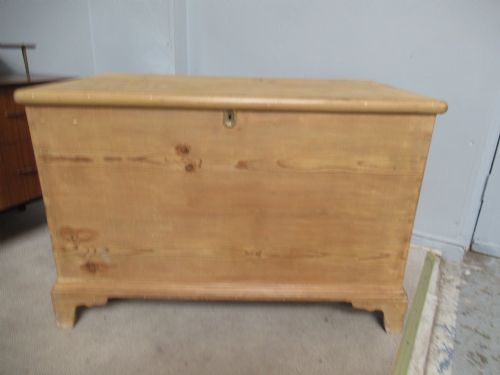
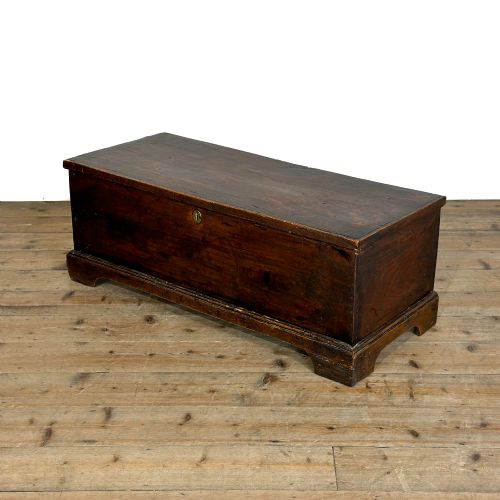
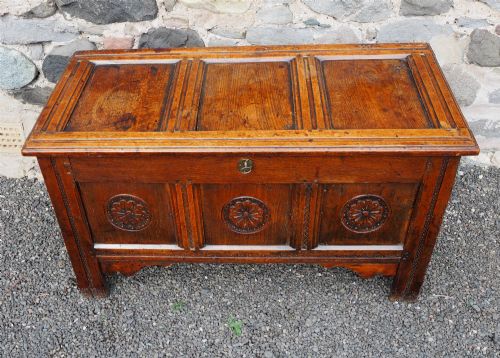
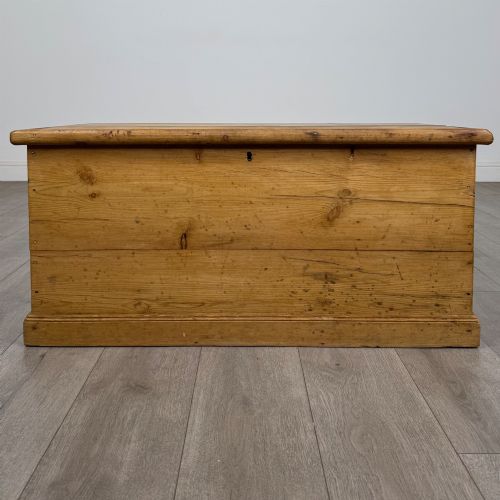
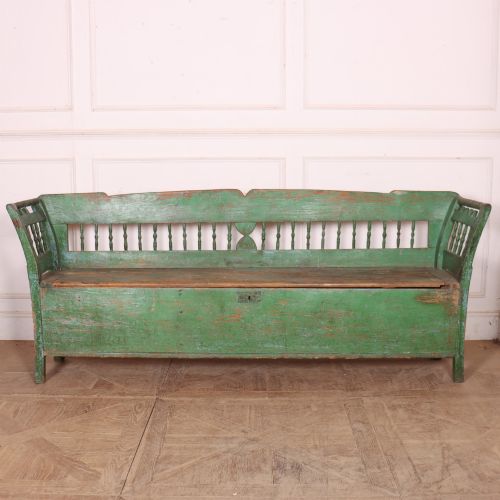
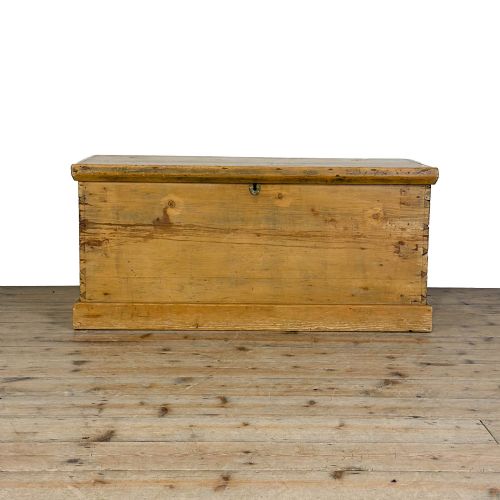
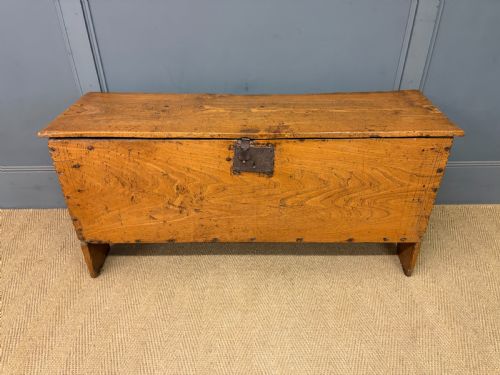
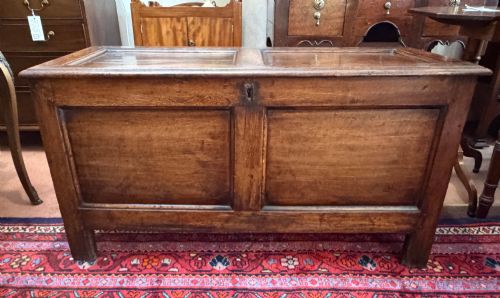
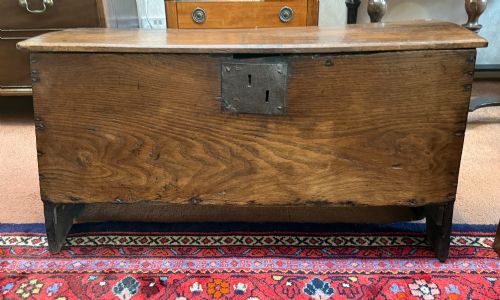
A rustic wooden storage coffer is a heavy-duty container designed for domestic possessions, blankets, and documents, surviving in various forms from the seventeenth century through the Victorian era. These pieces range from simple six-plank elm constructions to panelled oak chests and painted pine blanket boxes originating from British, French, Scandinavian, and Welsh workshops.
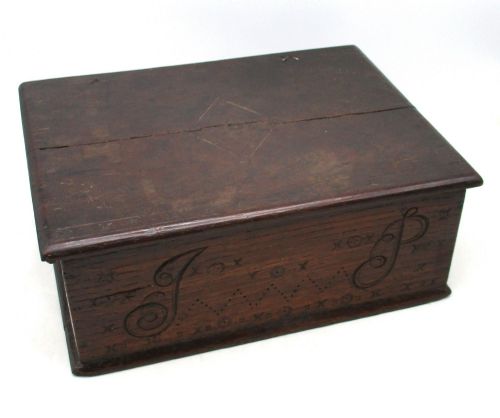
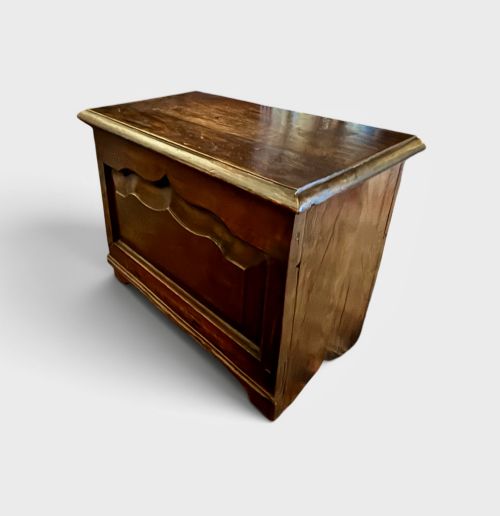
Buyers browsing this selection will most frequently encounter nineteenth-century pine trunks and eighteenth-century oak coffers. Formats extend from small table-top bible boxes and document chests to large dowry chests bound in iron strapwork and fitted with internal drawers.
Materials and Construction
Carpenters built these coffers primarily from sturdy native timbers such as oak, elm, and pine, occasionally utilising teak, pitch pine, and Oregon pine for specific regional or overseas commissions. Joinery techniques relied heavily on pegged panels, dovetailing, and the straightforward assembly of the six-plank method.
Makers reinforced vulnerable corners and lids with hand-forged iron strapwork and brass hinges, whilst surface finishes varied from plain scrubbed wood and carved ornamentation to painted lead-based pigments.
The listings combine British regional pieces with examples from France, Scandinavia, Austria, and India, spanning oak, pine, elm, and teak.
Distinctions in Quality
Quality in these storage pieces rests upon the integrity of the timber selection, the crispness of any period carving, and the survival of original hardware such as strap hinges and locks. Examples featuring secondary internal compartments or untouched surface patination command greater interest than heavily altered or stripped equivalents.
Proportion and scale also dictate distinction, as smaller proportions from earlier centuries require finer joinery to achieve stability over long spans of time.
The Rustic Wooden Storage Coffer Glossary
- Six-plank coffer
- A primitive chest constructed from six individual boards joined simply at the edges. This method represents some of the earliest surviving box forms.
- Bible box
- A small tabletop or desk-form box designed to hold sacred texts and writing materials. These often display slanted lids and carved decoration.
- Strapwork
- Flat bands of metal, commonly iron, fastened across the exterior of a chest to reinforce the joints and timber. It provides both structural strength and visual contrast.
- Dowry chest
- A large storage container commissioned to hold household goods and textiles for a bride. They are frequently monumental in scale and heavily embellished.
Rustic Wooden Storage Coffer: Frequently Asked Questions
What did people store inside a coffer?
Historically, households used these sturdy chests to keep valuable textiles, woollen blankets, family documents, and clothing safe from dampness and pests.
Over subsequent centuries, their contents evolved to accommodate tools, household provisions, and personal papers depending on the household's social standing.
How do I date an antique coffer?
Dating relies on examining the construction methods, tool marks left by the carpenter, and the style of any carved ornamentation. Seventeenth-century pieces typically show pegged oak framing, whereas nineteenth-century pine boxes often utilise machine-sawn boards and simpler butt joints.
Hardware such as hinges, handles, and locks also provide reliable clues regarding the period of manufacture or subsequent repairs.
Where should I place a wooden coffer at home?
These versatile storage containers function well at the foot of a bed for spare linens, as a coffee table in a living room, or as an entryway bench.
Positioning them away from direct heat sources and sunlight protects the aged timber from warping or splitting over time.
Are these chests suitable for daily storage?
Most antique coffers feature generous interior cavities that make them exceptionally practical for stowing away bulky items like winter blankets, board games, or shoes.
Their robust construction ensures they withstand regular opening and closing while adding texture and history to a room.