


Scandinavian Armoire
These pieces sold as a scandinavian armoire bring a calm, painted presence into a room, offering deep storage through sturdy timber construction.
Scandinavian Armoire
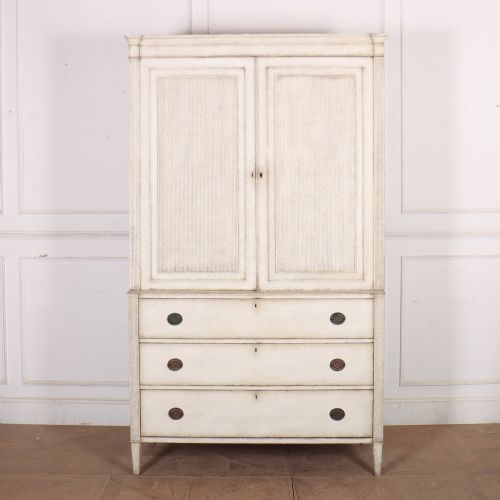
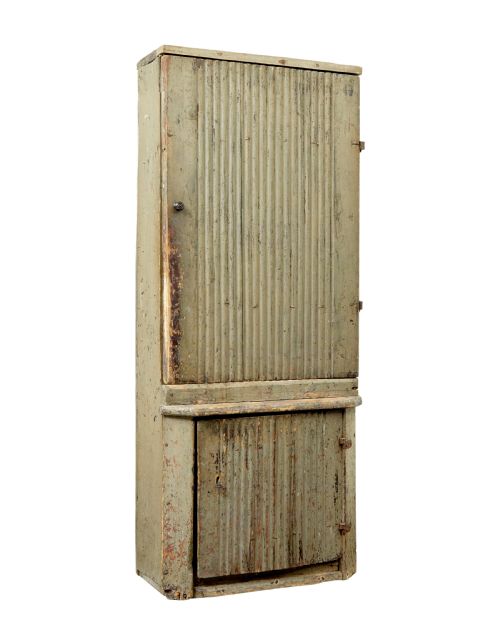
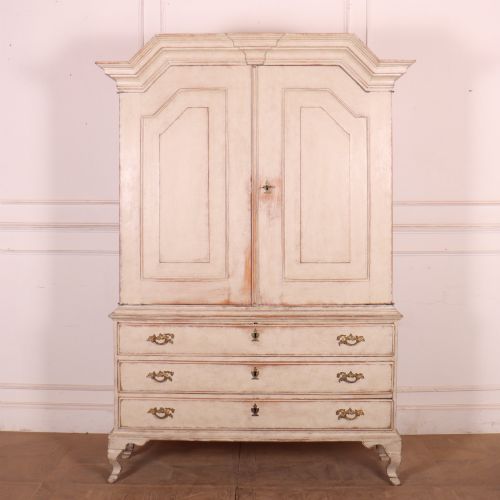
A scandinavian armoire takes many forms across this selection, appearing most frequently as painted pine linen cupboards, tall wardrobes, and kitchen cabinets originating from Sweden and the wider Baltic region. These storage pieces date from the eighteenth and nineteenth centuries into the twentieth century, reflecting regional traditions ranging from baroque forms to folk art and Gustavian designs.
Buyers encounter substantial double door armoires alongside single door cupboards, pieces raised on stands, and serpentine shaped storage units. The construction often serves utilitarian linen storage or general domestic organisation, utilising tall vertical proportions suited to period interiors.
How They Were Made
Carpenters built these cabinets primarily from solid pine and birch, sometimes applying birch veneers or birch and elm combinations on later twentieth-century examples. Iron and brass hardware provided structural reinforcement and hinges, while decorative schemes relied heavily on mineral paint and hand painted finishes.
Surface treatments range from traditional ragwork and rustic painted layers to bleached bird's-eye maple and carved detailing. Construction methods focused on durability, employing pegged joints and panelled doors to house textiles and household goods.
Some nineteenth-century cupboards feature traditional ragwork paint, proving that home DIY revamps are centuries older than television.
What Varies in Quality
Quality rests in the integrity of the timber framing and the authenticity of the painted surface, where original layered mineral paints distinguish finer historical examples from later re-paintings. The crispness of carved wooden details and the preservation of traditional folk art motifs elevate certain pieces above standard utility cupboards.
Proportion and scale also dictate distinction, particularly in balanced double door linen cupboards and sophisticated Swedish Empire Revival or Art Deco forms. Well-preserved interior fittings, such as original shelving and drawers, contribute further to a piece's structural coherence.
Oscar Nilsson Nordiska Kompaniet
The Scandinavian Armoire Glossary
- Gustavian
- A light, neoclassical Swedish design style popular in the late eighteenth century. It takes inspiration from French Louis XVI aesthetics but interprets them with northern restraint.
- Ragwork
- A decorative paint technique involving rags or cloths to apply colour and create textured patterns on furniture surfaces. This finish appears frequently on traditional nineteenth-century pine pieces.
- Birch
- A pale, hard wood commonly utilised for solid construction and decorative veneers across Scandinavian furniture. It offers a smooth grain and considerable structural strength.
- Linen cupboard
- A tall storage cabinet designed specifically for household textiles and bedding. These units typically feature internal shelving or hanging space behind one or two doors.
- Serpentine
- A curved line shape featuring a convex centre flanked by concave ends, or vice versa. Cabinet makers applied this undulating profile to the fronts of select eighteenth and nineteenth-century cupboards.
Scandinavian Armoire: Frequently Asked Questions
How do I tell an 18th-century piece from a 19th-century one?
Eighteenth-century examples often display heavier baroque proportions or distinct Gustavian detailing, alongside hand- forged iron hinges and deeper patination in the timber. Construction joints tend to rely on pegged joinery and older timber preparation methods.
Nineteenth-century pieces frequently embrace regional folk art painting, simpler pine carcasses, or serpentine shapes. Examining the tool marks and the layering of the mineral paint helps clarify the age of the woodwork.
Are these cupboards suitable for modern clothing storage?
Many of these pieces function well for contemporary garments, particularly the linen cupboards and wardrobes that provide tall interior vertical space. Shelves and hanging rails can sometimes be adjusted or integrated depending on the internal configuration.
Buyers should check the internal depth measurements listed for each cabinet, as older folk cupboards were built for folded textiles rather than modern wide coat hangers.
What is Scandinavian ragwork paint?
Ragwork is a specialised decorative painting method where makers applied pigments using cloths or rags to create mottled, textured surfaces on pine furniture. This technique added depth and visual movement to utilitarian household storage.
In surviving pieces, this painted finish has often aged to develop a soft chalky texture that defines traditional folk art aesthetics.
How should I care for a painted pine cabinet?
Painted antique pine requires stable indoor humidity levels away from direct heat sources to prevent the timber from warping or the historic paint layers from cracking. Dusting with a dry cloth keeps the mineral paint finish clean without introducing moisture.
Avoid chemical polishes or abrasive cleaners, as these can strip or damage the delicate historical pigment and protective waxes on the surface.