


Painted Press on Chest
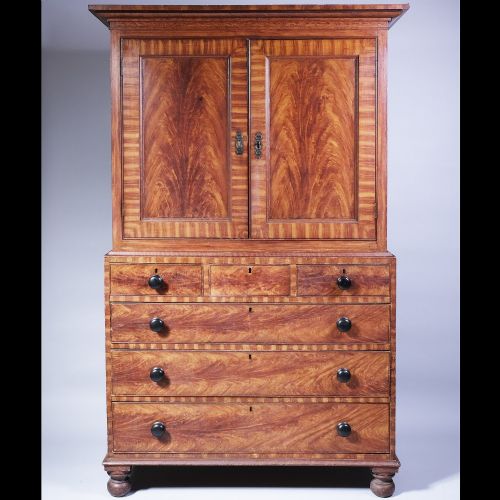
These painted press on chest pieces are substantial storage cupboards built above sets of drawers, prized for their rustic charm and vibrant surface decoration.
Painted Press on Chest
When you search for a painted press on chest, you encounter sturdy tall cupboards designed to hold household linens and garments, paired with functional lower drawer bases. The evidence shows these pieces surface mainly in 19th century, Victorian, and Regency periods, spanning diverse origins from British farmhouses to Scandinavian workshops.
You are most likely to meet pieces formed of pine and ash, often styled within Scandinavian country or Victorian country traditions. These combine upper shelving spaces with lower chest drawers, creating commanding storage units that anchor a room.
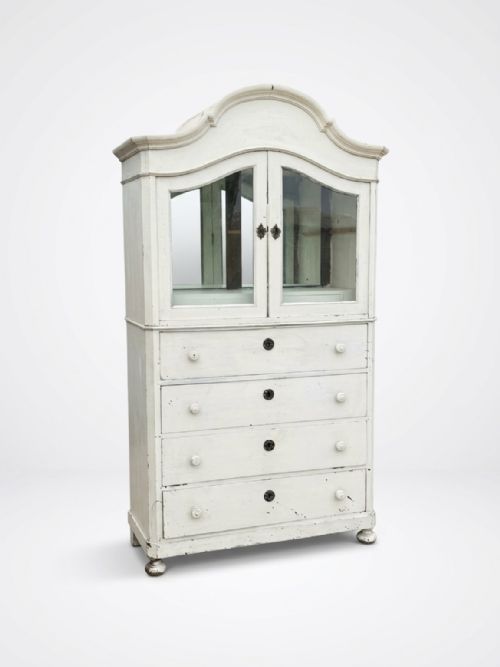
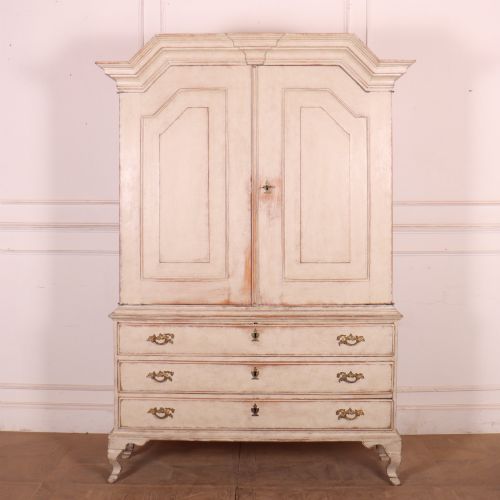
The historical record reveals forms ranging from Swedish bonnet top cabinets to housekeepers cupboards and compactums. Each variant serves the same fundamental domestic purpose while reflecting the regional aesthetic preferences of its maker.
How they were made
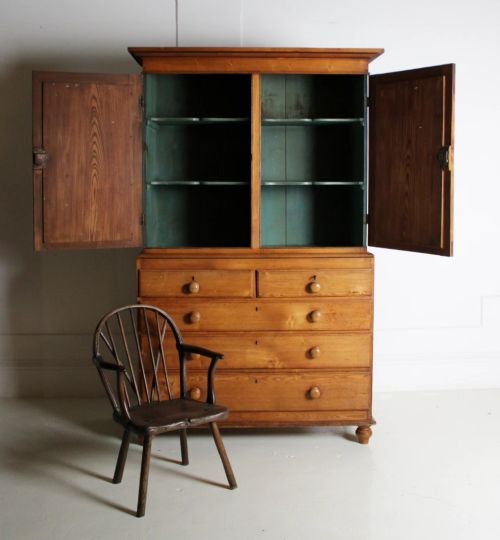
Carpenters typically constructed the main carcase and shelving from pine or ash, selecting these accessible timbers for their reliable strength and straight grain. Iron and brass fittings such as hinges, handles, and occasional glass elements completed the structural assembly.
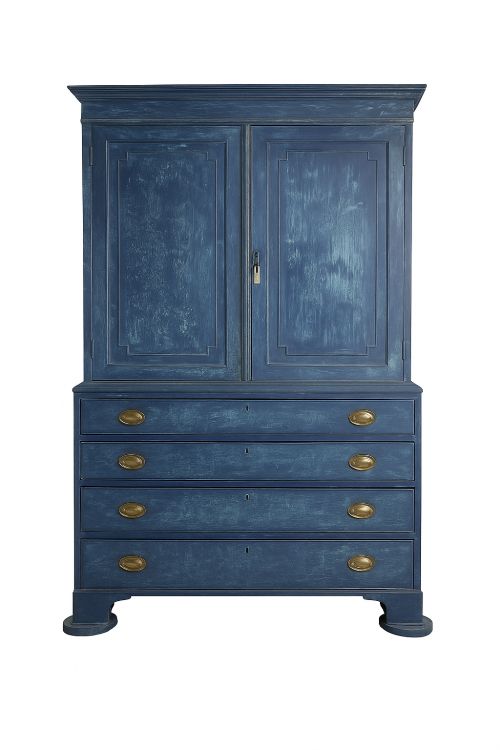
Makers applied decorative paint layers directly to the timber, utilising scumble techniques or flat colours to achieve distinct Scandinavian folk art or country finishes. These painted surfaces protected the underlying wood while providing the characteristic aesthetic appeal valued today.
Swedish bonnet tops give austere storage cupboards a jaunty, curved hat.
What varies in quality
The sophistication of the painted finish separates simpler country items from finer examples in the range. Original surface treatments showing careful layering or distinct regional folk art characteristics hold greater interest than later, unsympathetic repainting.
Proportion and structural integrity also define the better pieces, where cornices, panelled doors, and lower drawer assemblies align harmoniously without clumsy alterations. The integration between the upper press section and the lower chest determines the overall architectural success of the build.
The Painted Press on Chest Glossary
- Scumble
- A decorative painting technique involving a translucent top layer dragged or dabbed over a lighter base colour to create mottled texture.
- Bonnet top
- An arched or curved upper cornice profile resembling the shape of a historical bonnet. This stylistic flourish softens the strict linearity of tall cupboards.
- Housekeeper's cupboard
- A large utilitarian storage piece traditionally kept in large country houses for domestic linens and stores. It combines upper cupboard storage with lower drawers.
- Compactum
- A fitted wardrobe or press designed with specialised internal compartments for efficient clothing storage. These typically combine hanging space, shelves, and drawers.
Painted Press on Chest: Frequently Asked Questions
What is a press on chest?
A press on chest is a tall storage furniture form that combines an upper cupboard section with a lower chest of drawers. This combination provides ample vertical storage for household linens and personal garments.
Historically used in domestic spaces to keep textiles clean and organised, these units served bedrooms, landings, and large hallways. The upper doors conceal shelves or trays, while the lower drawers handle smaller items.
How do I date a painted cupboard?
Dating these cupboards involves examining the construction methods, timber choice, and surface paint layers. Hand-cut joints and original pine or ash timbers often point towards nineteenth-century origins.
Paint analysis provides further clues about age, as original scumble or folk art finishes exhibit natural wear patterns distinct from modern interventions. Stylistic cues such as Regency proportions or Victorian cornices help narrow down the period.
Where were these cupboards made?
These cupboards originate from various regions across Britain and Scandinavia. British examples frequently emerge from farmhouses and country houses.
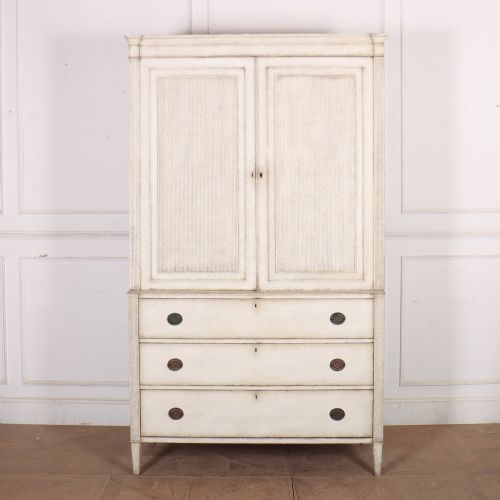
Scandinavian pieces reflect distinct regional folk art traditions, particularly from Sweden. Gustavian and Scandinavian country styles bring lighter painted palettes to the form.
How do I style a painted press?
Living with a painted press involves letting the piece function as a focal storage anchor in a room. Its substantial height and decorated surface draw the eye naturally.
These cupboards work well in bedrooms, hallways, or living spaces where they provide generous hidden storage. Keeping surrounding decor simple allows the painted finish and regional character to stand out.