
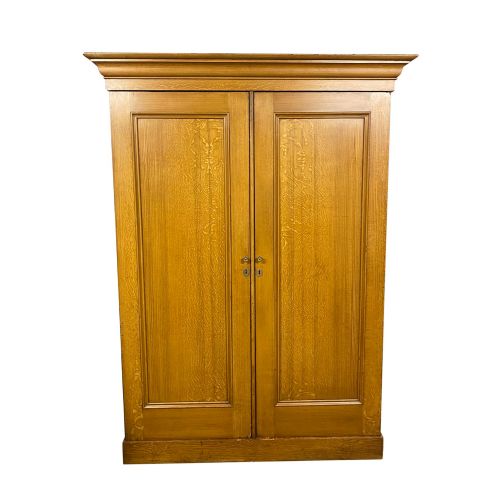
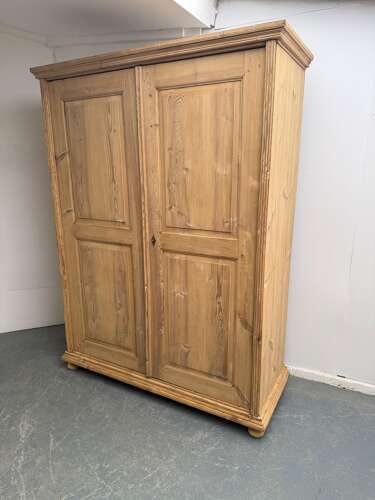
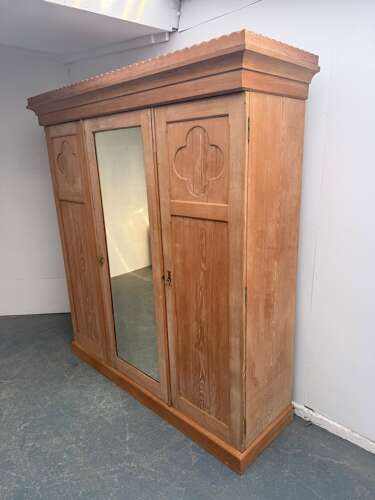
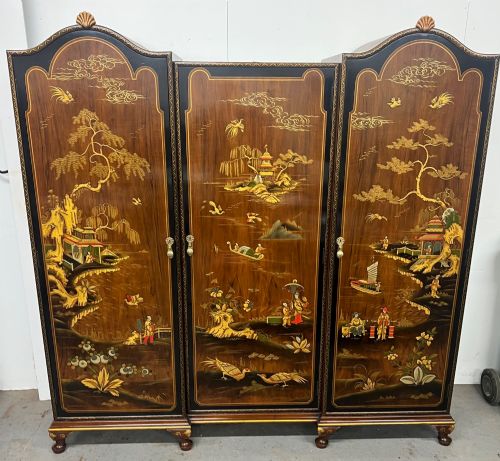


Painted Bedroom Armoire
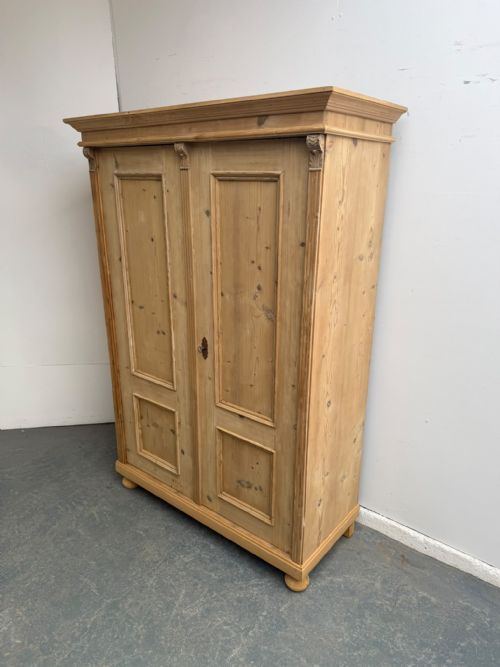
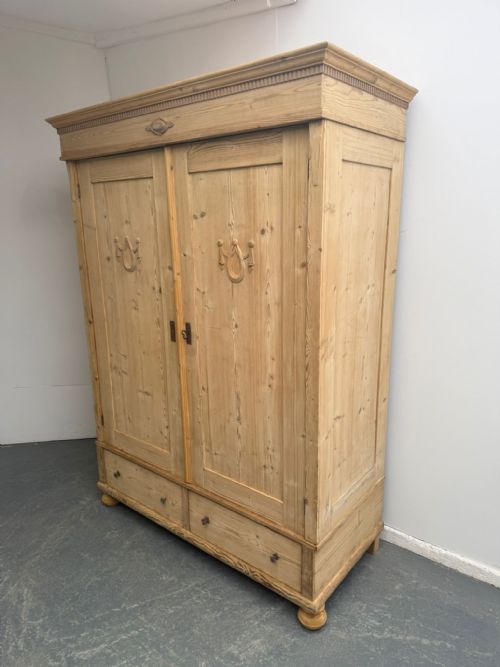
These painted bedroom armoire pieces bring large storage and decorated surfaces together, offering substantial capacity alongside hand-painted finishes.
Painted Bedroom Armoire
A painted bedroom armoire serves as a substantial storage piece for clothes and linens, combining hanging space, shelves, and drawers within a single architectural frame. These large cupboards appear in several historical guises, including compactums, linen presses, and multi-door bedroom suites originating from various domestic traditions.
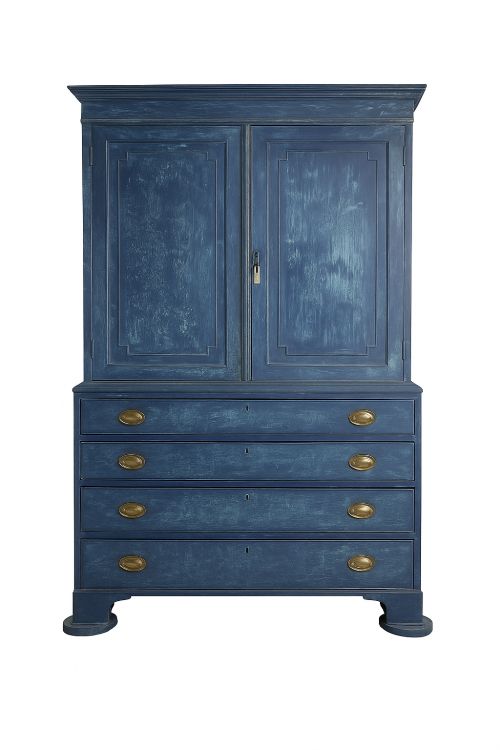
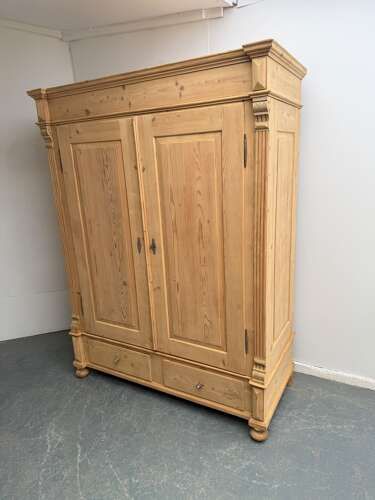
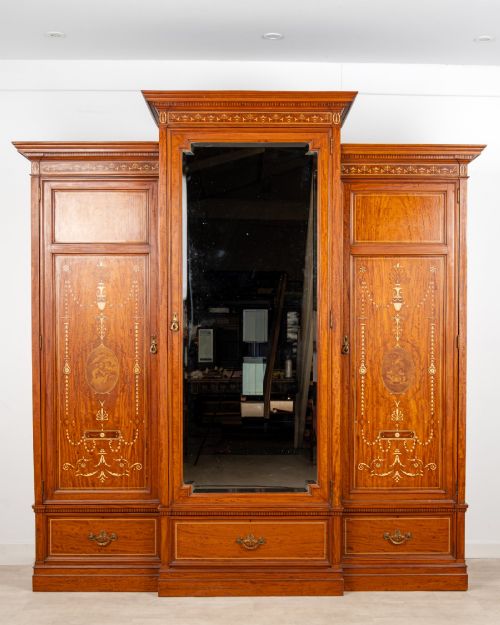
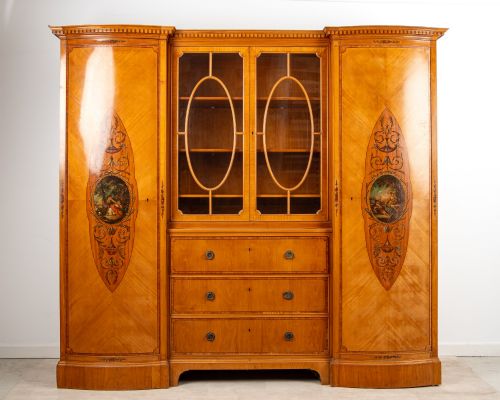
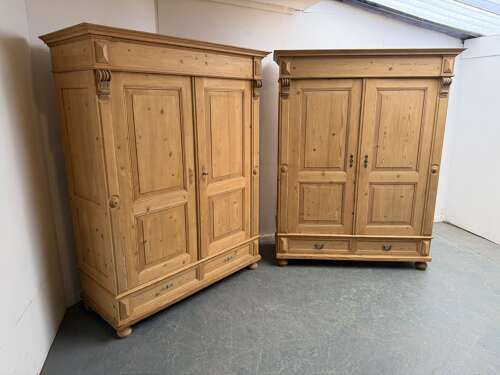
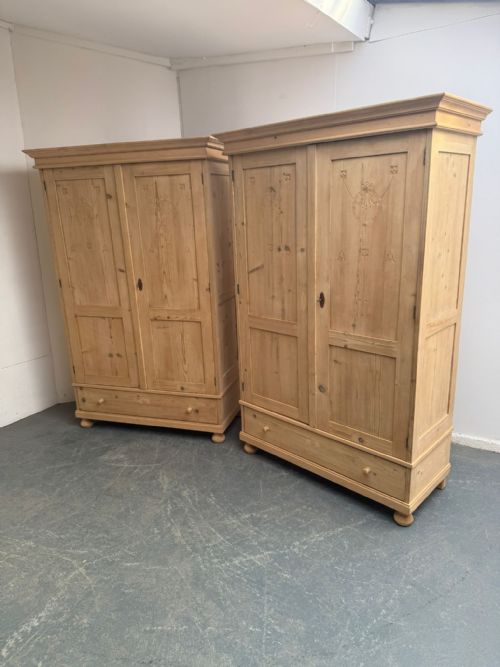
The selection ranges from sturdy country pine carcasses, often prepared for custom waxing or painting, to more elaborate Edwardian satinwood pieces with hand-painted panels and inlaid details. Pieces span the Victorian, Georgian, Edwardian, and Regency eras, alongside continental examples featuring polychrome pigments, French chateau styling, or Chinoiserie decoration.
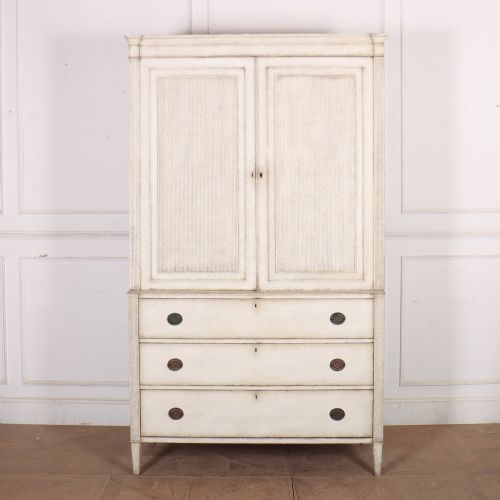
Buyers most frequently encounter pine knockdown wardrobes designed for practical assembly alongside painted or glazed statement pieces. Whether finished in blue, grey, white, or original scumble faux oak paintwork, each item provides the scale necessary to anchor a bedroom scheme while concealing everyday garments.
How they were made
Carpenters constructed these large carcasses primarily from solid pine, ash, and satinwood, frequently employing knockdown joinery so the bulky wardrobes could be transported and reassembled in upstairs chambers. Panel and frame construction accommodated seasonal wood movement, keeping large doors stable over decades of domestic use.
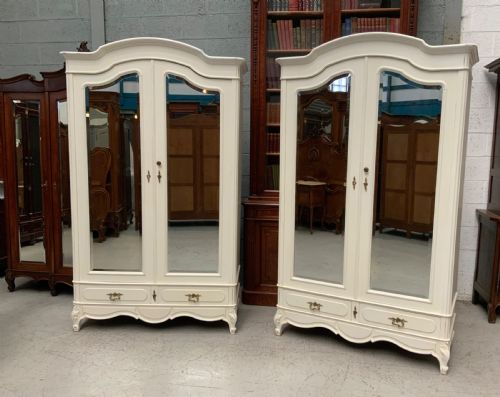
Makers applied decorative finishes using lead-based or oil paints, scumble glazes to imitate richer timbers like oak, and hand-painted artistic panels depicting floral or oriental motifs. Brass and iron hardware, including hinges, escutcheons, and locks, anchored the heavy doors, while mirrored glass panels frequently appeared on later Edwardian and Victorian armoires to reflect light in the bedroom.
Listings feature painted bedroom armoire forms in Georgian, Victorian, and Edwardian styles, constructed mainly from pine, satinwood, and ash.
What varies in quality
The hierarchy of quality rests primarily on the integrity of the original construction, the sophistication of the painted surface, and the retention of period hardware. Master cabinetmakers balanced architectural proportions with refined internal fittings, whereas utilitarian workshop pieces relied on simpler joinery and straightforward plank construction.
Surface preservation marks another clear dividing line, separating pieces with untouched historic paintwork or delicate hand-painted panels from those stripped back or repeatedly painted over in modern emulsions. Original knockdown mechanisms, working locks with matching keys, and intact mirrored doors distinguish superior examples from heavily altered survivors.
Maples & Co.
The Painted Bedroom Armoire Glossary
- Armoire
- A large wardrobe or movable cupboard, traditionally used for storing clothes. These French-influenced pieces often feature double doors and deep internal hanging space.
- Compactum
- A multi-compartment wardrobe combining hanging space, drawers, and shelving within one unit. This efficient design gained popularity during the Victorian and Edwardian periods.
- Linen Press
- A tall storage cabinet featuring upper sliding trays or shelves for textiles and lower drawers for bulkier items. They often double as general bedroom wardrobes.
- Scumble paintwork
- A decorative glazing technique where a translucent top layer of pigment is manipulated with combs or rags to simulate the grain of expensive timbers like oak. It appears frequently on nineteenth-century pine furniture.
- Knockdown wardrobe
- A large piece of furniture engineered to be disassembled into flat sections for easy transport and reassembly. This clever construction was essential for moving heavy bedroom furniture up narrow staircases.
Painted Bedroom Armoire: Frequently Asked Questions
Are these wardrobes suitable for modern hangers?
Many nineteenth-century wardrobes were built for shallower garments or antique hooks rather than wide contemporary coat hangers. You may need to check the internal depth front-to-back before hanging modern suits.
Some pieces easily accommodate modern brass rails fitted into the original side brackets without altering the historic structure of the timber.
How should I clean painted surfaces?
Painted antique wood requires gentle maintenance using a soft, dry microfibre cloth to lift dust without disturbing delicate or crazed pigment layers. Avoid household detergents or soaking moisture, which can soften historic oil and water-based paints.
If the paintwork is unsealed, consult a specialist conservator before applying any wax or protective polish to prevent darkening the original finish.
What is the difference between an armoire and a compactum?
An armoire is primarily designed for hanging garments behind large double doors, offering an open internal drop space. It focuses on vertical clearance for coats and dresses.
A compactum splits the interior volume by dividing the width, integrating small drawers and shelving columns alongside a narrower hanging section to maximise multi-purpose bedroom storage.