
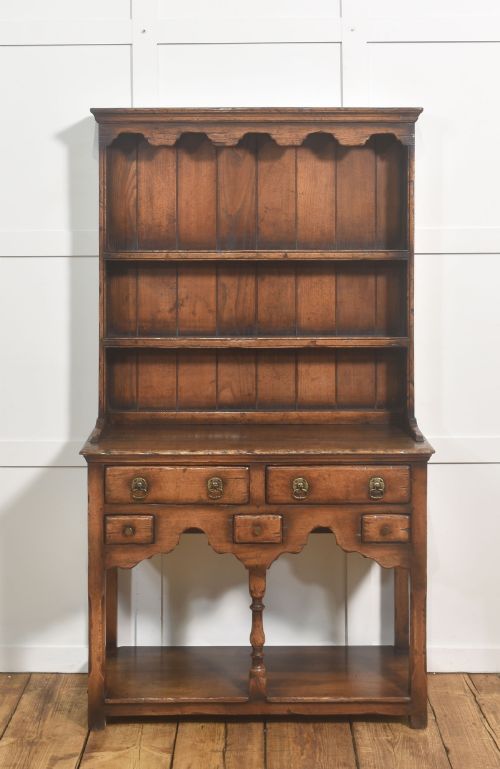
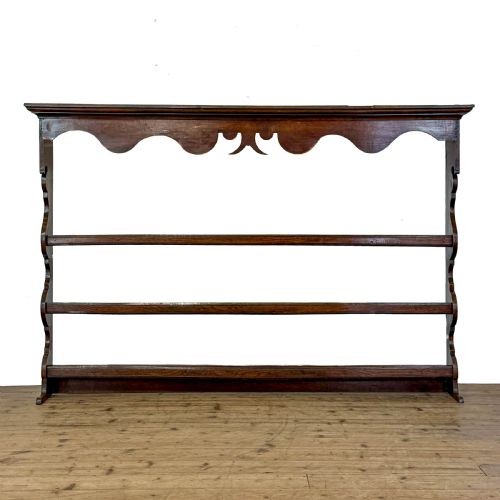


Scalloped Oak Kitchen Dresser
A scalloped oak kitchen dresser brings rustic English and Welsh vernacular character to a room, offering both display space and deep storage.
Scalloped Oak Kitchen Dresser
A scalloped oak kitchen dresser combines a sturdy lower base with an upper plate rack, representing centuries of practical dining room storage in domestic interiors. When searching for a scalloped oak kitchen dresser, buyers encounter examples ranging from 18th Century vernacular forms to later Georgian and Victorian interpretations.
The regional variations include English country pieces alongside Welsh dresser bases and fruitwood hybrids. These forms serve as central functional furniture, designed originally for displaying pewter and china while storing linens or dry goods below.
How they were made
Makers utilised solid oak and occasional fruitwood for the carcass construction, employing traditional joinery methods suited to heavy domestic use. Brass hardware appears on drawer pulls and cabinet fittings, complementing the warm timber tones.
Surfaces show hand-planed boards and exposed pegging, with potboards or cabinet bases supporting the upper plate racks. Carved details and shaped aprons define the regional aesthetics of these pieces.
Some provincial makers incorporated fruitwood alongside oak, creating subtle colour contrasts across drawer fronts.
What varies in quality
The integrity of the timber and the retention of original plate racks dictate the standing of an individual piece within the market. Early 18th Century examples with untouched surfaces and integrated potboards command greater appreciation than later vernacular revivals.
Proportion and the subtlety of the shaped woodwork also influence distinction, separating standard utility furniture from finer country workshop production.
The Scalloped Oak Kitchen Dresser Glossary
- Plate rack
- An upper shelving tier attached to the dresser base, designed specifically to display plates upright. These structures often feature grooved plate rails.
- Potboard
- A low open slatted shelf built between the legs of a dresser base, traditionally used for storing heavy pots and pans. This feature is common in Welsh vernacular furniture.
- Welsh dresser
- A large dining room storage unit comprising a base section of drawers and cupboards surmounted by open plate shelves. They are distinct from standard sideboards due to their towering upper display capacity.
- Fruitwood
- A dense timber such as pear or apple occasionally utilised alongside oak in regional cabinetmaking. It offers a distinct grain pattern and a warmer hue than standard native oak.
- Vernacular furniture
- Domestic pieces made by local craftspeople using regional traditions rather than high-style metropolitan designs. These items prioritise everyday utility and local materials.
Scalloped Oak Kitchen Dresser: Frequently Asked Questions
What is a Welsh dresser?
A Welsh dresser is a traditional combination of a lower base unit featuring drawers or cupboards and an upper open rack designed for displaying ceramics.
These pieces formed the heart of the historic country kitchen for storing everyday tableware and provisions.
How do I date an oak dresser?
Dating relies on examining construction marks, timber choice, hardware, and the style of the base and plate rack. Eighteenth-century pieces typically display hand-cut joinery and pegged frames.
Later Victorian and 20th-century revivals often utilise standardised fixings and machine-sawn timber elements.
Are plate racks always original?
Many early dressers have upper plate racks that were separated, lost, or reunited with bases at a later date. Matching timber patination and historical peg holes help determine whether the base and rack started life together.
Finding a completely undisturbed pairing is a notable characteristic for collectors.
Where should I place a dresser?
A kitchen dresser requires a solid wall with sufficient ceiling height to accommodate both the base and the towering plate rack safely. These items anchor a dining room or kitchen, serving as functional display space for everyday crockery.
They work best away from direct heat sources to protect the historic oak timber.