
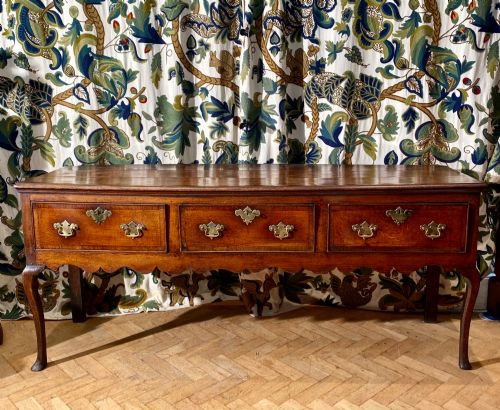
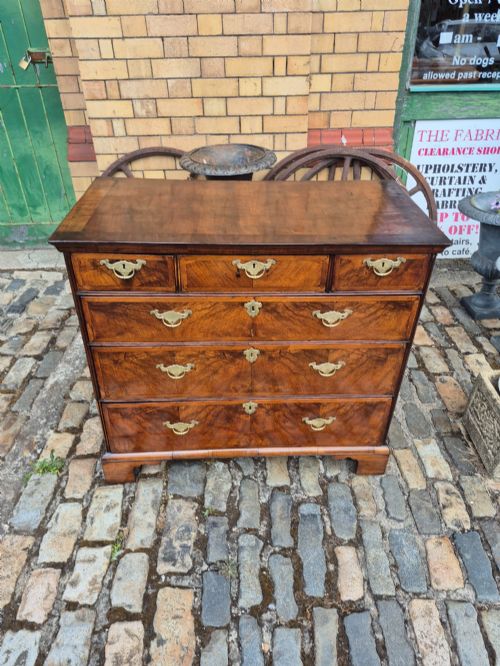
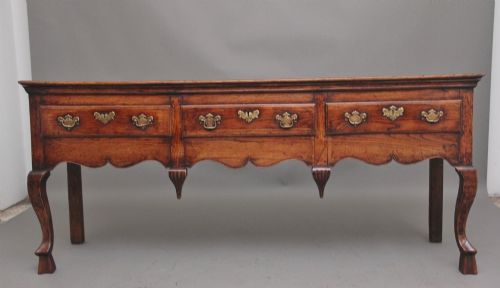
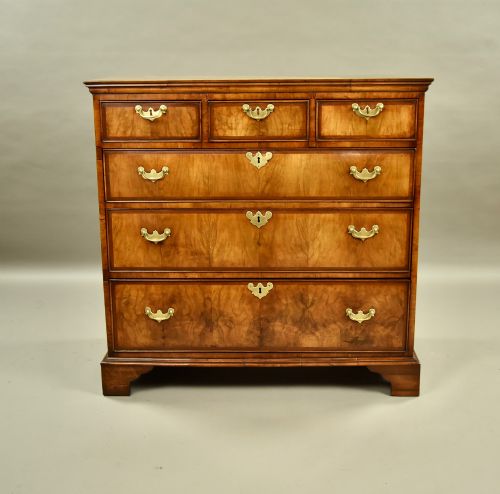


Queen Anne Oak Dresser
A queen anne oak dresser brings honest country craft into a room, offering warm timber surfaces and practical storage built to last.
Queen Anne Oak Dresser
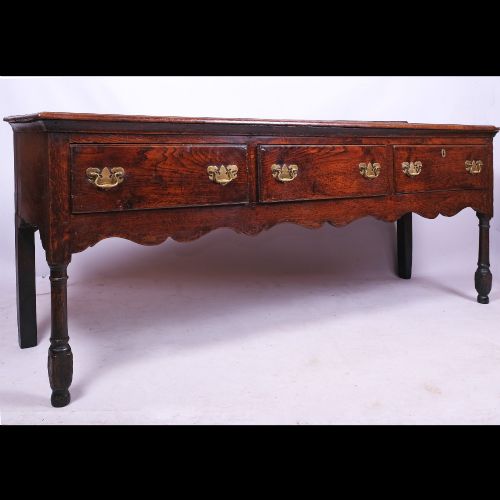
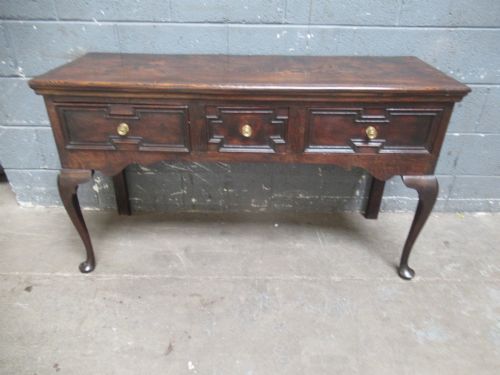
When you search for a queen anne oak dresser, you are looking at substantial timber furniture designed for storage and display in domestic spaces. The pieces seen here span centuries of making, taking the form of open-backed plate racks, enclosed cupboards, and low dresser bases. Oak forms the primary structure, often paired with elm, walnut, or burr walnut for contrast.
The most typical examples on this page date from the eighteenth century, though later revivals from the nineteenth and early twentieth centuries also appear. These later interpretations adopt the classic forms and cabriole leg styles of the earlier period while reflecting the manufacturing methods of their own time. Buyers will find variations ranging from simple country pieces to more refined architectural designs.
Forms include chest of drawers combinations, sideboards, and traditional Welsh dressers with plate racks mounted above the base. Early examples from around seventeen hundred sit alongside Victorian interpretations and nineteen-twenties revivals. Each piece demonstrates how makers adapted domestic storage furniture to suit changing household needs across different eras.
Judging Quality and Character
Quality rests in the choice of timber and the proportion of the piece, particularly in the shaping of cabriole legs and the integration of drawer tiers. Pieces retaining original brass hardware and surface patination stand apart from those with later replacements or heavy restoration. The harmony between primary woods like oak and secondary timbers such as elm influences the overall visual weight.
Construction integrity also separates examples, visible in the snugness of drawer construction and the stability of the base frame. Early eighteenth-century originals display hand-worked surfaces and jointing methods distinct from nineteenth-century copies or nineteen-twenties revival pieces. Understanding these distinctions helps identify the period and integrity of each item.
Early cabinetmakers often used elm for drawer bases because its interlocking grain refused to split when the spoons were dropped.
The Queen Anne Oak Dresser Glossary
- Dresser base
- The lower section of a dresser, functioning as a sideboard with drawers and cupboards without the upper plate rack.
- Cabriole leg
- A furniture leg that curves out and then narrows down to a foot, typical of the Queen Anne style.
- Burr walnut
- Timber taken from a walnut tree growth, prized for its swirling, highly figured grain patterns on drawer fronts.
- Plate rack
- The open shelving superstructure mounted on top of a dresser base to display ceramic plates and platters.
Queen Anne Oak Dresser: Frequently Asked Questions
What is a dresser base?
A dresser base is the lower portion of a traditional dining room or kitchen dresser, built with drawers and cupboards for storage. It functions similarly to a sideboard.
Many examples survive without their original upper plate racks, having been used independently as standalone serving tables or storage cabinets over the centuries.
How do I spot a revival piece?
Revival pieces dating from the nineteenth or early twentieth centuries often show more uniform machine-cut timber and standardised joinery compared to earlier work. Examining the interior construction and wood ageing helps reveal the actual period.
Makers of the nineteen-twenties and Victorian eras frequently copied Queen Anne proportions, using older stylistic cues on newer furniture frameworks.
Where were these pieces used?
These dressers originated in domestic kitchens and dining rooms as utilitarian furniture for storing and displaying everyday tableware. Country houses and farmhouses relied on them for heavy-duty storage.
Today, they transition easily into modern living spaces, serving as credenzas, hallway storage, or kitchen islands.
What woods are used?
Oak serves as the primary structural timber for the majority of these pieces, providing strength and durability. Elm and walnut frequently appear in combination with the oak.
Finer decorative surfaces often feature burr walnut veneers, contrasting with the heavier, straight-grained oak frames.