


Oak Hall Table Storage
Oak hall table storage encompasses versatile furniture pieces designed for entryways, offering practical compartments alongside traditional seating or surface space.
Oak Hall Table Storage
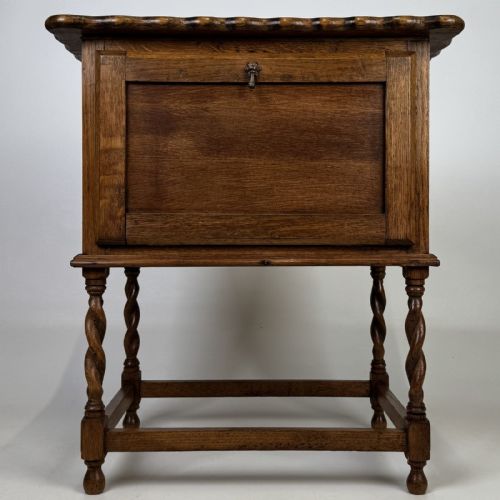
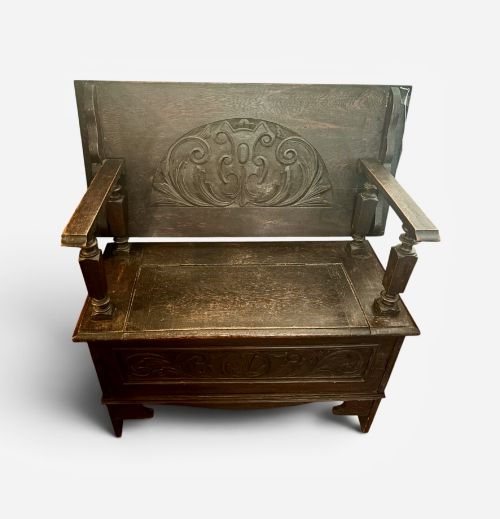
Pieces span from the eighteenth century through the Edwardian and Victorian eras into the nineteen-thirties, with the nineteen-twenties particularly well represented. Forms include items with lift-up seats, fold-over tops, and enclosed cupboards that double as benches or side surfaces.
Origins vary across distinct historical periods, encompassing Jacobean revival styles alongside simpler early twentieth-century designs. Buyers select these items to combine seating and concealed storage within narrow hallway spaces.
Construction and materials
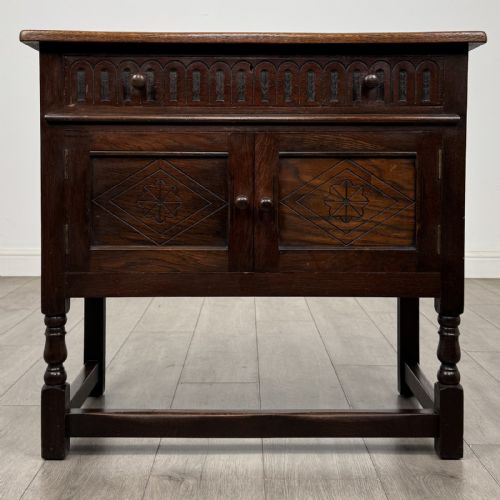
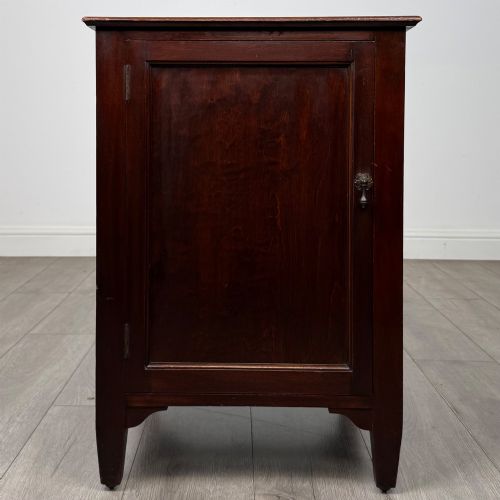
Construction relies heavily on solid oak, frequently augmented by mahogany stain, alongside supportive hardware formed from brass, iron, and other metals. Structural assembly often incorporates panelled construction and carved decorative elements.
Listings feature solid oak and stained wood alongside hardware made from brass, iron, and glass.
Evaluating quality and craftsmanship
Quality separates through the depth and crispness of carved detailing on the oak panels and the solidity of the timber used throughout the piece. Finer examples display harmonious proportions, particularly in smaller sideboard and bench formats.
The integrity of operational mechanisms, such as fold-over table tops and lift-up seat compartments, distinguishes superior surviving examples. The application of finishes, from natural golden oak tones to darker stains, also reflects the original maker's intent and subsequent upkeep.
Walker & Hall
The Oak Hall Table Storage Glossary
- Monks bench
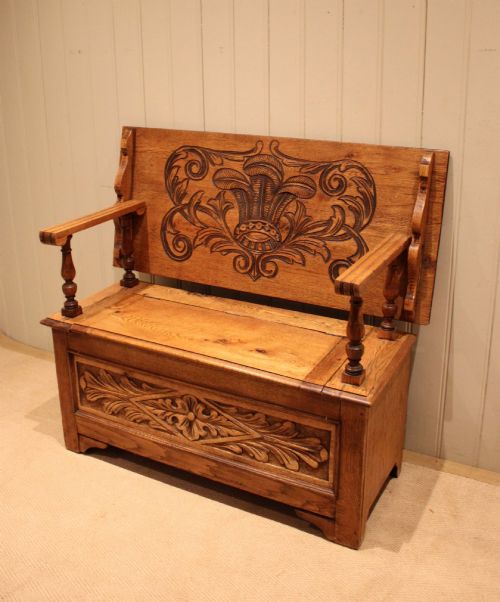
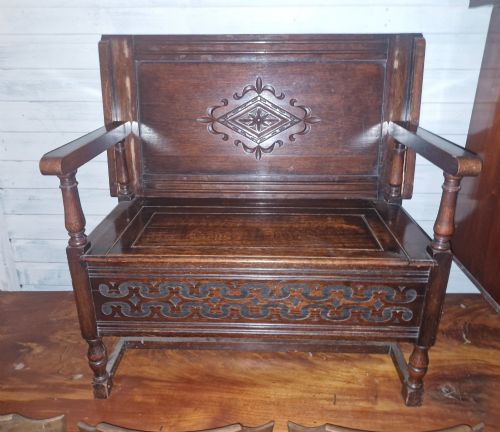
- A versatile multi-functional furniture piece featuring a backrest that folds down to create a table surface above a box seat for storage.
- Dresser base
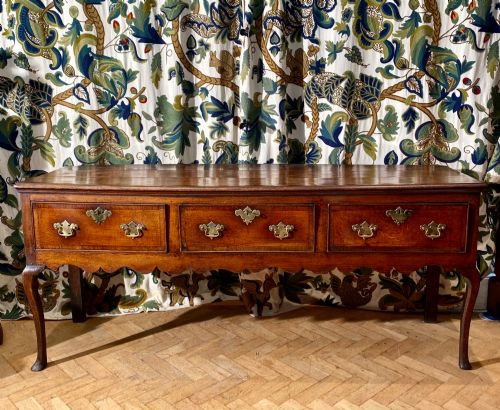
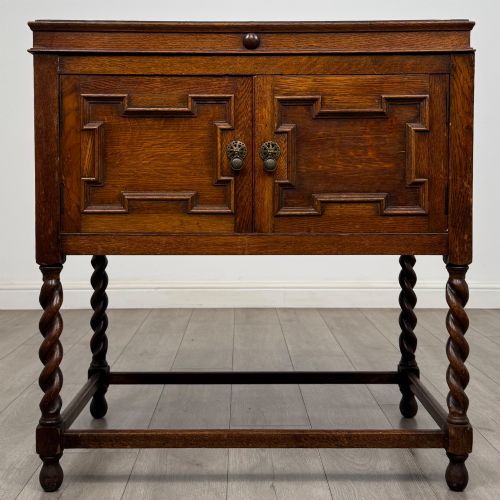
- A low sideboard or cabinet featuring storage cupboards or drawers, historically used for serving food or storing household items.
- Court cupboard
- An enclosed antique cabinet, typically constructed of oak, featuring upper and lower storage sections often supported by carved pillars.
- Barley twist
- A decorative turning technique resembling a spiral rope, frequently found on the legs of tables, cupboards, and benches from revival periods.
- Settle
- A wooden bench with high backrests, solid armrests, and enclosed storage beneath the seat designed to keep out draughts in hallways.
Oak Hall Table Storage: Frequently Asked Questions
What is a monks bench?
A monks bench is a dual-purpose hall seat with a hinged back that folds flat to form a table top. The base contains a storage compartment accessed by lifting the seat.
These pieces were designed for compact entryways where floor space was limited, allowing homeowners to sit while removing footwear and store items inside.
How do I date an oak hall cupboard?
Dating relies on stylistic clues such as carving depth, hardware materials like brass or iron, and overall construction methods. Pieces from the eighteenth century differ noticeably in timber grain and assembly from Edwardian or nineteen-twenties revivals.
Revival styles often copy earlier Jacobean or Gothic forms, so examining the interior timber and joinery helps confirm the actual manufacturing period.
Where should I place a hall bench?
Hall benches suit entryways, corridors, and large landings where guests gather or household items require concealment. Their narrow footprint fits well against plain walls without obstructing pathways.
Ensure adequate clearance if selecting a design with a fold-over top or lift-up seat so the mechanism operates freely.
What is a dresser base used for today?
A dresser base serves as a low sideboard providing surface display space and enclosed cupboard storage in hallways or dining rooms. The flat top accommodates lamps or decorative items while the interior holds everyday essentials.
Smaller proportioned examples fit comfortably in modern hallways without overwhelming restricted spaces.