






Wooden Buffet Table Drawers
Wooden buffet table drawers offer practical storage and timeless utility, bringing substantial timber craftsmanship and period character directly into your dining room or hallway.
Wooden Buffet Table Drawers
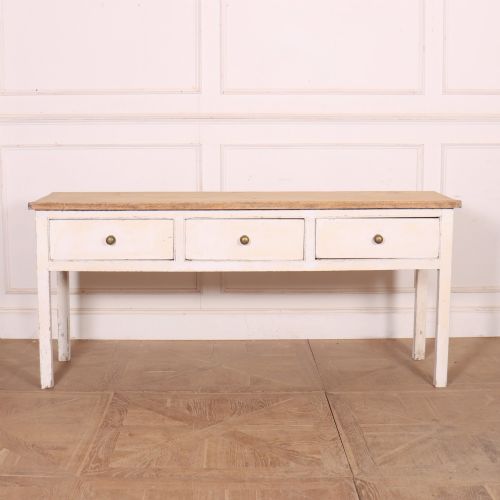
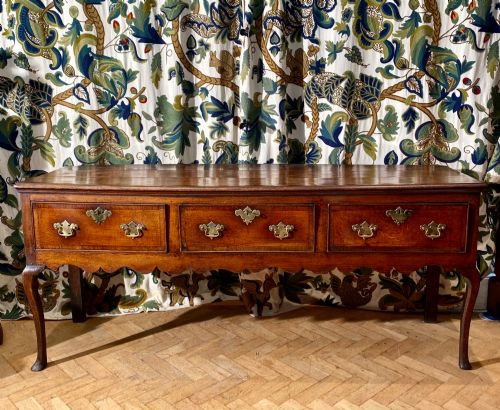
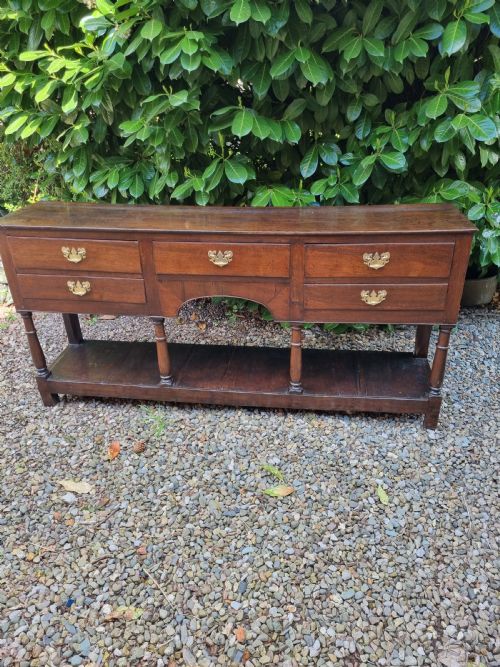
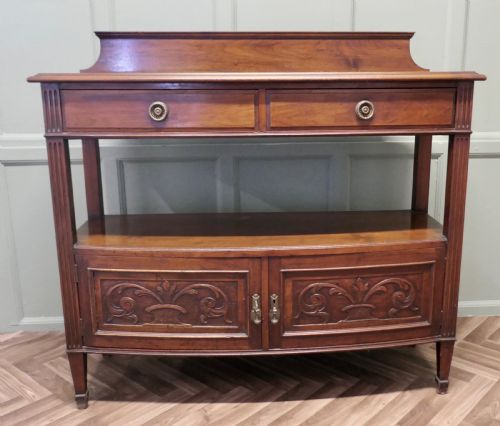
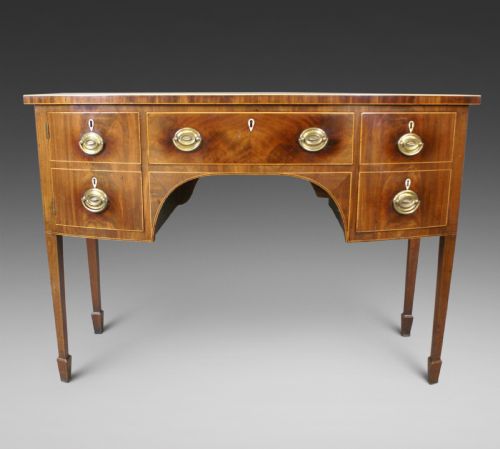
Wooden buffet table drawers encompass a diverse group of serving furniture, sideboards, and dresser bases designed for storage and display. When you search for wooden buffet table drawers, you encounter utilitarian serving pieces and substantial storage furniture rooted in domestic tradition. These functional items range from simple country formats to formal formal dining room furnishings.
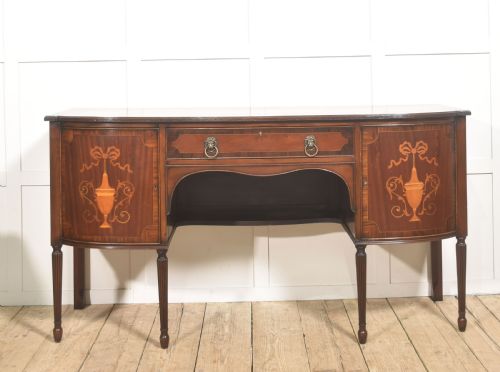
The pieces on this page span the eighteenth century, the Victorian and Edwardian eras, and early twentieth-century design movements. You find regional pieces like Welsh vernacular oak alongside refined Georgian mahogany sideboards and French provincial servers. This selection bridges the gap between rural practicality and formal entertaining spaces.
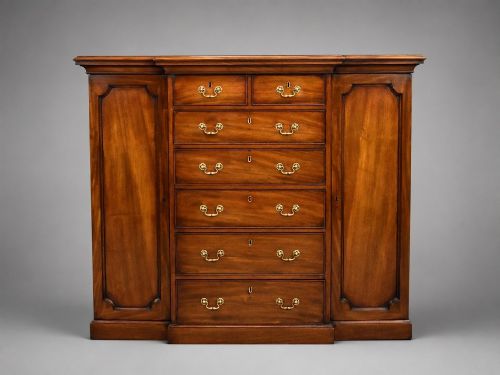
Forms vary from low serving tables and console pieces to multi-drawer dresser bases and fitted cabinets. Many incorporate banks of drawers flanked by cupboards or open serving surfaces designed for domestic organisation. Each variant reflects the specific dining and storage habits of its original period.
Materials and construction
Makers relied on durable timbers such as oak, mahogany, walnut, and pine to build these sturdy storage pieces. Mahogany and walnut provided dense surfaces suited to refined finishes, while oak and pine served structural roles in regional furniture.
Craftsmen utilised brass for drawer pulls and handles, adding functional metalwork to timber facades. Decorative elements include satinwood inlay and burr walnut veneers, which introduced subtle grain variation and contrasting tones to the primary wood.
Some drawers retain stubborn traces of eighteenth-century flour dust, whispering tales of past domestic industry directly into your modern dining room.
Assessing quality in construction
Quality rests in the selection of timber figures, such as burr walnut or figured mahogany, and the precision of the joinery. Superior examples display tight dovetails in the drawer construction and well-matched grain patterns across the front facade.
The integrity of the secondary woods and the retention of original brass hardware elevate a piece above standard utility items. Consideration is also given to how gracefully the timber has aged and whether structural alterations compromise the original design.
Bowman Brothers
The Wooden Buffet Table Drawers Glossary
- Dresser base
- A lower storage unit typically featuring multiple drawers set above cupboards or open potboards. It served as a primary food preparation and kitchen storage surface in earlier homes.
- Cross-banding
- A decorative technique where a border of veneer is applied to the edges of a surface with the grain running perpendicular to the main panel. This frames the primary timber and adds visual depth.
- Vernacular furniture
- Pieces made by local regional craftsmen using regional timbers rather than following strict metropolitan fashion. These items prioritise sturdy utility and local stylistic traits.
- Satinwood
- A lustrous, yellow-toned timber used primarily for decorative stringing and inlay work on late eighteenth and nineteenth-century furniture. It contrasts sharply with darker woods like mahogany.
Wooden Buffet Table Drawers: Frequently Asked Questions
What is a dresser base?
A dresser base is a low wooden storage unit featuring a series of drawers, historically used in kitchens and dining rooms for storing tableware and linens. Unlike tall dressers, it lacks upper shelving.
These pieces function effectively as sideboards in modern dining spaces, providing concealed storage while offering a wide surface for serving food.
How do I date a sideboard?
Dating relies on identifying the primary timber, construction methods such as dovetailing, and the overarching stylistic period. Georgian pieces often display restrained classical lines, whereas Victorian items tend to be heavier and more ornate.
Hardware styles and secondary woods hidden inside drawers also provide reliable clues to a piece's manufacturing era.
Are these suitable for hallways?
Narrower serving tables and shallow dresser bases fit well in hallways, providing a convenient surface for post and keys alongside hidden drawer storage. Their varied depths allow them to occupy transitional spaces without obstructing movement.
Selecting a piece with proportion matching your corridor width ensures both practical utility and balanced interior design.
What is burr walnut?
Burr walnut is a highly decorative timber taken from the wart-like growth on a walnut tree, yielding complex, swirling grain patterns. Cabinet makers prized it for veneering prominent surfaces like drawer fronts.
This material creates rich visual texture that catches the light differently depending on the angle of view.