
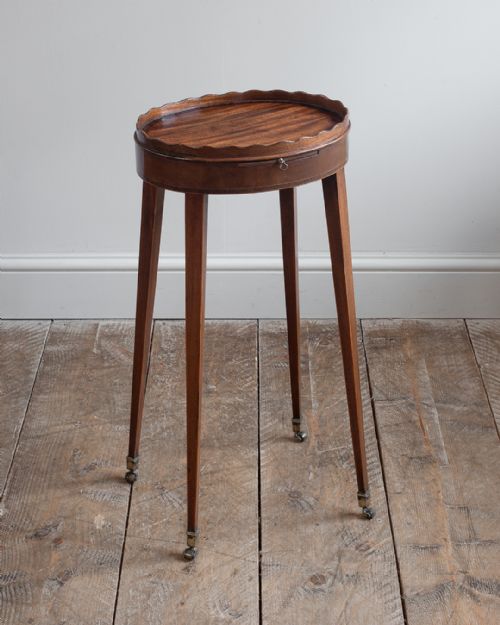
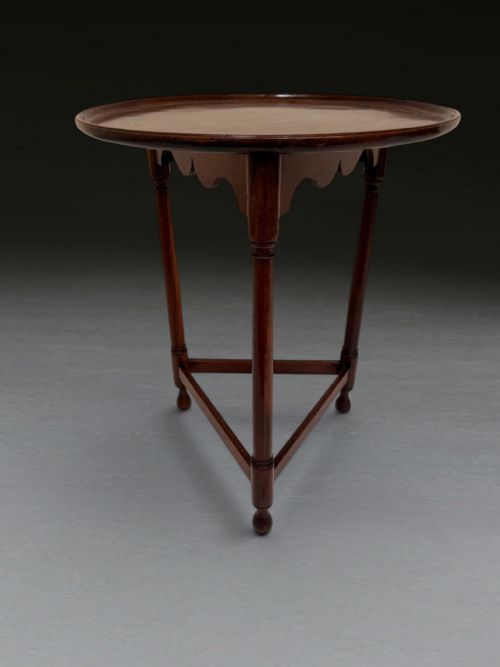

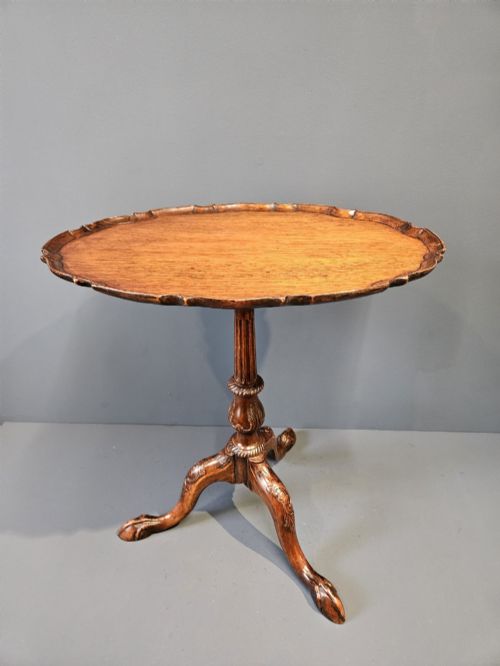
Scalloped Mahogany Table
A scalloped mahogany table brings fine timber and shaped edges into domestic rooms, offering versatile surfaces for display and dining.
Scalloped Mahogany Table
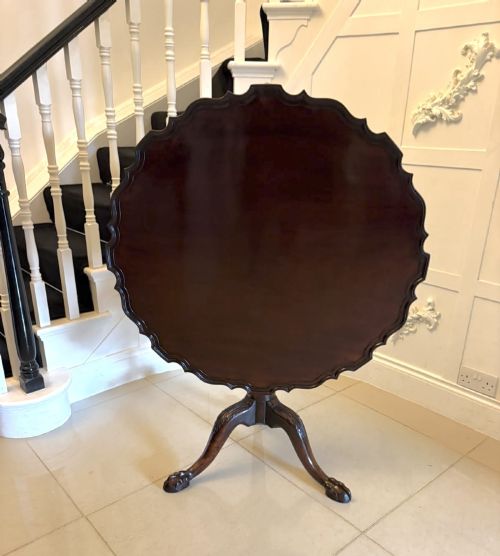
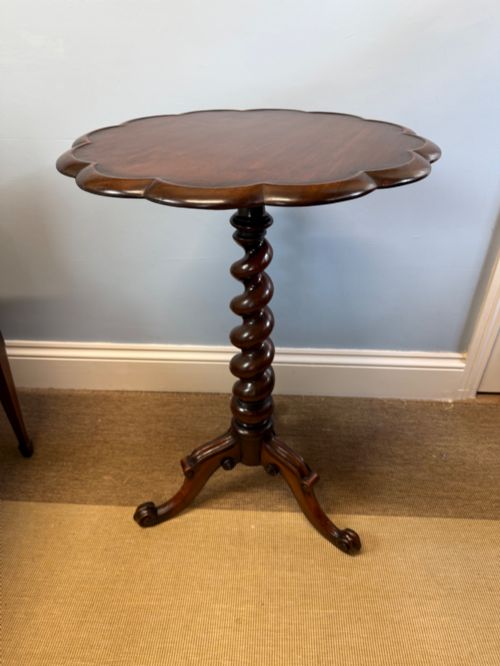
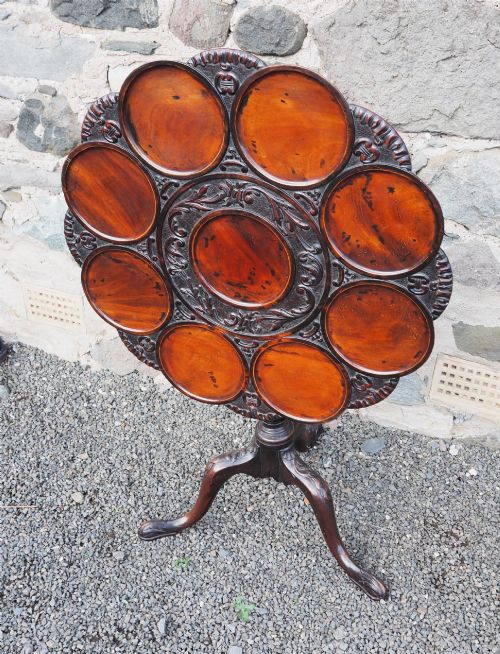
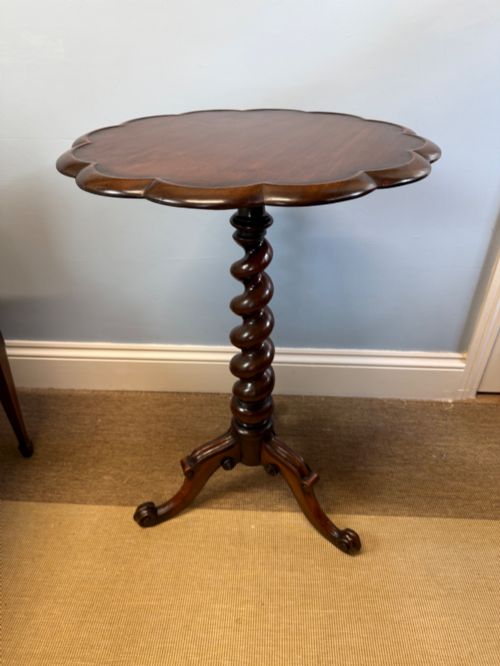
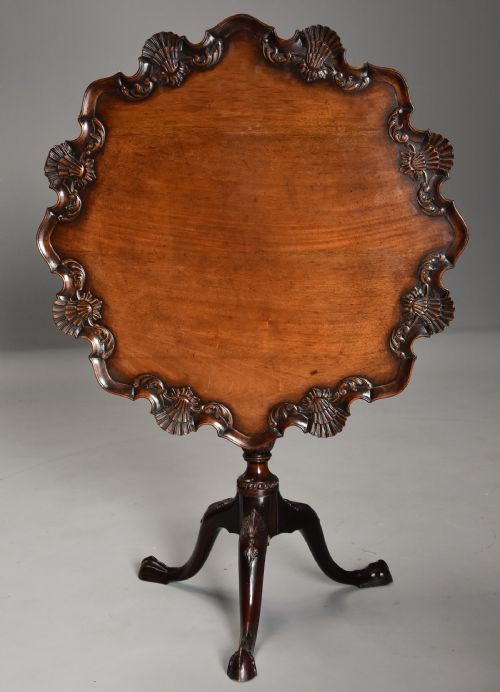
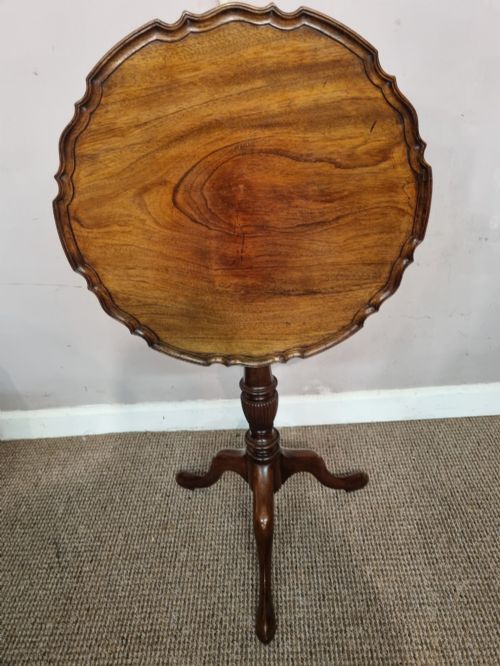
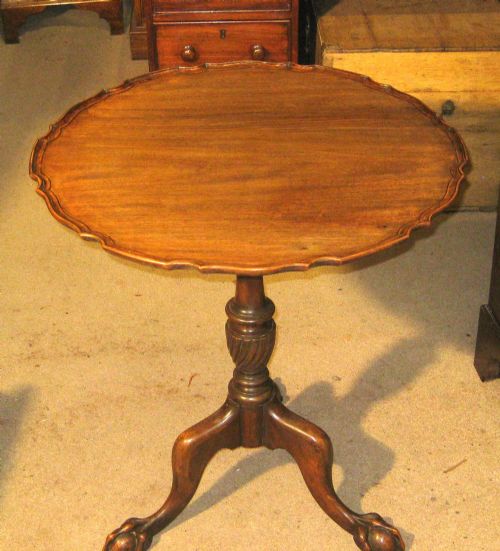
A scalloped mahogany table unites rich timber surfaces with shaped, undulating borders across various historical periods. These pieces appear as occasional tables, wine tables, centre tables, and tilt-top designs spanning the eighteenth, nineteenth, and early twentieth centuries.
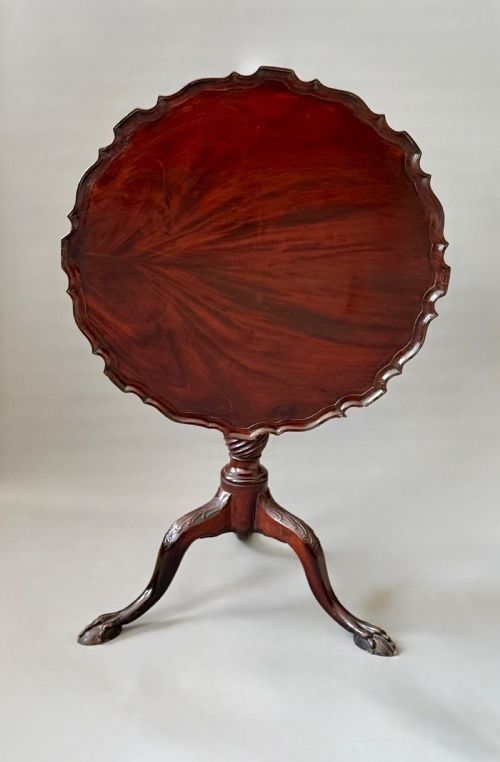
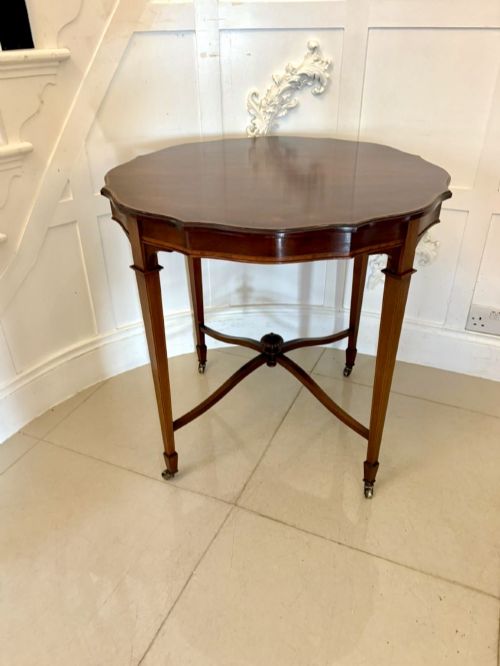
Buyers most frequently encounter tilt-top tripod examples from the Georgian and Victorian eras, often featuring piecrust edges. Occasional and side tables from Edwardian and later revival periods also populate the selection, providing compact surfaces for lamps or decorative objects.
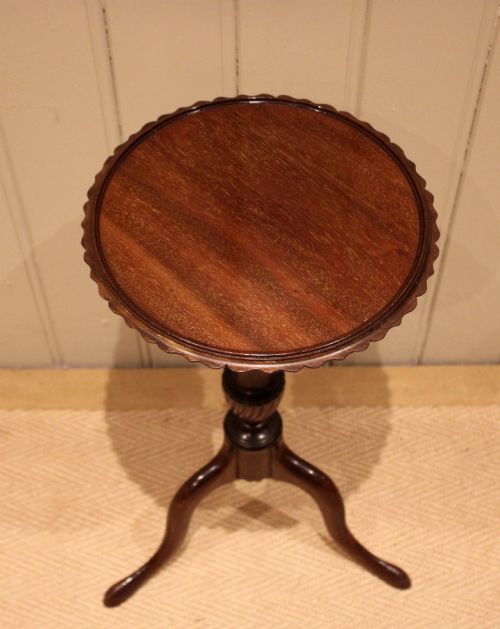
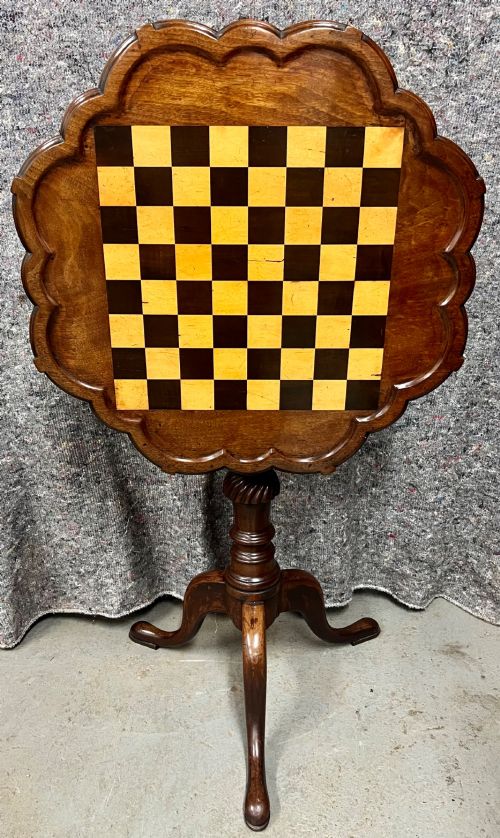
Forms range from small urn stands and cricket tables to larger folding butler's trays and games tables. The integration of mahogany timber remains constant, while stylistic influences shift between classical Georgian restraint and ornate Chippendale or Victorian carving.
How they were made
Cabinet makers utilised solid mahogany and applied veneers, shaping the distinctive edges by hand to create the undulating profiles. Tripod bases frequently employ turned pedestals supported by three carved legs, while tilting mechanisms utilise birdcage or block pivots to allow the surface to drop flat.
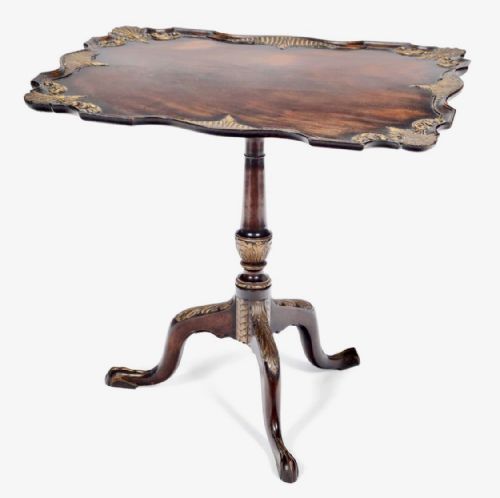
Decoration often includes parcel gilt accents, intricate wood inlay, and satinwood banding or marquetry work. Carved foliate motifs and piecrust borders require precise hand chiselling along the hardwood grain to maintain structural integrity while achieving delicate visual curves.
Object forms range from occasional and wine tables to games tables, cricket tables, and lowboys.
What varies in quality
Quality rests primarily in the crispness of the carved edge work and the selection of the mahogany timber itself. Superior examples display dense grain patterns, harmonious proportions in the pedestal and legs, and smooth operation in any tilting mechanisms.
Refined pieces show meticulous hand-carving along the scalloped borders rather than mechanical shaping. The integration of secondary woods, precise inlay work, and stable joinery across the tripod base distinguish standard production from exceptional craftsmanship.
Gillows·Shapland and Petter
The Scalloped Mahogany Table Glossary
- Piecrust edge
- A raised, carved tabletop border shaped with alternating curves and points resembling pastry work. This decorative edge requires skilled hand labour to carve from the solid timber of the top.
- Tilt-top
- A hinged tabletop mechanism that allows the surface to pivot into a vertical position when not in use. This clever design saved valuable floor space in period drawing rooms.
- Birdcage
- A timber framework beneath a tilt-top table that allows the top to both rotate and tilt. It represents a more complex and desirable engineering solution than simple block pivots.
- Tripod table
- A small freestanding table supported by a central pillar and three legs. These versatile pieces gained popularity during the Georgian period for tea service and general use.
- Lowboy
- A small kneehole dressing table or side table featuring one or more rows of drawers beneath the surface. They typically stand on slender legs and date from the eighteenth century onwards.
Scalloped Mahogany Table: Frequently Asked Questions
What is a scalloped mahogany table used for?
These tables traditionally served as tea tables, wine tables, or occasional stands for lamps and decorative ornaments in principal rooms. Their movable surfaces also allowed them to function as bedside cabinets or compact dining spots.
Today, they suit similar roles in modern interiors, fitting neatly beside seating areas or serving as display points for collections. Their compact footprints make them practical for everyday use.
How do I tell an 18th century table from a revival piece?
Eighteenth-century examples display authentic timber patination, hand-cut joinery marks, and wear patterns consistent with age. Revival pieces from the Edwardian era or later often show machine-finished components and different secondary woods beneath the surface.
Examining the underside of the tabletop and the construction of the pedestal reveals clues about manufacturing methods. Older tables exhibit the subtle irregularities typical of hand tools.
How do tilt-top mechanisms work?
Tilt-top mechanisms use a pivoting block or a revolving birdcage frame mounted at the top of the central pillar. A wooden catch secures the surface in a horizontal position during use.
Releasing the catch allows the heavy mahogany top to pivot upright against the stem. This clever engineering allowed servants to store multiple tables against the wall when rooms needed to be cleared.
How should I care for mahogany surfaces?
Mahogany responds well to regular dusting with a soft, dry cloth and occasional applications of traditional beeswax to nourish the timber. Avoiding direct sunlight and extreme temperature changes prevents the wood from drying out or warping.
Keeping moisture away from the polished surface preserves the historic finish. Gentle maintenance ensures the grain and colour remain rich over decades of daily use.