
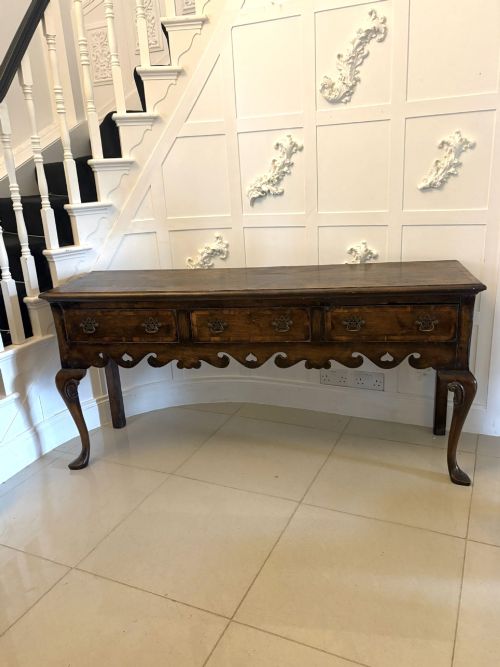
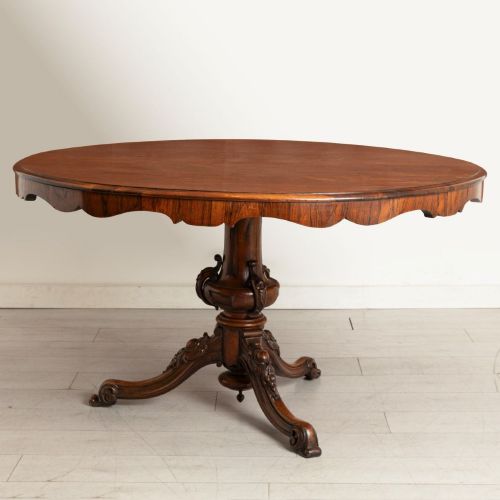
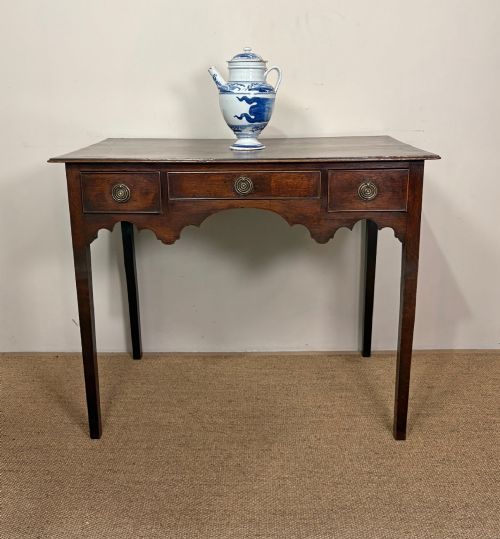
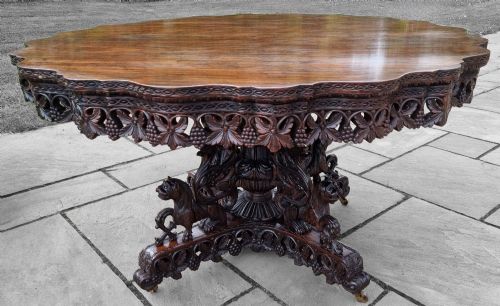
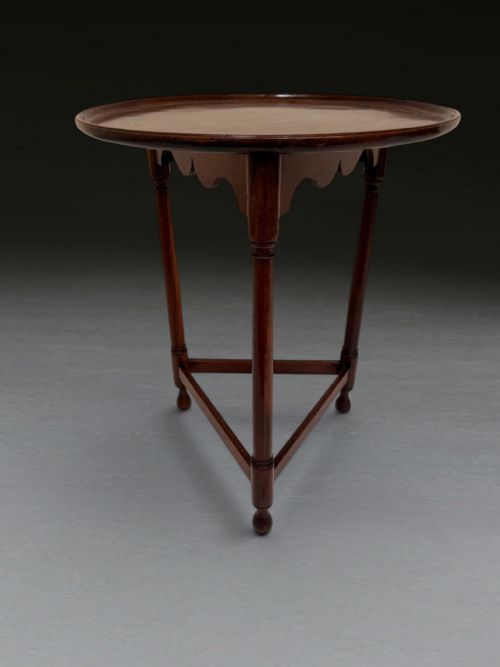
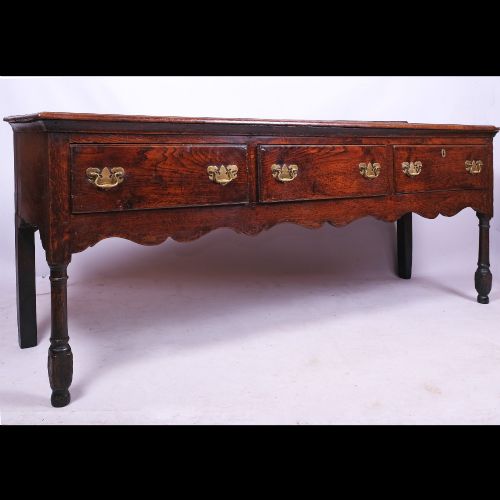
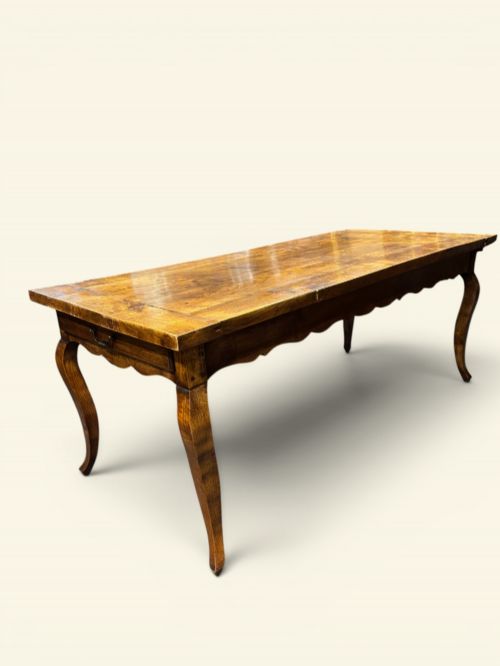
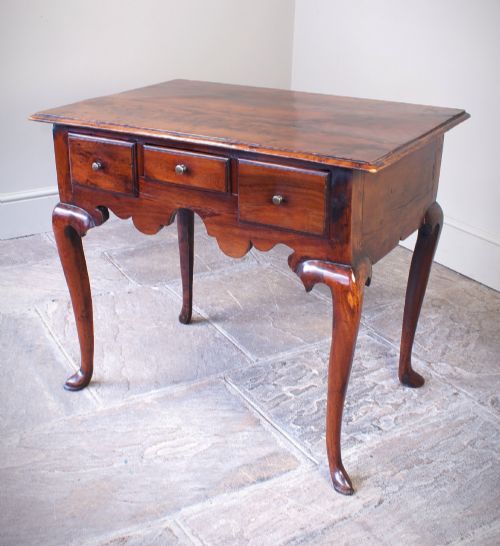
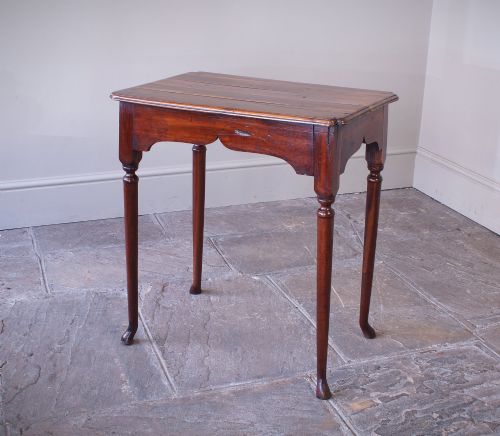

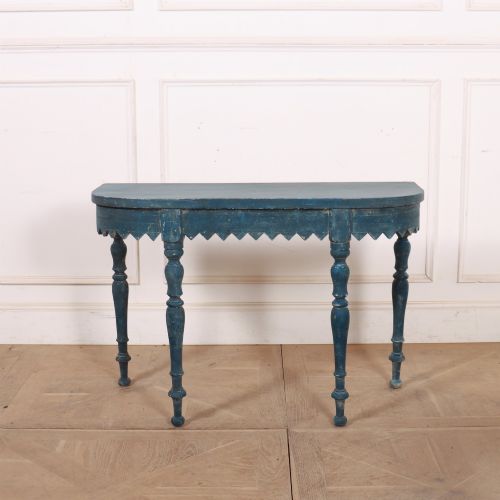

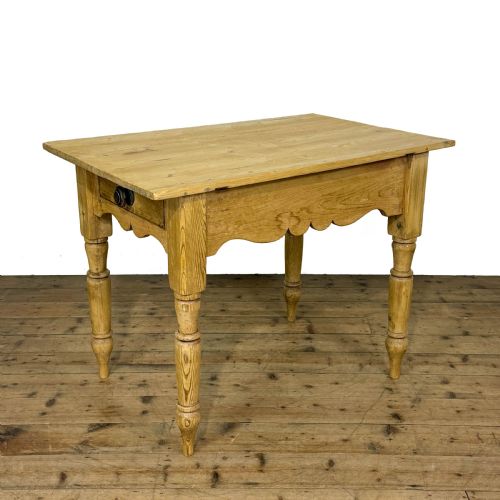
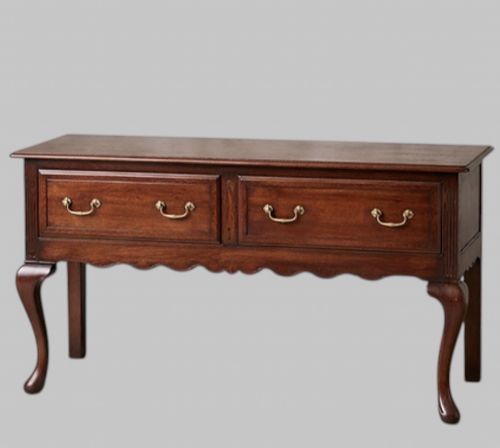
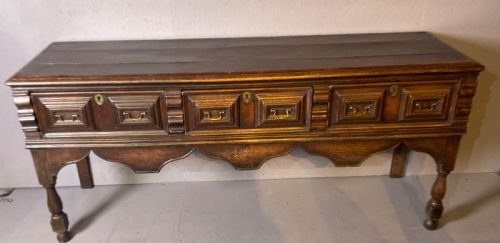

Scalloped Apron Table
A scalloped apron table brings understated grace to a room through curved woodwork beneath the top surface.
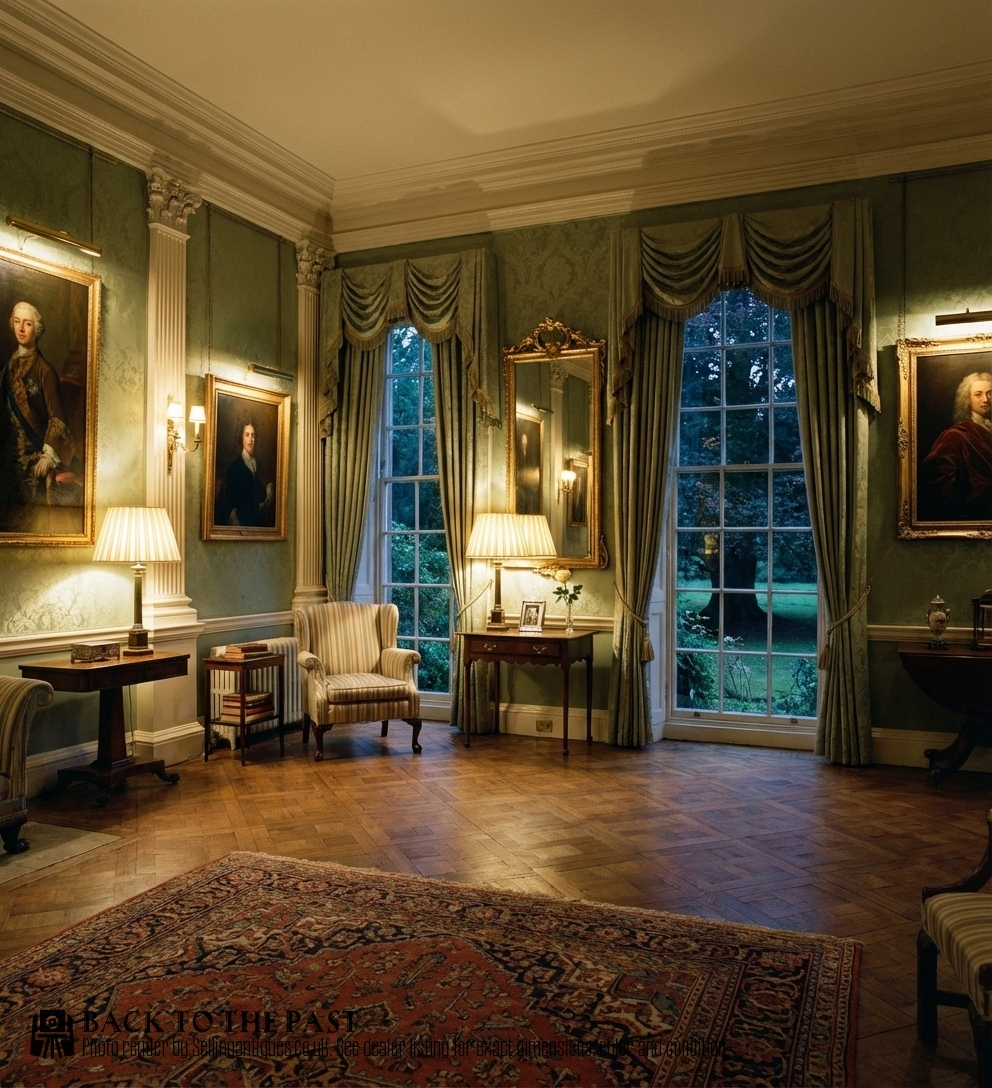
Scalloped Apron Table
When you search for a scalloped apron table, you look for lowboys, side tables, and occasional tables featuring shaped wooden rails beneath the top. The selection includes examples from the eighteenth and nineteenth centuries, often associated with Georgian and country periods.
The form appears most frequently in oak, mahogany, and fruitwood, taking shape as side tables, lowboys, and console tables. These pieces serve practical functions in hallways and living spaces while displaying traditional joinery.
Makers and craftsmen applied curved cutting to the underframe, creating distinctive profiles that distinguish these tables from straight-edged designs. The proportions generally remain compact, suiting smaller spaces within a home.
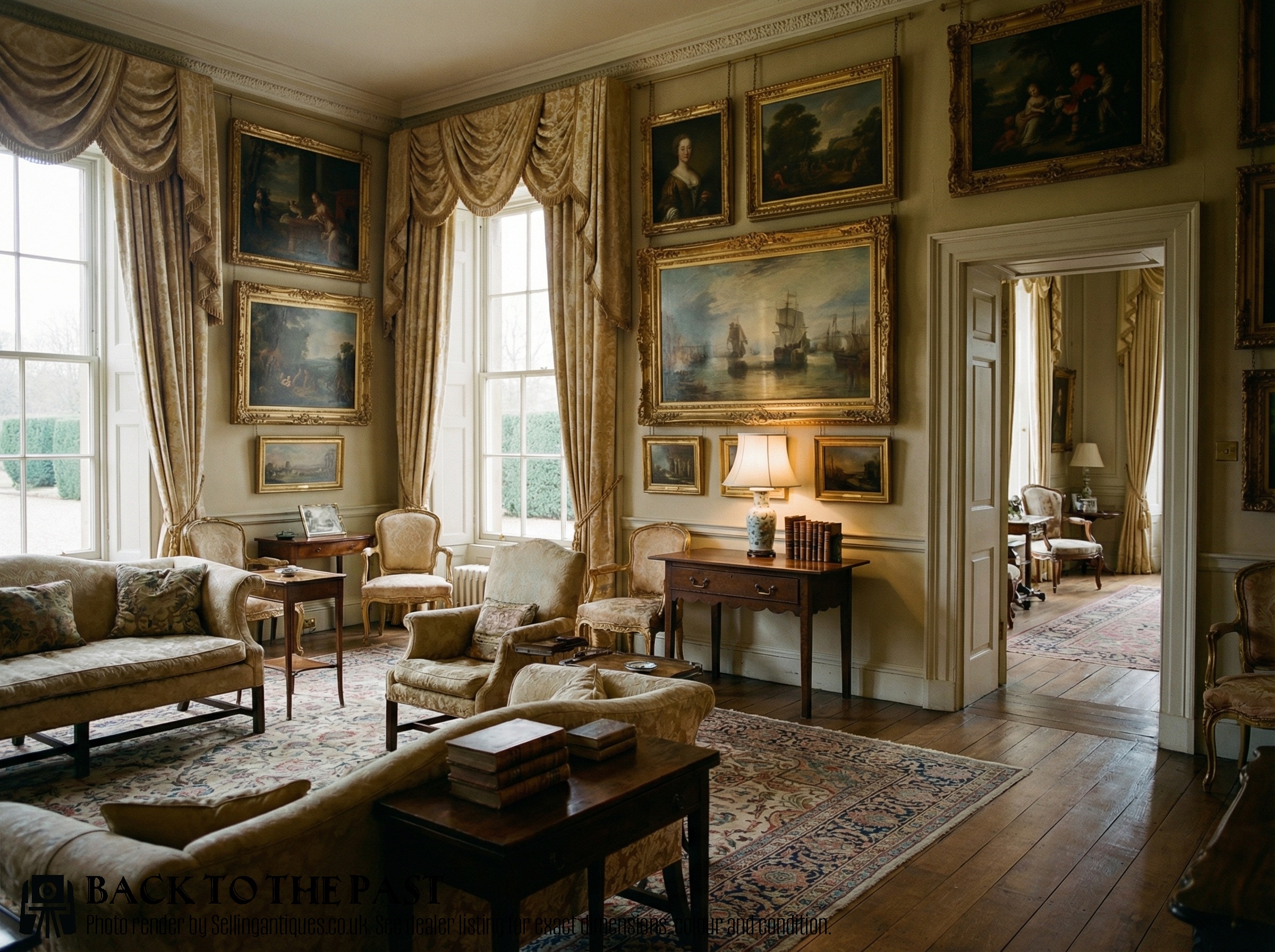
Materials and construction methods
Construction relies heavily on timbers such as oak, mahogany, fruitwood, and pine, shaped with hand tools and traditional joinery. Artisans selected these woods for their grain and stability, allowing the apron to be carved or sawn into curved outlines.
Surface finishes include natural wax, polish, and paint, reflecting both formal Georgian sensibilities and provincial traditions. Brass hardware occasionally appears on associated drawers, while the main frames depend entirely on pegged or tenoned joints.
Scalloped Apron Table Retail Price Guide 2026
Typical asking prices for scalloped apron table among the pieces listed under this phrase on Sellingantiques today, from the lower quarter to the upper quarter. They describe what is for sale here now, not the wider market.
Some provincial makers subtly hid small charms or signature tally marks inside the unseen joins of their underframes.
Assessing quality in the design
Quality rests in the harmony of the curves and the crispness of the timber's grain rather than ornamental excess. A well-proportioned underframe balances the weight of the top without appearing weak or overly thinned.
The integrity of the timber and the preservation of original surfaces dictate the desirability of an example. Altered legs or replaced aprons diminish the character established by period craftsmen.
The Scalloped Apron Table Glossary
- Apron
- The horizontal timber connecting the legs beneath the tabletop. This is the structural element that receives the scalloped cutting.
- Lowboy
- A small kneehole table or side table with drawers, frequently produced during the eighteenth century in oak or mahogany.
- Refectory table
- A long dining table traditionally used in communal halls and farmhouses. These pieces utilise heavy timber construction.
- Cabriole leg
- A furniture leg that curves outward and then tapers inward, inspired by animal limbs. This form appears across eighteenth-century designs.
- Pot board
- A low wooden shelf fitted between the lower stretches of a dresser base or table. It provides storage for kitchen pottery.
Scalloped Apron Table: Frequently Asked Questions
Where should I put a scalloped apron table?
These tables fit well in hallways, living rooms, or dining areas where surface space and subtle decoration are required. Their modest proportions allow them to sit against walls or behind seating without dominating the room.
They function effectively as side tables, lamp tables, or small serving surfaces. Their historic character adds warmth to both traditional and contemporary interiors.
How do I identify a Georgian period table?
Georgian tables typically display specific timber choices like mahogany or oak, combined with restrained classical proportions and refined joinery. Details such as hand-cut dovetails in drawers and traditional polish help indicate this era.
Compare the leg style and edge mouldings with established eighteenth-century forms. Regional pieces often incorporate local fruitwoods while maintaining similar structural layouts.
What is the difference between a lowboy and a side table?
A lowboy is specifically a small table featuring one or more rows of drawers beneath the top. They were traditionally used for personal grooming or as dressing tables.
A standard side table may lack drawers entirely, serving purely as a surface for lamps or decorative objects. Both forms frequently incorporate decorative aprons.
How should I care for antique timber tables?
Maintain antique wood by keeping it away from direct heat sources and rapid humidity changes. Apply natural beeswax periodically to nourish the grain and protect the finish.
Avoid using modern silicone-based polishes that can build up on historic surfaces. Gentle dusting with a soft, dry cloth preserves the patina built up over centuries.