


French Harvest Table
A french harvest table brings warmth and enduring utility to any dining space.
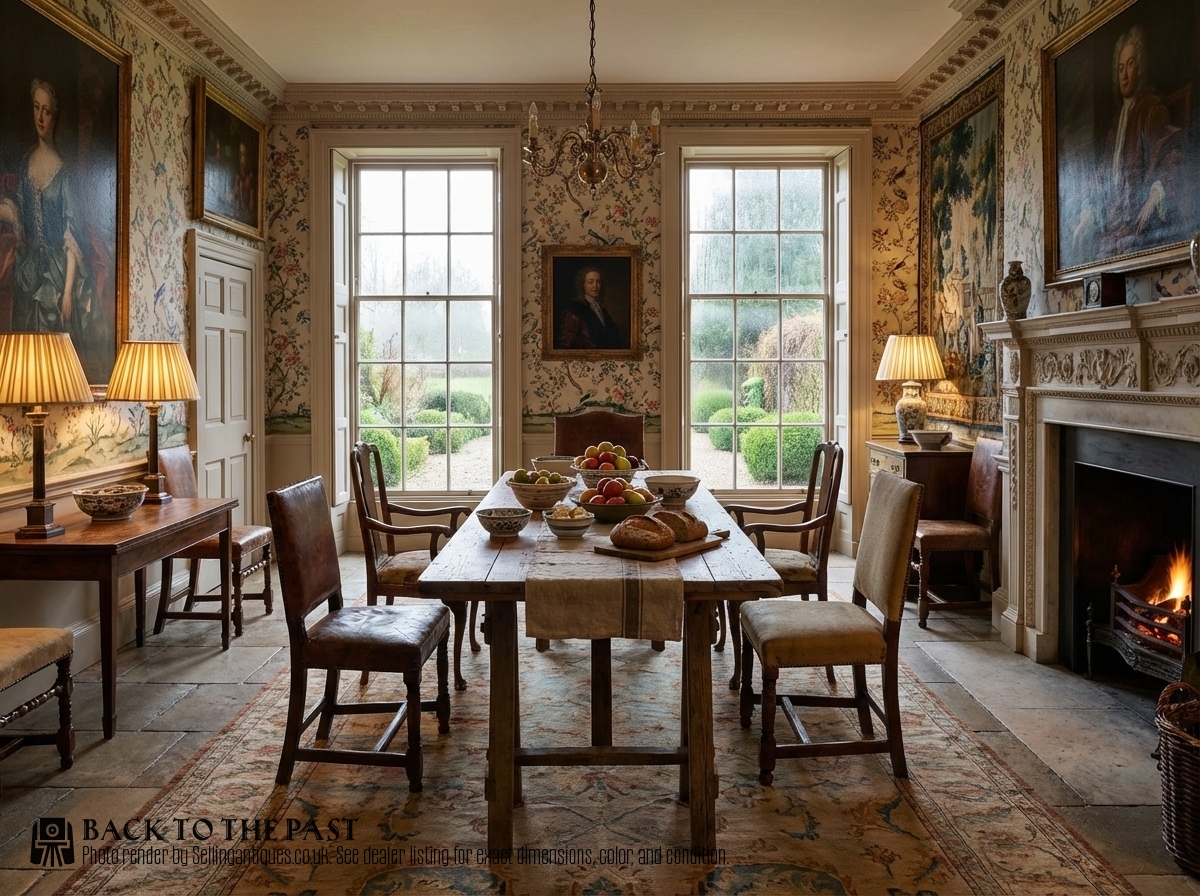
French Harvest Table
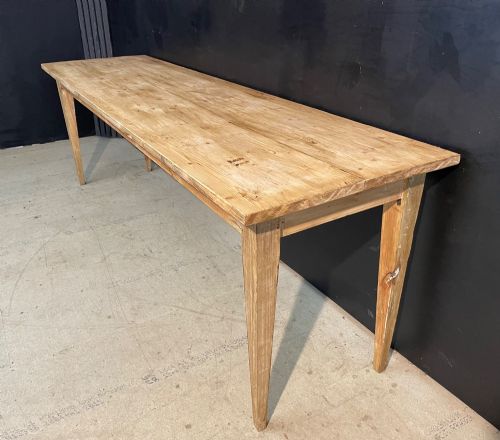
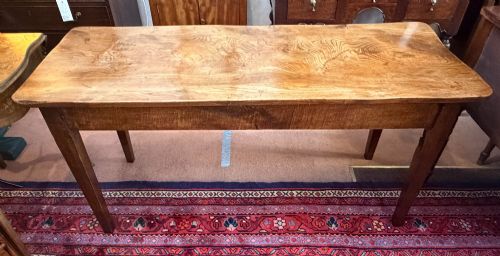
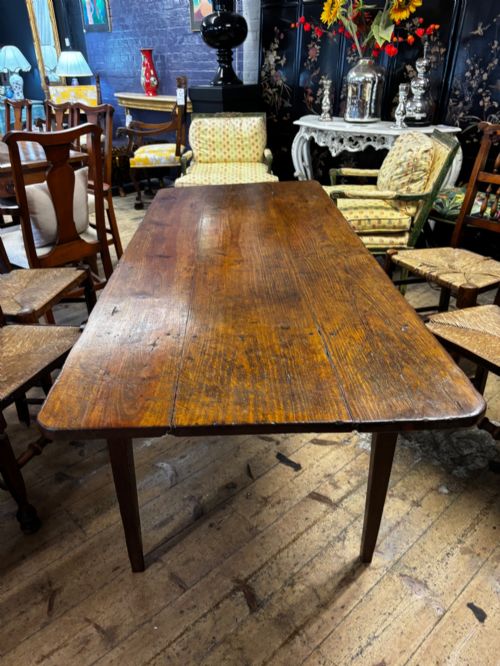
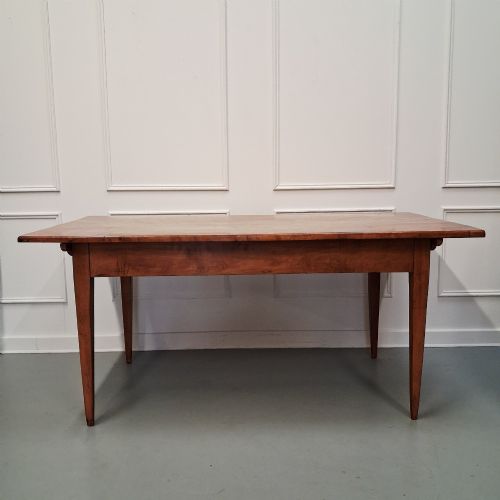
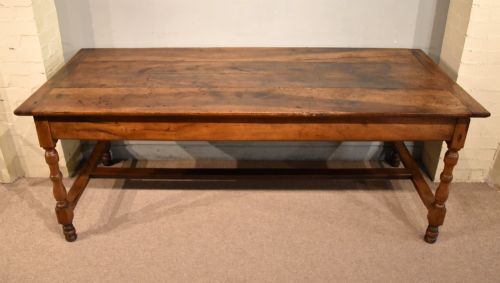
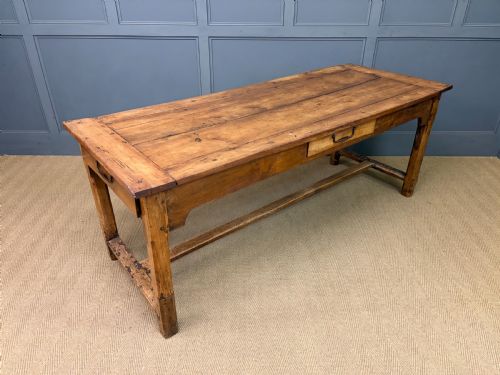
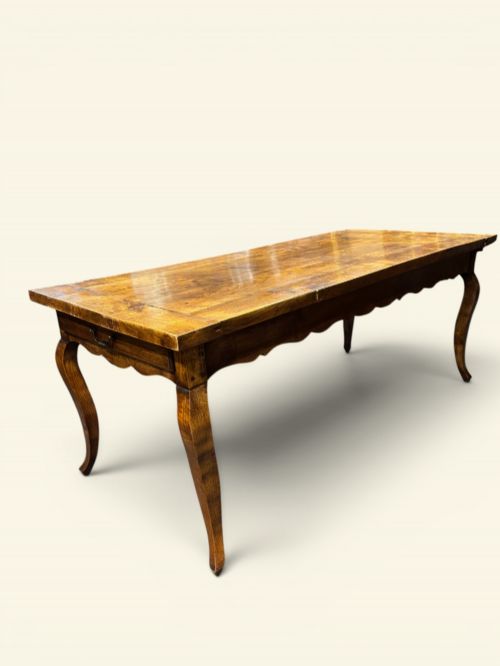
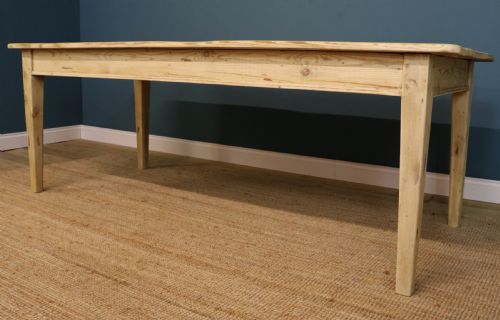
When you search for a french harvest table, you encounter substantial dining pieces designed for communal gatherings. These tables originate primarily from the nineteenth century, reflecting rural practicality and honest domestic carpentry.
Materials and Construction
Local joiners built these tables using hardwoods and softwoods sourced from surrounding woodlands. Oak, fruitwood, pine, elm, cherry and walnut appear frequently across the pieces.
Carpenters employed sturdy stretchers and pegged joints to ensure stability during heavy daily use. Folding mechanisms also appear on specialised pieces designed for seasonal fieldwork.
The inventory spans the nineteenth and early twentieth centuries, featuring robust oak, fruitwood, pine, elm, and cherry across dining and refectory forms.
Indicators of Quality
The choice of primary timber dictates much of the character, with dense fruitwoods and mature oaks holding a distinct presence over softer pine. Grain depth and natural patination acquired through decades of use separate standard examples from finer ones.
Structural integrity relies on original stretchers and uncompromised timber frames. Tables retaining their authentic surface finish and balanced proportions command greater appreciation.
The French Harvest Table Glossary
- Refectory table
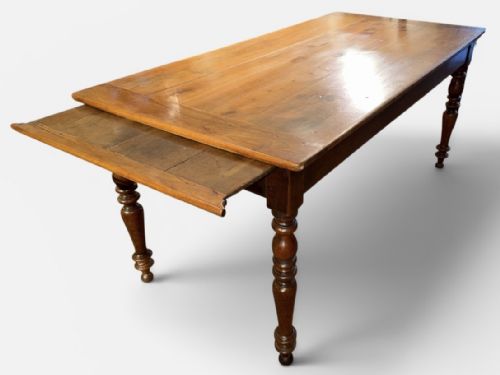
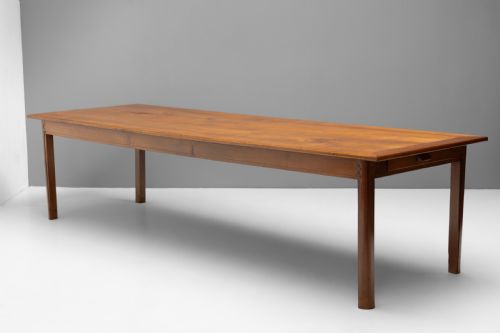
- A long dining table traditionally used for communal meals. These pieces provide substantial length and steady leg support.
- Fruitwood
- Timber gathered from fruit-bearing trees such as cherry or apple. Cabinet makers valued it for its fine grain and warm tone.
- End stretcher
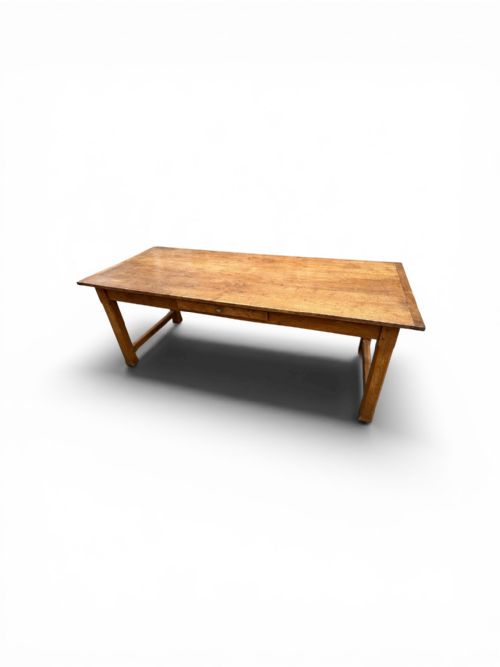
- A horizontal beam connecting the legs near the floor for added stability. This component prevents the table legs from spreading under heavy loads.
- Tilt top table
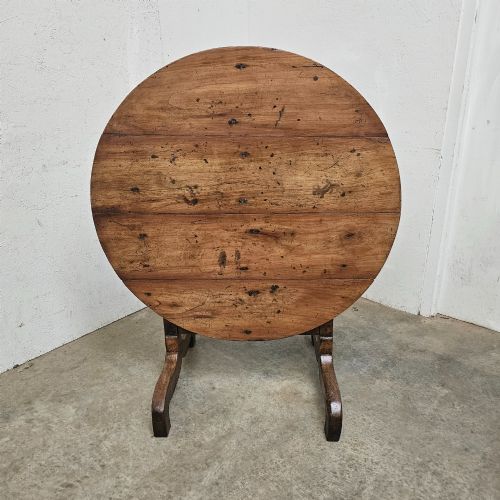
- A table designed with a mechanism allowing the surface to fold vertical when not in use. This clever adaptation saved valuable floor space in cramped rural kitchens.
- Patina
- The surface sheen and colour developed over decades through handling and polishing. It serves as a visual record of the object's age and history.
French Harvest Table: Frequently Asked Questions
How many people do they seat?
These generous tables easily accommodate eight to twelve guests depending on their specific length. Many examples exceed two metres to provide ample elbow room for dinner parties.
Their open underframes allow chairs to tuck in neatly without obstructive central pedestals getting in the way of your guests.
Are they suitable for daily dining?
Built for hardworking rural kitchens, these pieces handle the demands of daily family life with ease. Their resilient timber surfaces actually improve in character with regular use.
A simple wipe with a damp cloth keeps the wood clean, though using placemats protects the historical finish from excessive heat and moisture.
How do I date a table?
Examine the construction methods, tool marks on the underside, and the type of timber used. Nineteenth-century examples often display hand-sawn boards and pegged joints rather than modern screws.
Comparing the wear patterns around the stretcher base also helps determine whether the piece has seen active historical service.
What is a vendange table?
A vendange table is a specialised folding design historically used during the grape harvest. These versatile items combined portable convenience with sturdy dining surfaces.
Their clever folding frames allowed workers to store them compactly in barns or carts at the end of the working day.