

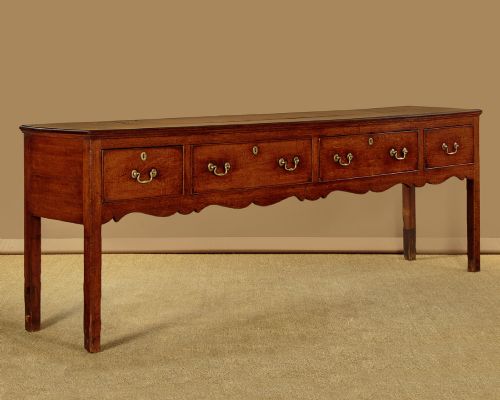
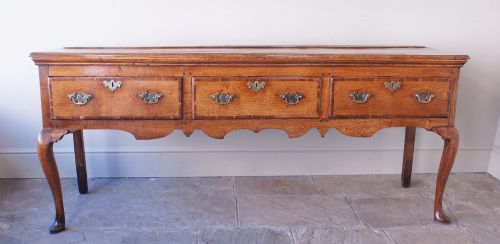
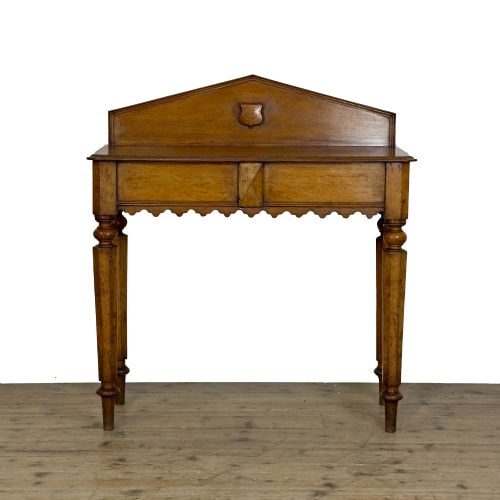
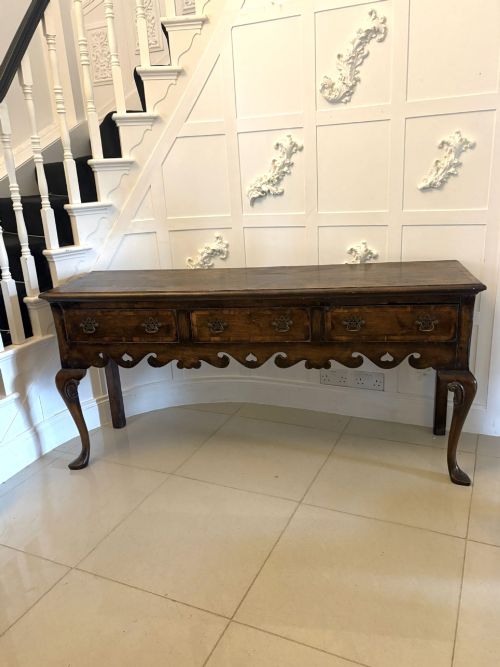




Scalloped Apron Oak Table
These scalloped apron oak table pieces bring vernacular utility and robust joinery into a room, offering functional surfaces built from heavy timber.
Scalloped Apron Oak Table
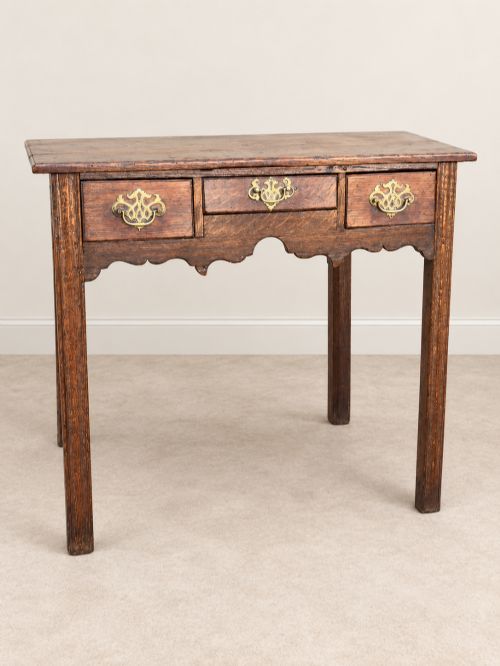
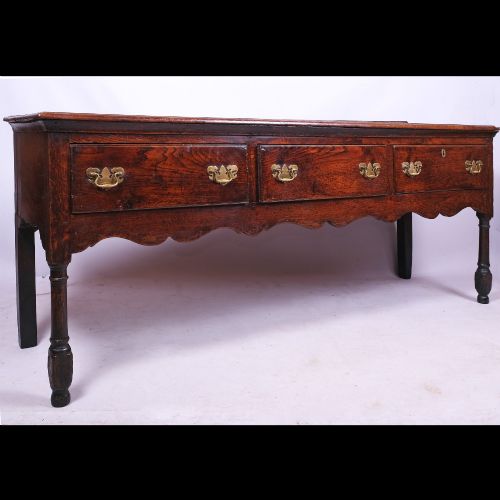
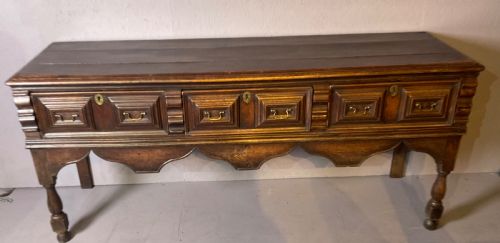
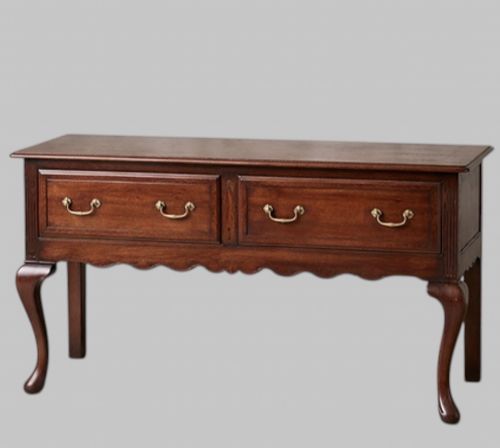
A scalloped apron oak table typically appears as a side table, lowboy, or dresser base, drawing from 17th century, 18th century, and 19th century periods. These forms range from English country examples to French provincial designs.
The profile is defined by the shaped or carved frieze beneath the top, often associated with Queen Anne, Georgian, or Jacobean styles. Side tables and serving dressers dominate the available selection.
How they were made
Construction relies heavily on solid oak, occasionally supplemented by fruitwood or timber inlay and brass hardware. Timber is worked using traditional joinery methods suited to heavy regional furniture.
Surfaces show the natural grain and patination developed over centuries of use, with carved details applied to panels, legs, and aprons.
Scalloped Apron Oak Table Retail Price Guide 2026
Typical asking prices for scalloped apron oak table among the pieces listed under this phrase on Sellingantiques today, from the lower quarter to the upper quarter. They describe what is for sale here now, not the wider market.
The listings span from the 17th century through the Victorian era, utilising oak alongside fruitwood and brass.
What varies in quality
Quality rests on the crispness of the timber shaping, the integrity of the original construction, and the depth of surface patination. Early pieces with untouched surfaces stand apart from later revivals.
Proportion and regional character dictate desirability, where restrained carving and balanced timber selection separate ordinary examples from finer specimens.
The Scalloped Apron Oak Table Glossary
- Lowboy
- A small low table with drawers, frequently serving as a dressing table or side table during the 18th century. They typically stand on slender cabriole or straight legs.
- Dresser base
- A heavy sideboard or serving table featuring cupboards or drawers below a wide top. These form the lower section of traditional kitchen or dining storage furniture.
- Pot board
- An open lower shelf fitted between the legs of a dresser base or table. It was originally intended for storing pots and heavy kitchen utensils.
- Refectory table
- A long dining table traditionally used in communal halls. Examples in this category lean towards French harvest and provincial formats.
Scalloped Apron Oak Table: Frequently Asked Questions
How do I date an oak table?
Dating relies on examining the construction methods, tool marks, and timber shrinkage visible beneath the top and inside the drawers. Regional styles and nail types also provide clues to the century of manufacture.
Comparison with documented examples from periods like the 17th or 18th century helps confirm whether a piece is an authentic survival or a later revival.
Where were these tables used?
These tables served practical roles in kitchens, halls, and dining rooms for food preparation, serving, and storage. Dresser bases and lowboys anchored domestic spaces where robust furniture was required.
In modern rooms, they function well as console tables, sideboards, or lamp tables, providing surface area and storage.
How do I care for antique oak?
Protect the timber from direct sunlight and sudden humidity changes to prevent splitting and movement. Maintain the surface with occasional applications of appropriate wax.
Avoid silicone-based polishes which can damage the historic patination built up over centuries of handling.
What is the difference between a lowboy and a side table?
A lowboy specifically incorporates one or more rows of drawers beneath the work surface, usually standing on four legs. Side tables may lack drawers entirely, serving purely as flat surfaces.
Both forms utilise similar oak construction and can feature the characteristic shaped aprons found in Georgian and earlier periods.