

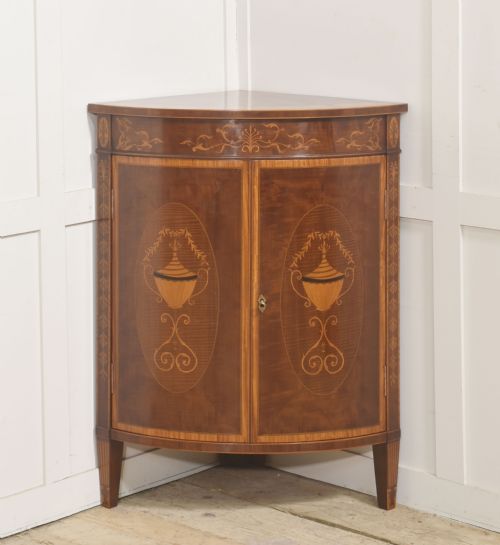
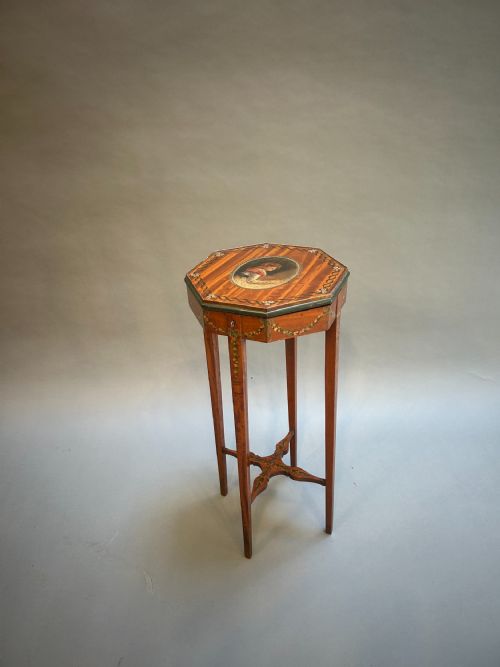
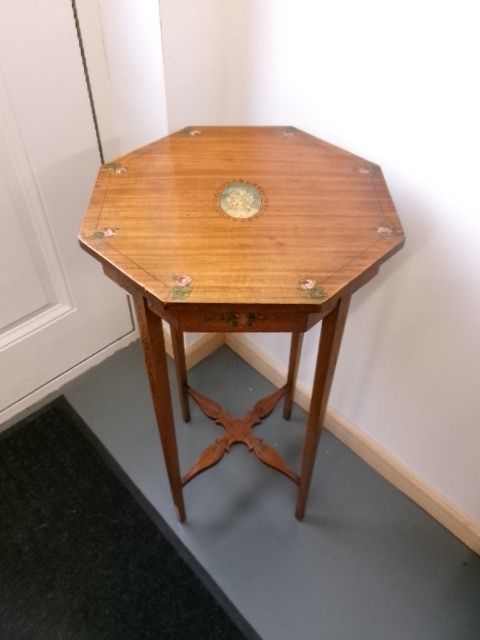


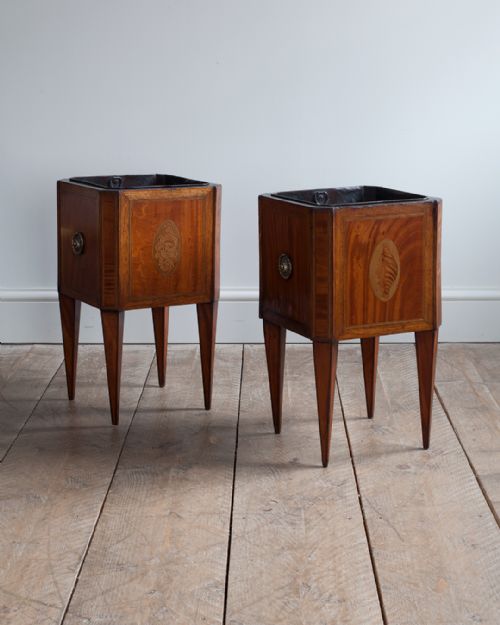

Satinwood Urn Stand
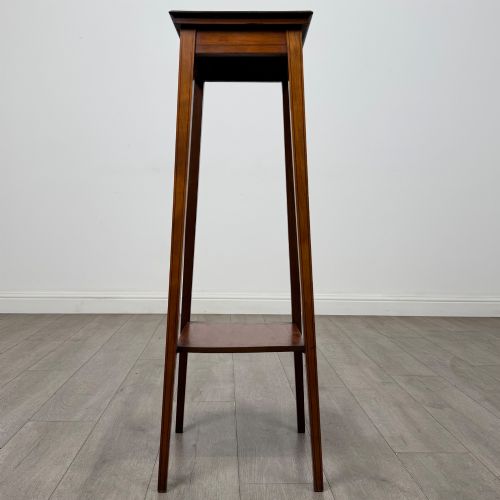
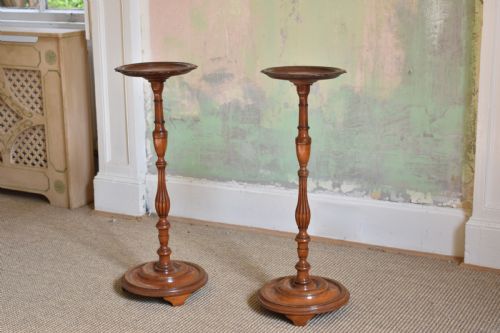
A satinwood urn stand is a slender occasional piece built to elevate decorative vessels, and the examples here are predominantly Edwardian and Georgian.
Satinwood Urn Stand
A satinwood urn stand functions as a slender support for ornamental urns, jars and plants within formal reception rooms. These pieces appear primarily in Edwardian interpretations and George III originals, frequently taking compact forms suited to corners and perimeters.
The evidence shows forms ranging from dedicated kettle stands and candle stands to occasional tables and plant stands. On this page, the Edwardian Sheraton Revival and the Georgian period dominate the selection, often featuring circular or oval tops.
How they were made
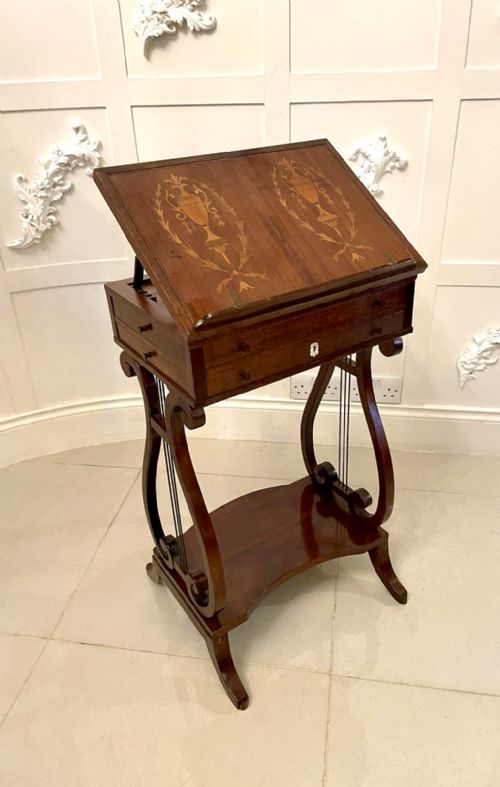
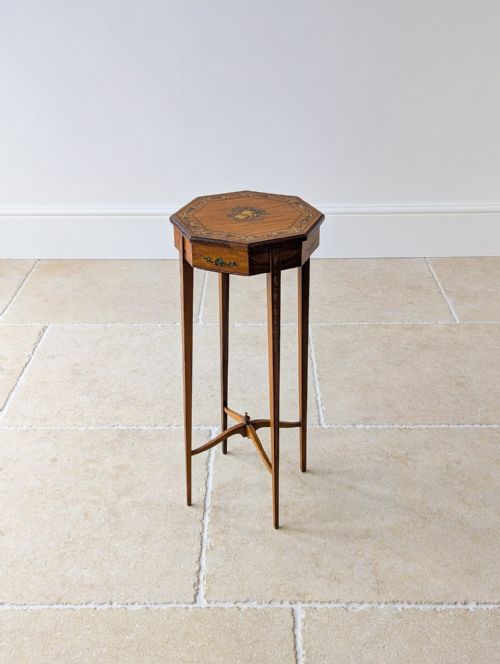
Cabinetmakers utilised satinwood veneer and solid timber foundations, often combining mahogany and rosewood with contrasting boxwood stringing. Surfaces frequently display hand-painted neoclassical motifs or delicate marquetry inlay.
Structural stability relied on slender tapering legs, sometimes joined by low stretchers. Brass mounts and painted timber details occasionally supplement the woodwork to accentuate the classical silhouette.
Listings feature Edwardian, Georgian, and Victorian periods alongside materials such as satinwood, mahogany, rosewood, and paint.
What varies in quality
The distinction between standard production and the finest work lies in the crispness of the inlay and the depth of the timber figuring. Superior pieces demonstrate precise boxwood stringing and controlled proportions rather than heavy ornamentation.
Hand-painted decoration ranges from simple linear borders to elaborate classical figures executed with fine brushwork. The integration of secondary timbers and the integrity of the satinwood veneer further separate workshop tiers.
The Satinwood Urn Stand Glossary
- Satinwood
- A lustrous timber with a golden sheen, highly prized for fine cabinetmaking during the eighteenth and early twentieth centuries. It accepts veneer well and provides a bright canvas for inlay.
- Stringing
- Thin lines of contrasting wood inlaid into channels in the primary timber to outline panels and edges. Boxwood is frequently utilised for this purpose.
- Marquetry
- The art of forming decorative patterns using fitted pieces of wood veneer of different colours and grains. It differs from inlay by assembling the entire design before gluing it to the carcase.
- Urn stand
- A small, tall table designed specifically to hold a heated water urn or decorative vessel. These pieces typically feature raised edges or galleries to secure the base.
- Sheraton Revival
- A late nineteenth and early twentieth century design movement that reinterpreted the light, neoclassical furniture forms associated with Thomas Sheraton. It relies heavily on painted decoration and satinwood veneers.
Satinwood Urn Stand: Frequently Asked Questions
What is a satinwood urn stand used for?
These pieces were originally designed to hold heavy silver urns used for tea service in grand dining rooms. Today, they serve as elegant pedestals for plants, lamps or decorative ceramics.
Their narrow footprint allows them to occupy awkward corners and narrow hallways without cluttering the floor space.
How do I date an antique urn stand?
Dating relies on examining the construction methods, secondary timbers and decorative vocabulary. Georgian pieces exhibit hand-cut joinery and authentic period patination, while Edwardian revivals often show machine-cut precision beneath the veneer.
Stylistic cues such as painted neoclassical medallions or heavy boxwood stringing also point toward specific manufacturing decades.
Where should I place an urn stand in my home?
An urn stand fits well in drawing rooms, hallways or beside seating where a small surface is required for a lamp or decorative object. Because the timber can be sensitive to direct sunlight and moisture, placement away from radiators and windows is advisable.
Their decorative legs and painted tops make them suitable as focal points rather than heavy utility tables.
How do I care for satinwood surfaces?
Maintenance requires regular dusting with a soft, dry cloth and the occasional application of traditional beeswax to nourish the timber. Avoid using modern aerosol polishes or placing damp items directly on the polished surface.
Keeping the piece away from extreme temperature fluctuations prevents the satinwood veneer from lifting.