




Satinwood Tea Chest
These satinwood tea chests are refined timber boxes made to store valuable tea leaves safely under lock and key.
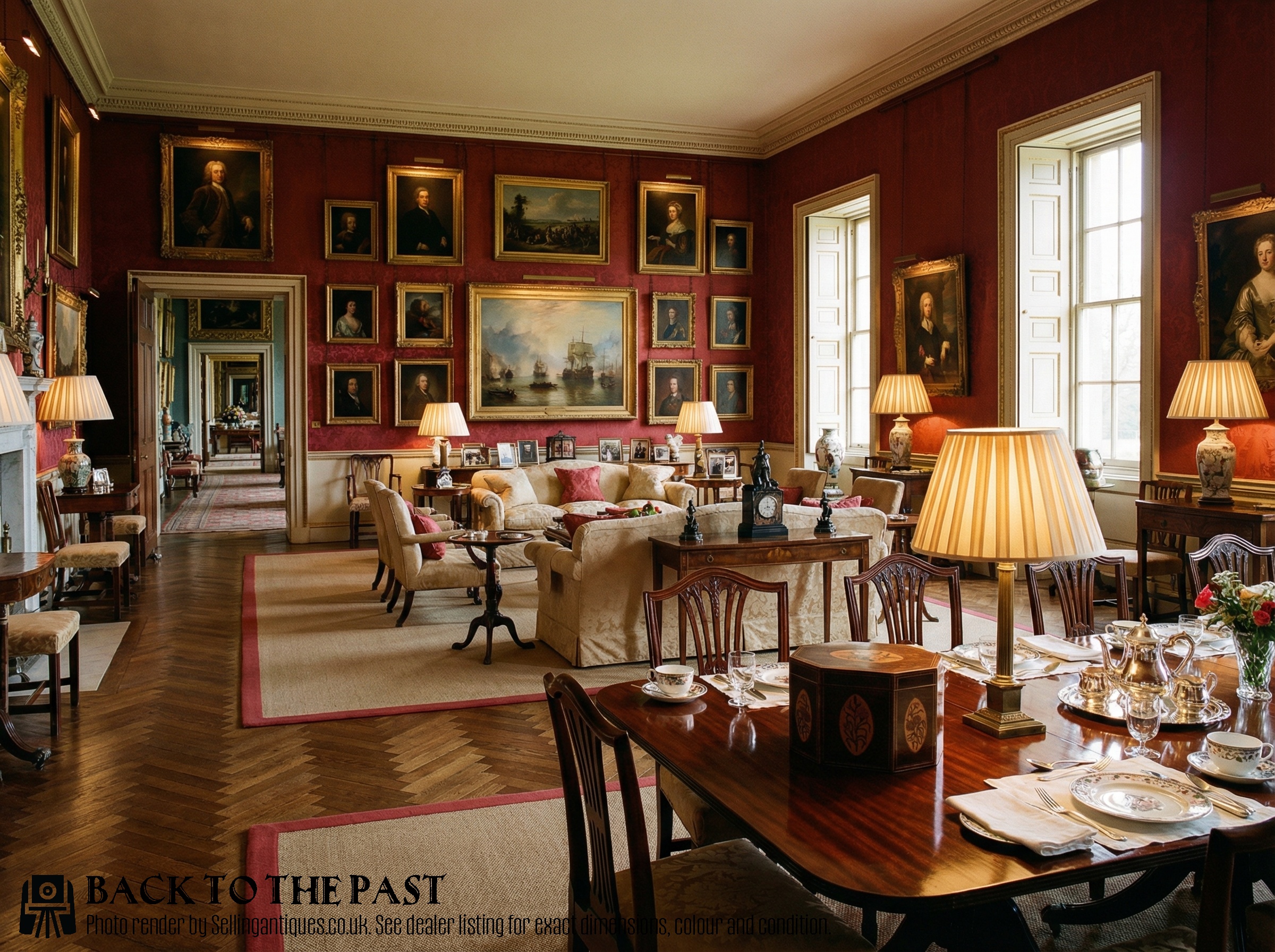
Satinwood Tea Chest
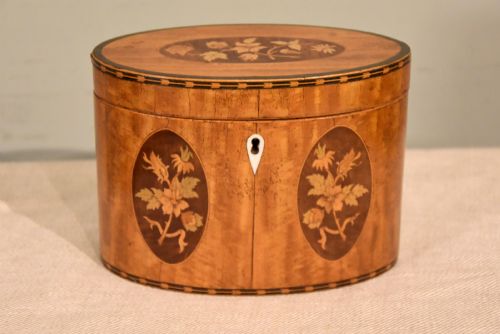
A satinwood tea chest is a specialised storage box designed during the Georgian and Regency periods to preserve precious dry leaves. These boxes typically appear in oval, octagonal, hexagonal, or sarcophagus forms with hinged lids and secure internal compartments.
Most examples found here date from the eighteenth and nineteenth centuries, often associated with the George III and Regency eras. Makers utilised dense exotic timbers to construct decorative boxes that sat prominently on parlour tables.
How they were made
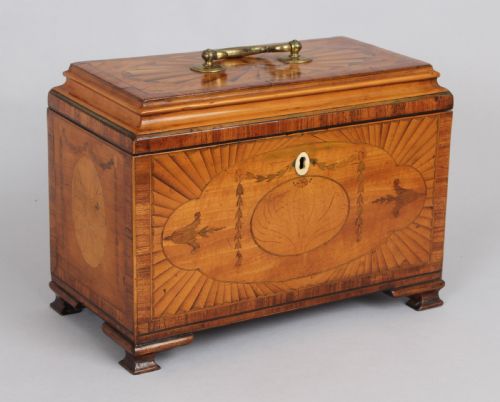
Craftsmen built these pieces using a foundation of solid timber or pine carcass veneered with figured satinwood, harewood, and mahogany. Surfaces frequently incorporate contrasting stringing, brass fittings, and delicate shell or butterfly inlays in boxwood and ebony.
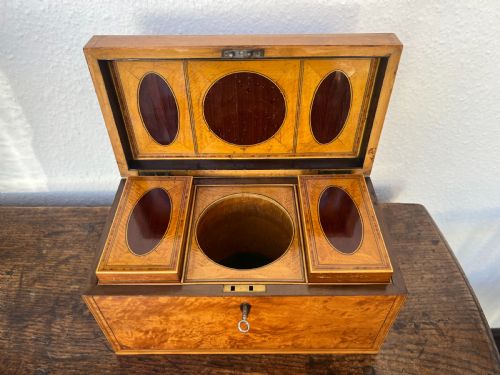
Interior layouts often feature lidded canisters and glass mixing bowls nestled within fitted wooden compartments. Advanced examples employ parquetry and intricate marquetry panels to create geometric and pictorial decoration.
Current listings feature eighteenth-century and nineteenth-century examples incorporating satinwood, harewood, mahogany, and rosewood.
What varies in quality
Quality rests primarily in the choice of timber veneer and the precision of the marquetry work. Highly figured grain patterns combined with elaborate shell motifs and intact original hardware distinguish superior examples from plain utility boxes.
The preservation of original interior elements, such as glass mixing bowls and mixing sticks, influences the integrity of a piece. Finer specimens display seamless veneer alignment across complex curved surfaces like oval or octagonal walls.
The Satinwood Tea Chest Glossary
- Satinwood
- A hard, yellowish exotic timber valued for its lustrous, reflective grain. It serves as the primary veneer surface on many eighteenth-century boxes.
- Tea caddy
- A vessel or box intended for storing loose tea leaves. The word derives from catty, the Chinese unit of weight.
- Marquetry
- Decorative veneer work forming pictorial or geometric patterns using various coloured woods. Artisans inlay these pieces into the primary carcase.
- Sarcophagus form
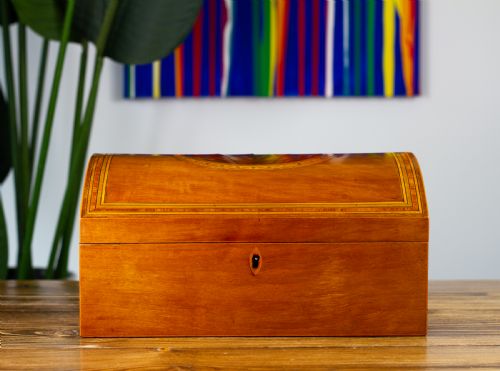
- A box shape featuring a domed lid and tapered body reminiscent of ancient stone coffins. This style gained popularity during the Regency period.
- Harewood
- Sycamore wood stained grey using chemical processes to imitate a lighter exotic timber. It frequently appears alongside satinwood in inlaid panels.
Satinwood Tea Chest: Frequently Asked Questions
What are satinwood tea chests?
These decorative wooden containers were built during the Georgian and Regency periods to store expensive loose tea leaves under lock and key. Wealthy households kept them in formal reception rooms as symbols of status.
Craftsmen constructed them using figured satinwood veneer, often embellished with contrasting stringing, shell inlays, and brass hardware to complement refined interiors.
How do I date a tea caddy?
Dating relies on observing structural forms, such as the shift from eighteenth-century oval and octagonal shapes to nineteenth-century sarcophagus silhouettes. Cabinetmakers also utilised specific decorative motifs like Neoclassical butterfly inlays during the George III era.
Examining internal construction methods and secondary timbers provides further clues to a box's age and origin.
What were the glass bowls for?
The glass vessels found inside many tea chests served as mixing bowls for blending different varieties of tea leaves. Masters or guests would combine green and black teas to personal preference before brewing.
Some surviving boxes retain their original blown glass bowls and wooden mixing sticks, which add significantly to their completeness.
How do I care for satinwood?
Preserving these surfaces requires keeping them away from direct sunlight and maintaining stable indoor humidity to prevent veneer lifting. Regular dusting with a soft, dry cloth maintains the natural lustre of the polished wood without harsh chemical polishes.
Handling the boxes by their main bodies rather than fragile applied mouldings or brass feet protects the historic structure.