



Satinwood Table Mirror
A satinwood table mirror brings a pale, figured timber to the dressing surface, offering a bright surface reflection.
Satinwood Table Mirror
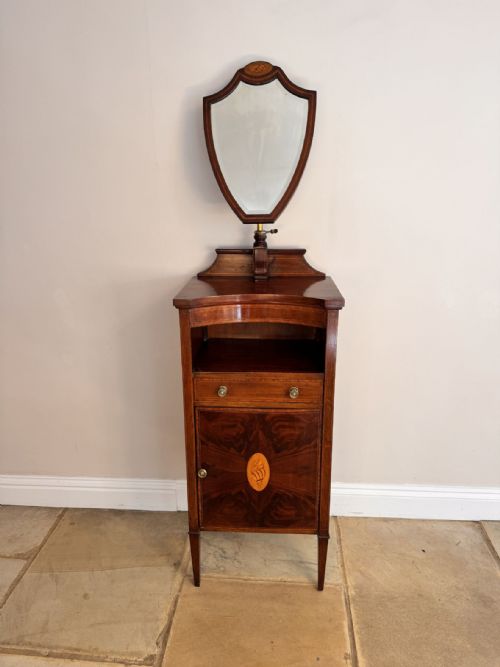
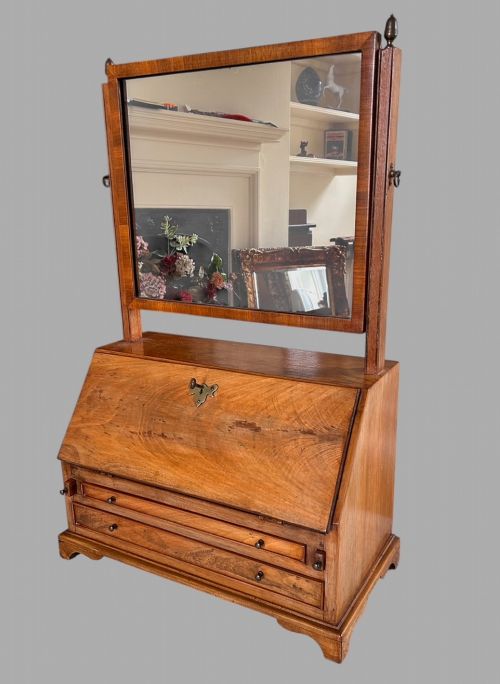
When you search for a satinwood table mirror, you encounter pieces designed to sit upon a chest or dressing surface, primarily dating from the Georgian, Victorian and Edwardian eras. These items frequently take the form of toilet mirrors with box bases containing small drawers, or swinging plates supported by upright arms.
The selection ranges from George III box base toilet mirrors to Edwardian Sheraton Revival examples, alongside larger dressing table mirrors with oval or rectangular glass plates. Alongside standalone toilet mirrors, the material appears on dressing tables and dressing chests featuring integrated mirror structures.
Originating largely from British workshops of the nineteenth and early twentieth centuries, these mirrors utilise pale exotic timbers complemented by contrasting stringing and marquetry details. They serve the practical function of a vanity glass while introducing warm golden tones to a bedroom or boudoir.
What varies in quality
The quality of a satinwood table mirror rests on the figuring and chatoyancy of the timber veneer, where deeply mottled or feathered grain commands greater visual presence than plain timber. Finely executed inlay work, such as delicate multi-wood floral marquetry and precise contrasting stringing, distinguishes superior cabinet work from simpler production.
Structural integrity and proportion also separate examples, seen in the balance between the swing frame and the supporting box base, as well as the retention of original brass hardware and glass plates. Finer pieces demonstrate crisp joinery in the miniature drawers and graceful curvature in the scroll supports rather than heavy, unrefined proportions.
Satinwood Table Mirror Retail Price Guide 2026
Typical asking prices for satinwood table mirror among the pieces listed under this phrase on Sellingantiques today, from the lower quarter to the upper quarter. They describe what is for sale here now, not the wider market.
Listings feature satinwood table mirrors spanning the Georgian, Victorian, and Edwardian periods, frequently paired with mahogany and walnut.
Waring and Gillows·Harry and Lou Epstein·John Taylor of Edinburgh·Gillows·Donald Ross
The Satinwood Table Mirror Glossary
- Box base
- A miniature chest of drawers or plinth upon which the mirror frame pivots, often featuring small accessory drawers.
- Stringing
- Thin inlay lines of a contrasting wood, such as ebony or boxwood, used to edge panels and frame drawers on satinwood furniture.
- Marquetry
- Elaborate veneer patterns forming pictorial or decorative designs, frequently incorporating various exotic woods on the face of the mirror base.
- Toilet mirror
- A traditional term for a small tabletop mirror designed for grooming and dressing, popular throughout the Georgian and Victorian periods.
- Sheraton Revival
- A late nineteenth and early twentieth-century style drawing inspiration from eighteenth-century neoclassical designs, characterised by light satinwood and painted ornamentation.
Satinwood Table Mirror: Frequently Asked Questions
How do I date a satinwood mirror?
Dating relies upon construction methods, timber choice, and prevailing stylistic influences. Georgian and Regency pieces tend to feature simple box bases with ogee bracket feet and fine mahogany secondary woods.
Later Victorian and Edwardian examples often display brighter satinwood veneers, Sheraton Revival painted details, or brass fittings characteristic of the turn of the twentieth century.
Are the mirror plates original?
Many mirrors retain their original glass, which can exhibit light foxing, minor silvering loss, or subtle distortions indicative of age. Replacement glass is sometimes fitted during restoration to improve the reflective quality.
Examining the backboards and the fit within the rebate helps determine whether the glass has been changed over time.
Where should I place a table mirror?
These mirrors suit placement atop a dressing chest, console table, or desk to provide a functional surface for personal grooming. Their compact proportions allow them to sit securely on sturdy furniture without requiring floor space.
Positioning them near natural light sources enhances both the reflection and the golden tones of the satinwood timber.
What is satinwood timber?
Satinwood refers to hard, durable timbers known for their lustrous, light yellow or golden appearance and chatoyant grain. It was highly favoured by cabinet makers for high-end neoclassical and revival furniture.
Because of its distinct sheen, small amounts of veneer created strong visual contrast when combined with darker woods like mahogany or ebony.