




Satinwood Study Furniture
Satinwood study furniture brings light, figured timber and refined form into a working space, offering a distinctive alternative to darker Victorian timbers.
Satinwood Study Furniture
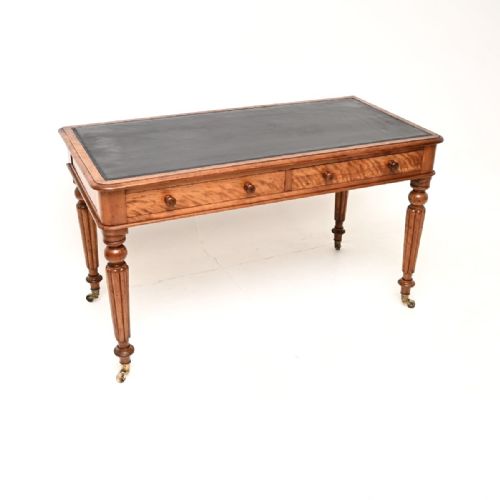
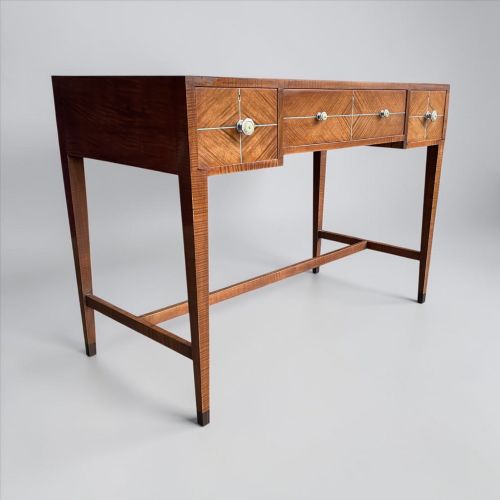
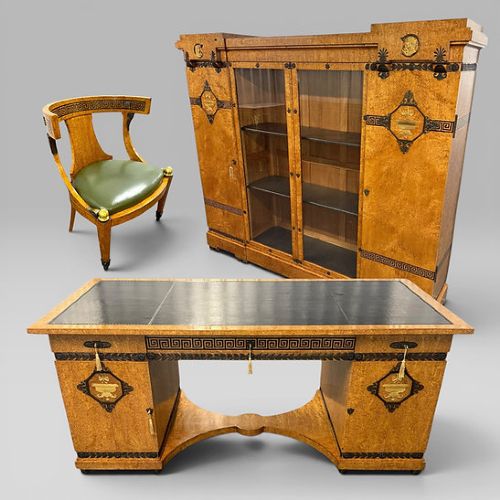
Satinwood study furniture encompasses writing desks, tables, and complete office sets designed for domestic libraries and studies. The pieces range from compact ladies' writing tables to substantial pedestal desks and Carlton House forms.
Edwardian interpretations and Victorian examples dominate the selection, often incorporating intricate marquetry or contrasting crossbanding. Makers such as Maple and Co. and J Shoolbred frequently applied satinwood veneer over firmer structural timbers.
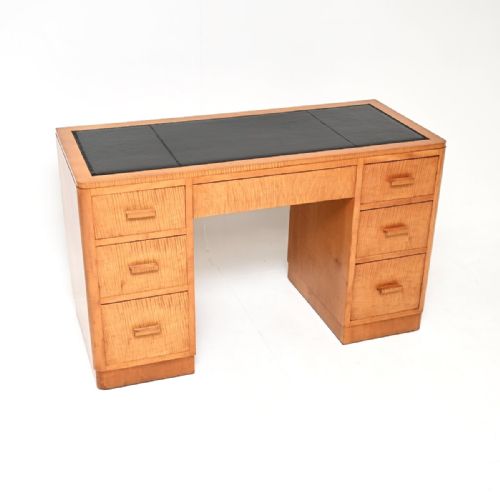
Forms span from simple kneehole configurations to elaborate cylinder bookcases and kidney-shaped writing desks. The overarching aesthetic prioritises delicate proportions alongside practical drawers and writing surfaces.
Materials and construction
Craftsmen built these pieces using solid and veneered satinwood, frequently paired with mahogany, satin birch, or walnut for structural support. Brass hardware, leather writing inserts, and intricate satinwood inlay complete the decorative scheme.
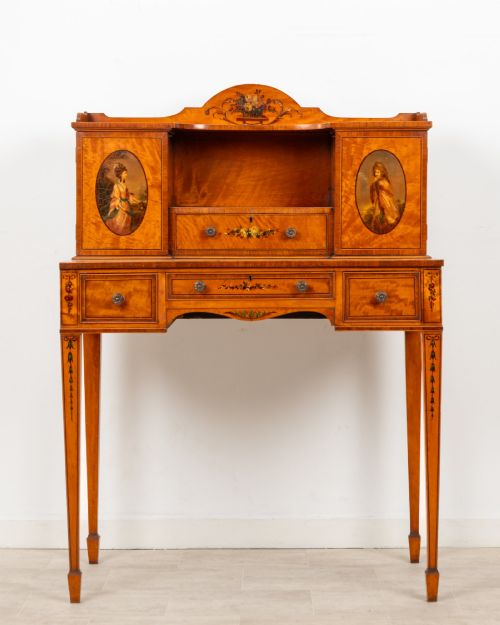
Cabinet makers utilised marquetry techniques to create floral or geometric motifs across writing surfaces and drawer fronts. Hand-painting and parquetry further decorated pieces produced during the Edwardian era and the Aesthetic Movement.
Satinwood Study Furniture Retail Price Guide 2026
Typical asking prices for satinwood study furniture among the pieces listed under this phrase on Sellingantiques today, from the lower quarter to the upper quarter. They describe what is for sale here now, not the wider market.
Certain desks hide secret compartments behind miniature tambour doors, built for Victorians who preferred to keep their love letters entirely out of sight.
Quality factors in study pieces
The choice of timber figure largely dictates the distinction between standard and exceptional pieces, with highly chatoyant grain commanding greater attention. The precision of the inlay work and the retention of original hand-painted decoration also influence overall merit.
Structural integrity, including smooth drawer action and the preservation of original brass handles or leather inserts, distinguishes finer workshops. Pieces bearing authentic maker stamps or attributions to recognised cabinet makers carry particular significance.
Maple and Co·Bath Cabinet Makers·Mercier Frères·Donald Ross·J Shoolbred·Howard and Sons
The Satinwood Study Furniture Glossary
- Satinwood
- A lustrous, yellowish timber native to Ceylon and the West Indies, prized for its natural sheen and figured grain. It was widely utilised by cabinet makers for high-status veneer and stringing.
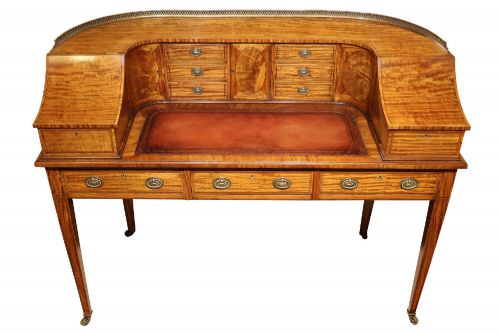
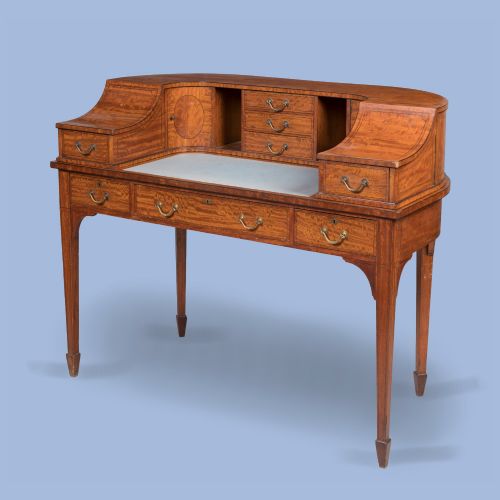
- Carlton House desk
- A form of writing desk featuring a curved superstructure of small drawers and pigeonholes enclosing the rear and sides of the writing surface. This layout originated in the late eighteenth century and remained popular through the Edwardian period.
- Parquetry
- A geometric mosaic of wood pieces used for decorative floors and furniture surfaces. It creates patterned wooden surfaces through contrasting timber tones.
- Kneehole desk
- A freestanding desk with a central recess for the sitter's legs, flanked by pedestals of drawers. This configuration provides functional workspace and storage within a compact footprint.
- Marquetry
- The art of applying pieces of veneer to a structure to form decorative designs and pictures. Artisans cut various woods to fit together precisely within the surface.
Satinwood Study Furniture: Frequently Asked Questions
What defines satinwood study furniture?
Satinwood study furniture comprises writing desks, tables, and office sets constructed primarily from or veneered in light, figured satinwood timber. These pieces typically date from the nineteenth and early twentieth centuries.
They reflect diverse stylistic influences, ranging from French Neoclassical and George III revivals to Edwardian marquetry and Aesthetic Movement designs.
How do I care for satinwood surfaces?
Maintain satinwood furniture by keeping it away from direct sunlight and excessive heat fluctuations to prevent the veneer from drying or cracking. Regular dusting with a soft, dry cloth preserves the natural lustre of the timber.
Avoid commercial silicone sprays or abrasive cleaners, applying a light microcrystalline wax occasionally if the wood requires nourishment.
Are these desks suitable for daily use?
Many satinwood desks remain fully functional for modern study and writing requirements, provided they receive careful handling. Leather writing surfaces offer a durable platform for paperwork.
Drawers and compartments accommodate contemporary stationery, though users should protect antique finishes from moisture and heavy impacts.
How do I identify an Edwardian piece?
Edwardian satinwood study furniture often displays lighter construction, refined stringing, and delicate hand-painted floral motifs. The period frequently reinterpreted eighteenth-century Sheraton and neoclassical styles with bright, clean finishes.
Examining internal drawer construction, secondary timbers, and hardware styles helps confirm the date of manufacture alongside any maker labels.