



Satinwood Storage Cupboard
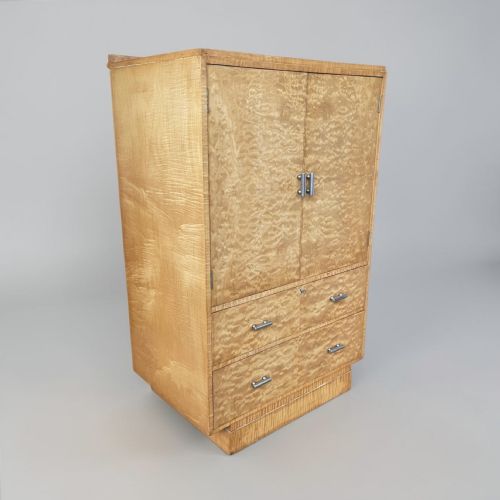
A satinwood storage cupboard brings together pale timber and disciplined geometry, offering a practical cabinet that holds linens or small items while brightening a room.
Satinwood Storage Cupboard
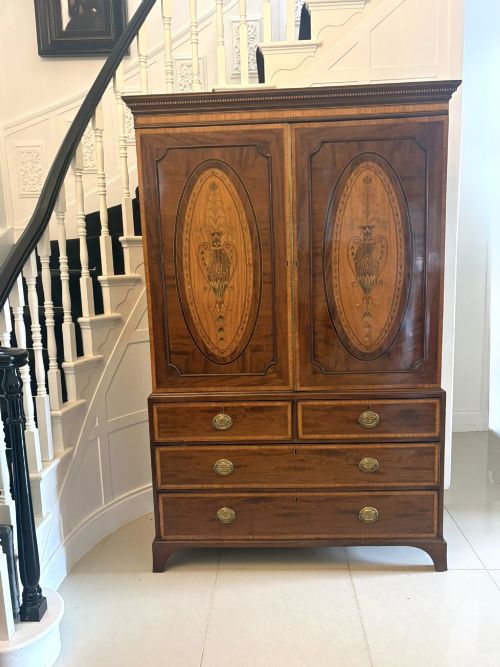
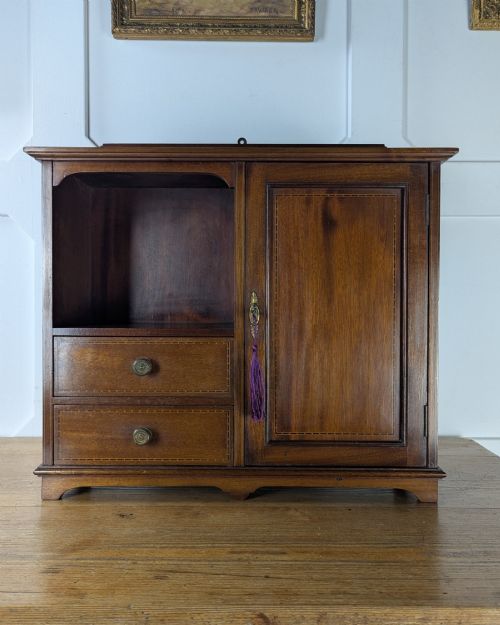
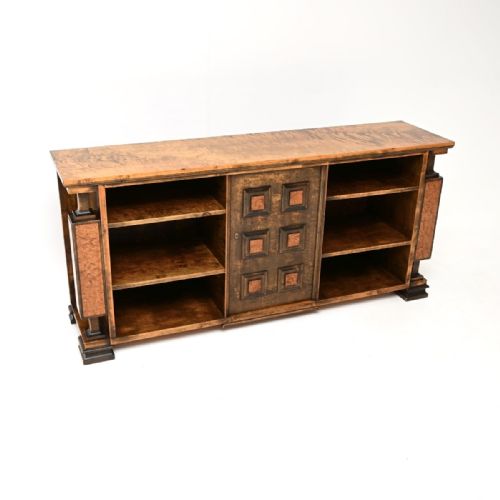
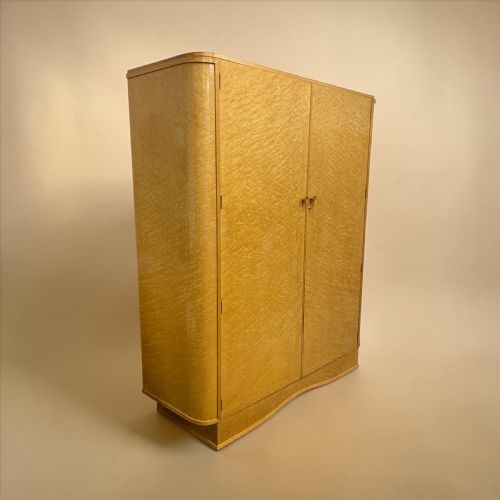
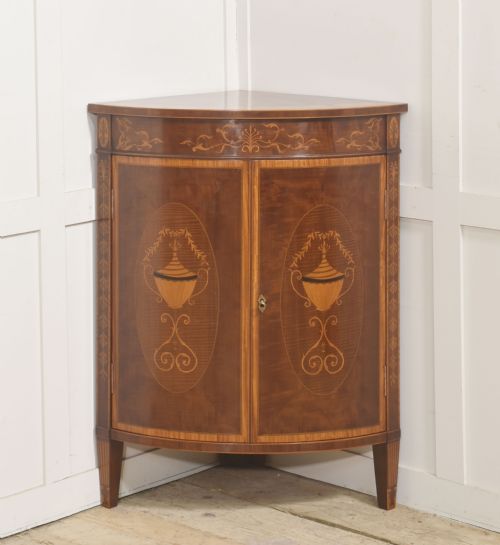
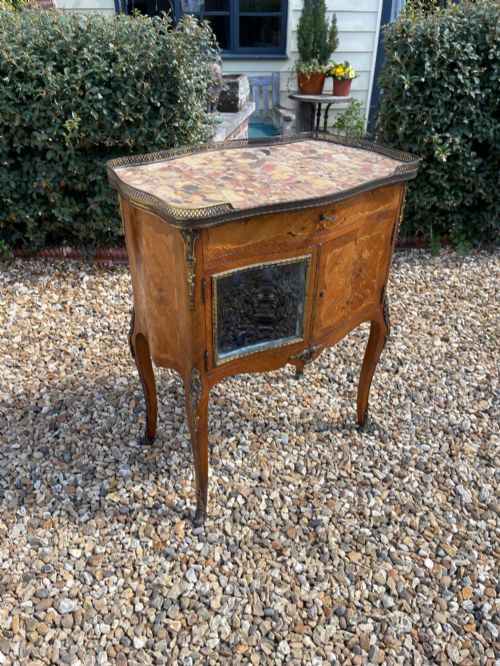
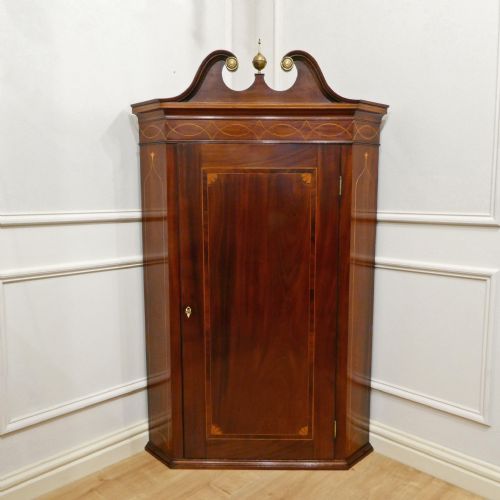
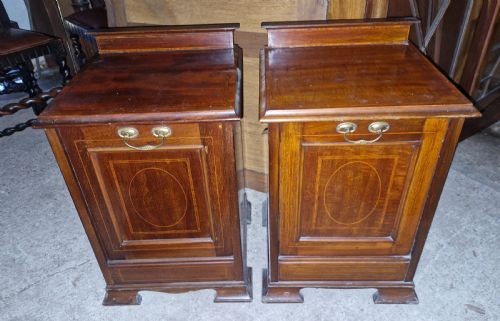
A satinwood storage cupboard encompasses everything from compact bedside cabinets and corner cupboards to larger linen presses and tallboys. The pieces span Georgian, Victorian, Edwardian, and Art Deco periods, drawing on origins from British workshops to Swedish makers.
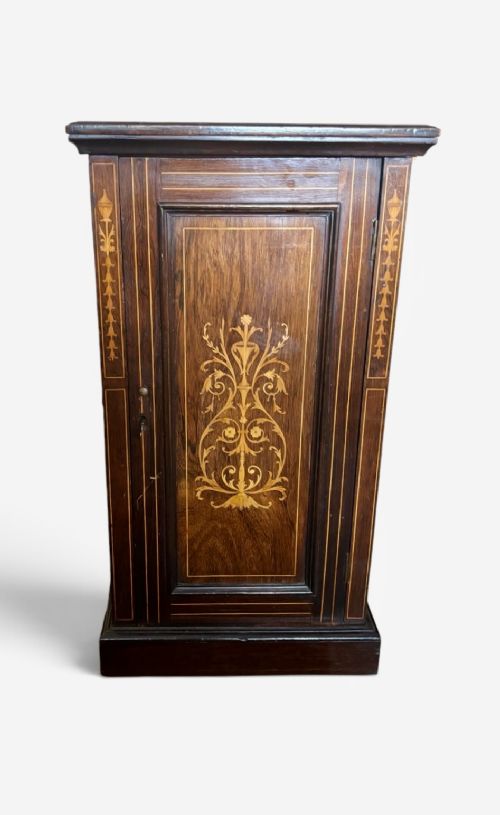
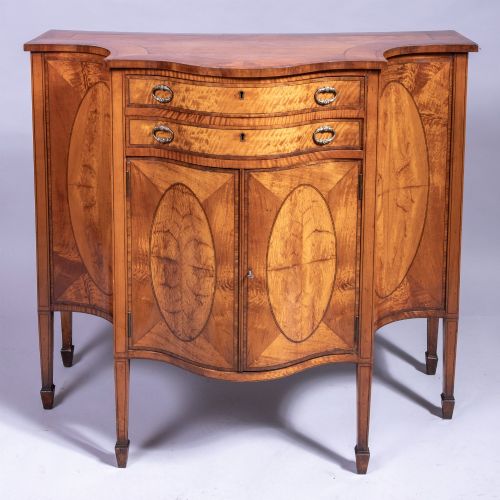
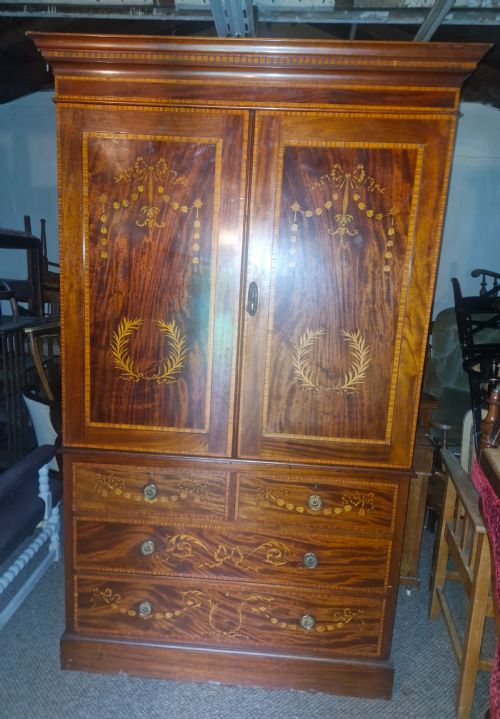
You are most likely to meet Edwardian and 1900s satinwood side cabinets or linen presses, often featuring mahogany or boxwood inlays alongside brass fittings. Corner cupboards and tallboys appear frequently, serving functional storage roles in bedrooms and living spaces.
How they were made
Cabinet makers utilised satinwood veneers and solid timbers, frequently combining the pale wood with mahogany, walnut, or satin birch for contrast. Inlays of boxwood and marquetry added linear detail to drawer fronts and door panels.
Construction methods relied on traditional joinery paired with brass hardware, marble tops, and fitted interiors designed for linen or personal storage.
The inventory records satinwood storage pieces spanning the Georgian, Victorian, Edwardian, and Art Deco eras, constructed from materials including brass, marble, walnut, and mahogany.
What varies in quality
Quality rests in the crispness of the inlay work, the figuration of the satinwood grain, and the integrity of the underlying mahogany or birch structure. Pieces exhibiting balanced proportions and finely preserved marquetry stand apart from simpler utilitarian builds.
The refinement of internal fittings, original brass mounts, and the precision of the joinery mark the division between standard workshop pieces and high-end cabinet work.
Druce and Co·Waring and Gillow
The Satinwood Storage Cupboard Glossary
- Satinwood
- A lustrous timber native to Ceylon and the West Indies, valued for its golden yellow sheen and smooth grain. It forms the primary decorative surface for many late eighteenth and nineteenth-century cabinets.
- Linen Press
- A tall piece of furniture designed with upper sliding trays or shelves for storing household linens, positioned above a chest of drawers. Georgian and Victorian examples often pair mahogany bodies with satinwood doors.
- Marquetry
- The art of applying decorative veneer pieces to a structure to form intricate pictorial or geometric designs. It frequently incorporates rosewood and boxwood alongside satinwood.
- Demi Lune
- A half-moon shape used for the footprint and top of specific side cabinets and commodes. This curved form allows the cabinet to sit flush against a wall while offering a softer profile.
Satinwood Storage Cupboard: Frequently Asked Questions
How do I date a satinwood cupboard?
Dating relies on combining the construction style, timber combinations, and decorative motifs present on the piece. Georgian and George III pieces display distinct classical proportions, whereas Edwardian and Art Deco examples shift toward lighter framing or geometric forms.
Examining internal drawer construction and timber choices helps confirm whether a cabinet belongs to the nineteenth century or later revival periods.
Where should I place a corner cupboard?
Corner cupboards suit awkward angles and empty room intersections, utilising vertical wall space without protruding into the main floor area. They function well in dining rooms or hallways to store tableware or small items.
Matching the wood tone to existing furniture helps the cabinet integrate naturally into the room layout.
How do I care for satinwood furniture?
Satinwood requires stable indoor humidity and protection from direct sunlight to prevent the pale timber from darkening or drying out. Gentle dusting with a dry cloth maintains the surface without stripping the polish.
Avoiding silicone polishes preserves the natural finish and grain definition of the veneer.