


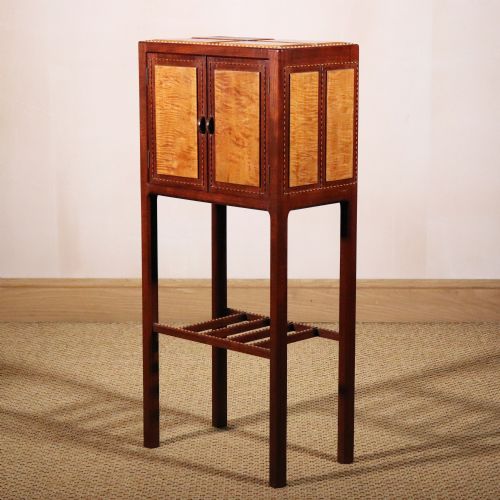


Satinwood Standing Shelves
Satinwood standing shelves are tiered display and storage furniture pieces designed to hold books and objects, prized for their luminous timber and elegant upright presence.
Satinwood Standing Shelves
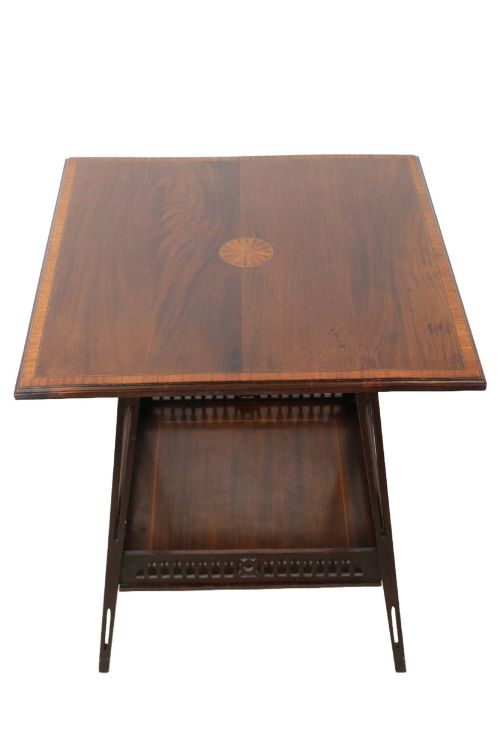
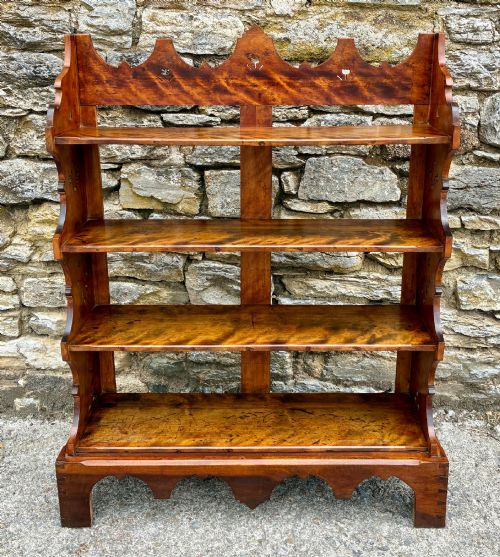
Satinwood standing shelves encompass vertical tiered furniture designed for books, display and storage across various historical periods. When searching for satinwood standing shelves, buyers encounter open bookcases, waterfall bookcases, revolving designs and freestanding etageres.
The pieces appearing on this page span the Victorian and Edwardian eras, alongside earlier Georgian examples and later twentieth century interpretations. Cabinets and bookcases form the core of the selection, often incorporating contrasting timbers and delicate inlay work.
Makers and workshops from the nineteenth and twentieth centuries produced these standing units using dense hardwoods and figured veneers. Buyers will find both compact occasional bookshelves and larger library pieces suited to domestic interiors.
What varies in quality
The calibre of timber preparation and veneer selection largely determines the distinction between standard items and exceptional examples. Richly figured satinwood matched with precise boxwood inlay denotes superior craftsmanship.
Structural refinement also separates pieces, visible in the handling of moulded cornices, internal shelving adjustments and the crispness of marquetry or painted decoration. The integration of high-grade brass fittings and solid secondary timbers indicates higher workshop standards.
Listings feature satinwood combined with mahogany, walnut, and boxwood across Victorian and Edwardian periods.
Trevor Page and Co·Gillows
The Satinwood Standing Shelves Glossary
- Satinwood
- A hard, durable tropical timber known for its yellowish-gold sheen and fine grain. It is frequently used as a veneer or for stringing on finer items of furniture.
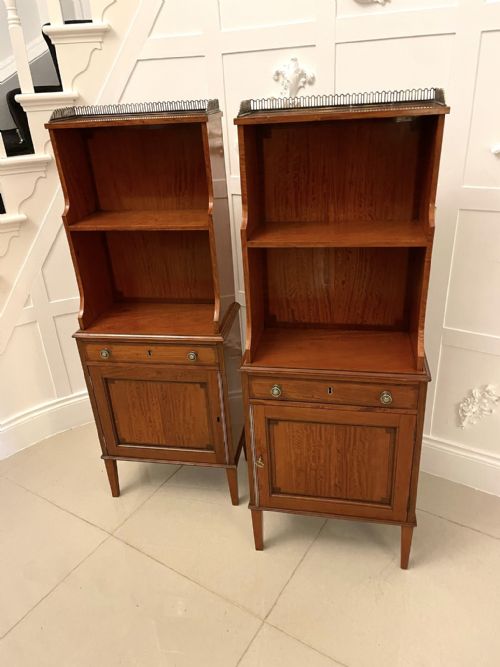
- Waterfall bookcase
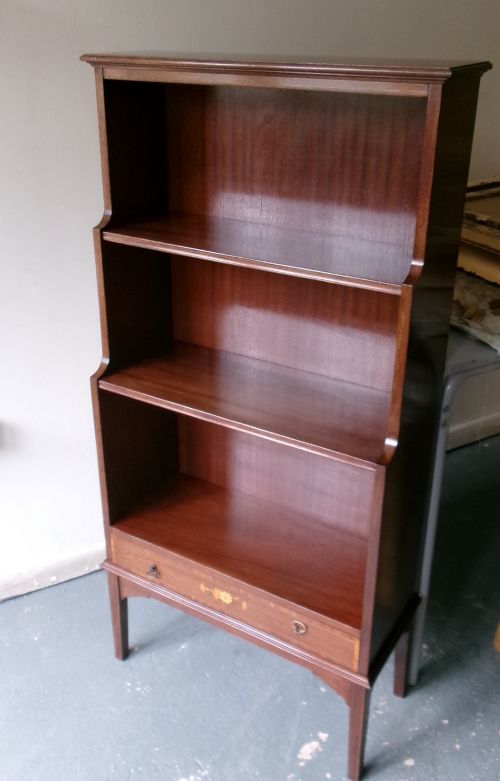
- A tiered freestanding bookcase featuring graduating shelves that step back from bottom to top. This form became popular during the nineteenth century for displaying books and decorative objects.
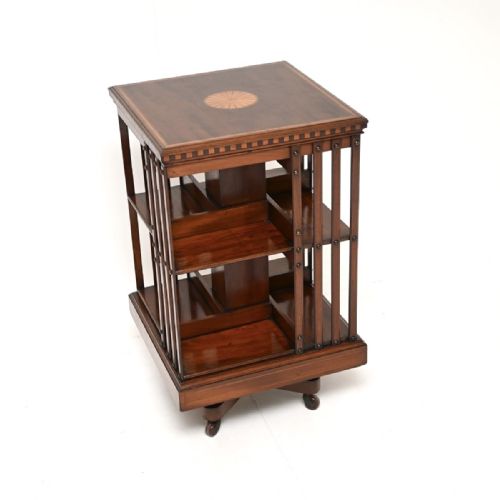
- Revolving bookcase
- A compact bookcase mounted on a hidden rotating base allowing access from all sides. These units often feature crossbanded tops and slatted sides.
- Marquetry
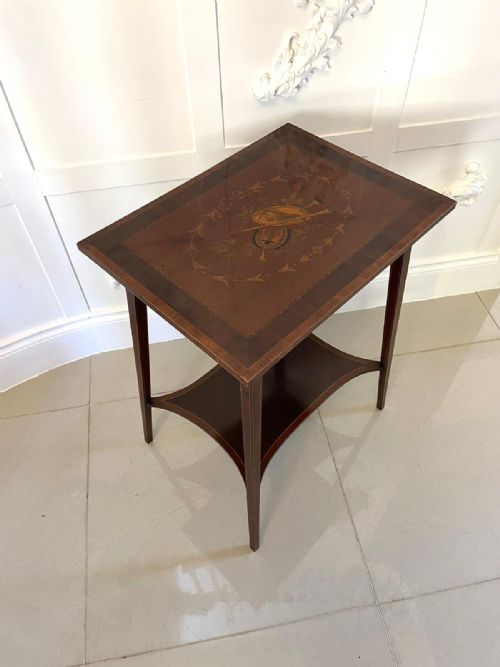
- Decorative veneer work forming pictures or geometric patterns using various coloured woods. Craftsmen assemble these patterns carefully before applying them to the furniture carcase.
- Sheraton Revival
- A late nineteenth and early twentieth century design style reviving the classical lightness and rectilinear forms associated with eighteenth century cabinetmaker Thomas Sheraton.
Satinwood Standing Shelves: Frequently Asked Questions
What are satinwood standing shelves used for?
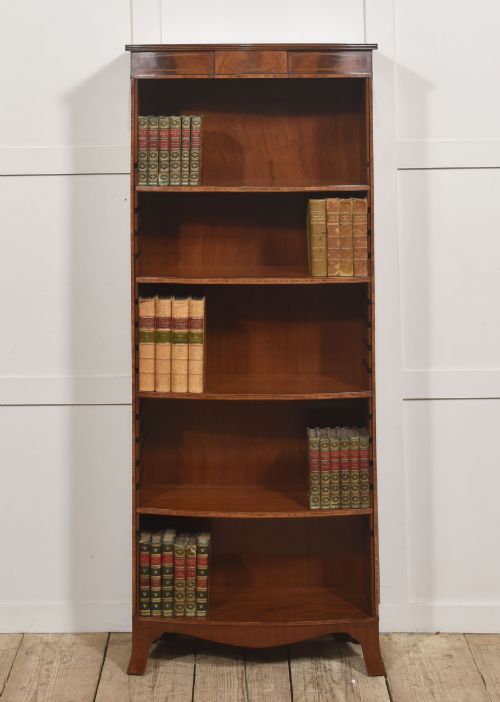
These pieces serve primarily for storing books and displaying ornamental objects within principal rooms or libraries. Their upright format makes efficient use of floor space while keeping volumes accessible.
They also function as decorative focal points, utilising the reflective quality of the timber to brighten darker corners of an interior.
How do I date a satinwood bookcase?
Dating relies upon observing the structural construction, secondary timbers used internally, and stylistic details such as inlay patterns or hardware. Victorian and Edwardian pieces exhibit distinct joinery methods compared to earlier Georgian examples.
Examining the backboards and drawer linings often reveals tool marks and wood choices characteristic of specific manufacturing periods.
How should I care for satinwood furniture?
Maintenance involves keeping the timber away from direct sunlight and maintaining stable room humidity to prevent veneer lifting. Dusting regularly with a soft, dry cloth preserves the polished surface.
Applying a specialist wax sparingly helps nourish the grain without building up heavy residues over time.
Are revolving bookcases sturdy enough for heavy books?
Revolving bookcases are engineered to distribute weight evenly over a central pivot mechanism designed for daily domestic use. Standard octagonal or square models hold moderate collections of books securely.
Spreading heavier volumes across the lower tiers ensures better balance during rotation.