
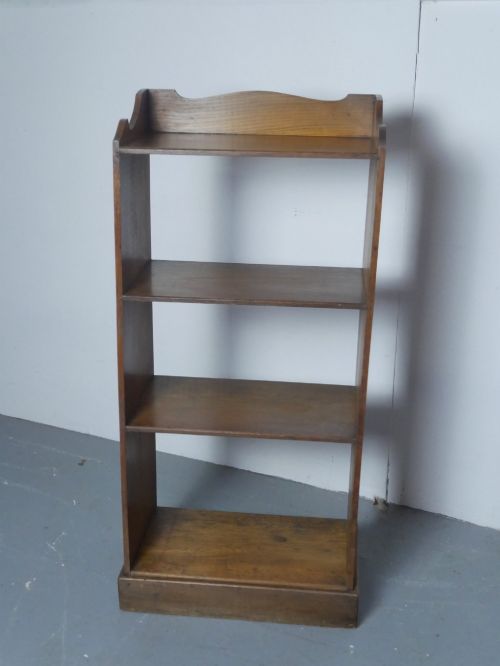
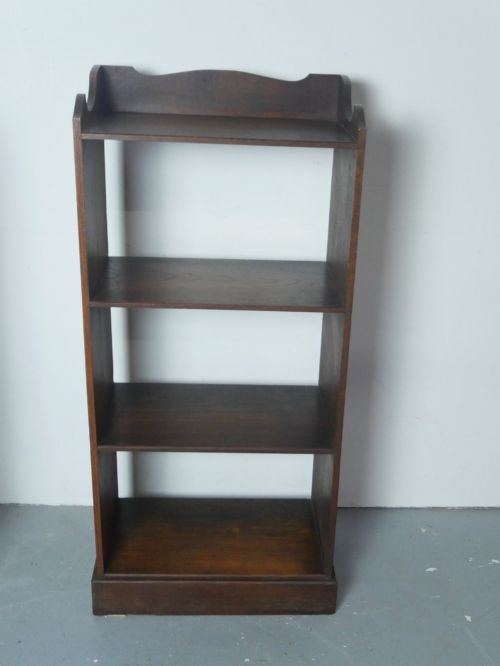
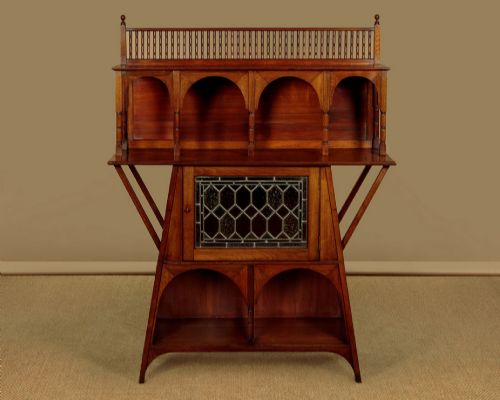
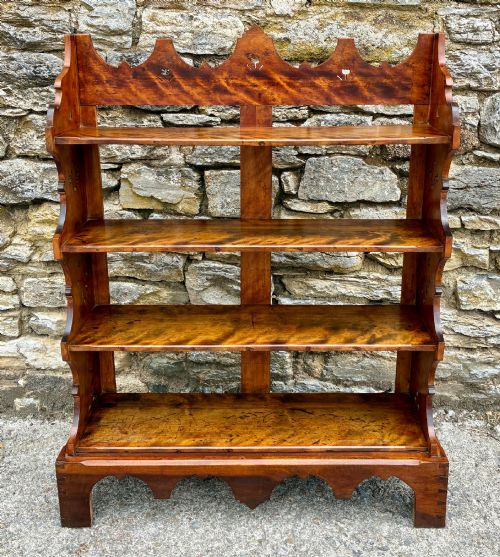
Arts Crafts Display Shelves
These arts crafts display shelves bring architectural timber and honest utility directly into a room, offering sturdy ledges for books and ornaments.
Arts Crafts Display Shelves
When you search for arts crafts display shelves, you encounter a selection spanning the late nineteenth and early twentieth centuries, drawing heavily upon Edwardian, Victorian Gothic Revival, and Aesthetic Movement influences.
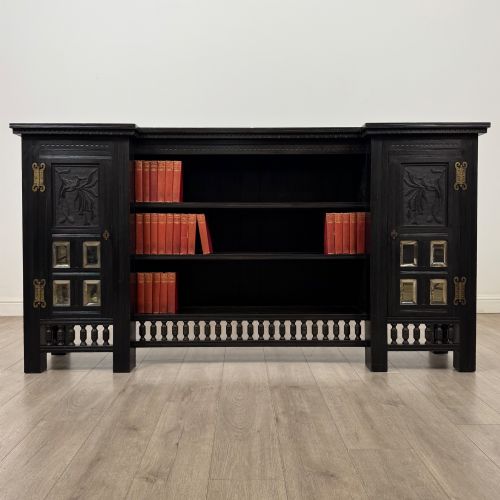
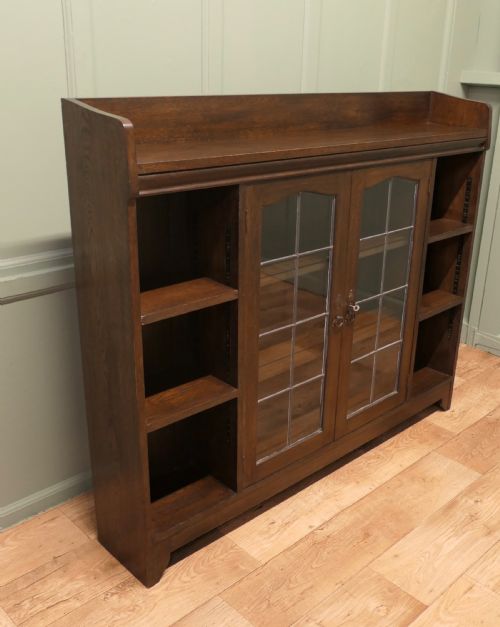
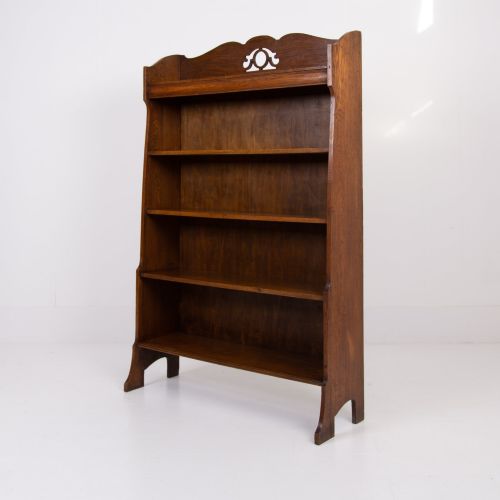
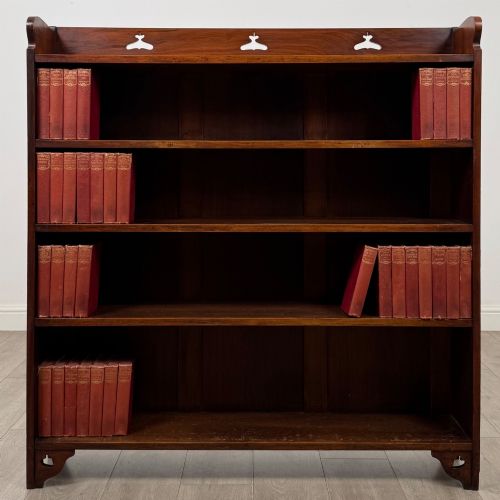
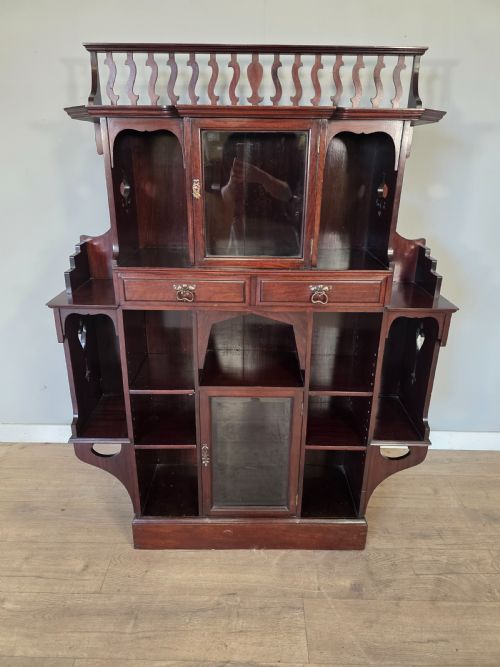
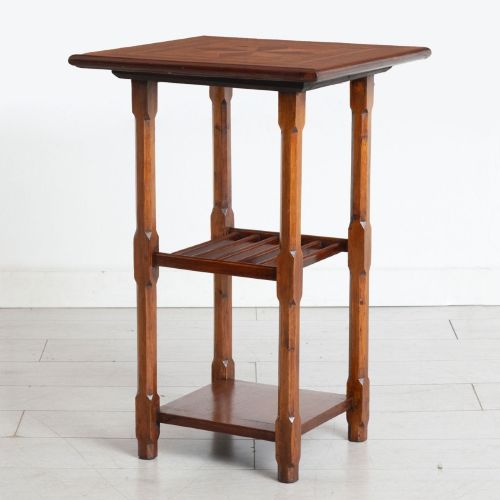
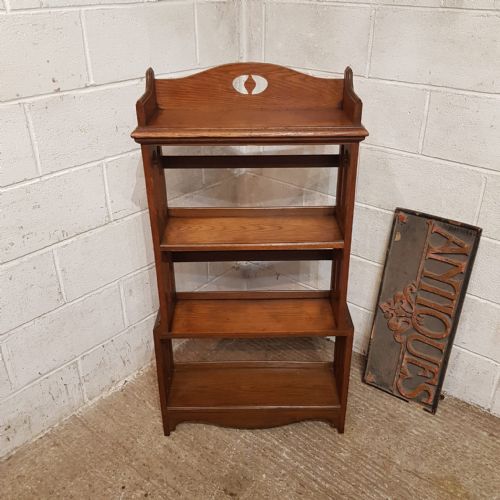
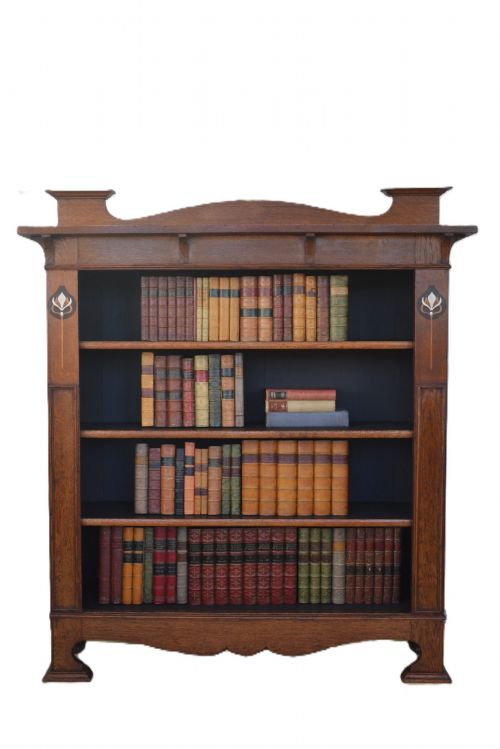
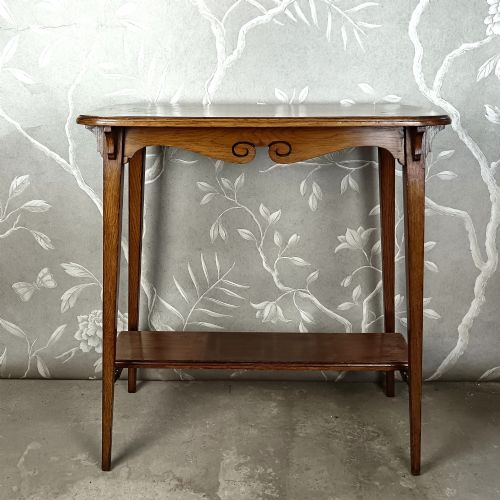
The pieces appearing here take the form of open bookcases, wall shelves, side tables, and standing cabinets, predominantly constructed in solid timber rather than veneered carcases.
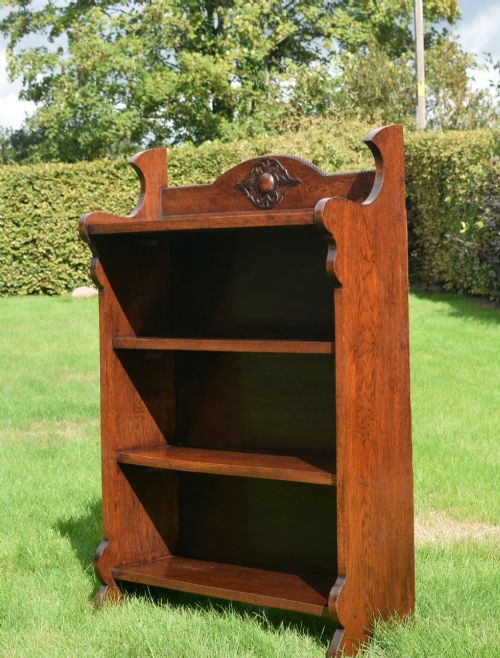
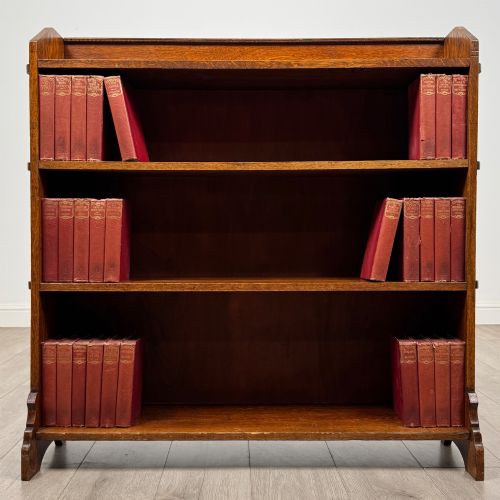
You are most likely to meet straightforward open oak bookcases and wall-mounted shelving units bearing the simple lines and functional proportions typical of the movement.
Materials and construction
Makers relied heavily upon oak, mahogany, and walnut, selecting timber for visible grain and structural integrity rather than masking surfaces with heavy finishes.
Construction details often included height-adjustable shelves, decorative cut-outs, and occasionally brass or copper hardware that provided subtle contrast to the wood.
Selected examples integrate inlay or painted surfaces, demonstrating how workshops balanced plain utilitarian forms with restrained decorative touches.
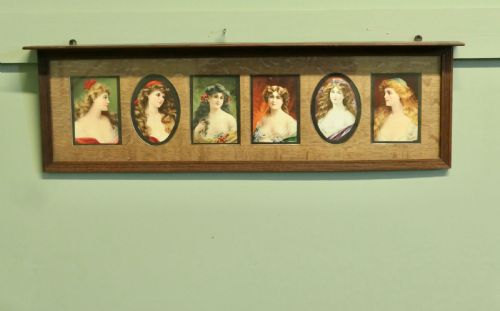
Several units quietly hide six pre-raphaelite portraits mounted directly into the woodwork.
Defining quality
The distinction between standard utility furniture and superior examples rests upon timber selection, proportion, and the crispness of any carved or cut-out detailing.
Better pieces display thoughtful grain matching and robust joinery that keeps open shelves rigid over decades of holding heavy volumes.
Superior items often bear the stamp or distinct design hand of a recognised maker or progressive workshop, elevating them beyond standard regional production.
Liberty & Co.·John Moyr Smith·Lambs of Manchester·Shapland & Petter
The Arts Crafts Display Shelves Glossary
- Arts & Crafts
- A design movement emphasising handcraftsmanship, plain surfaces, and vernacular forms over mass-produced ornamentation. It emerged in Britain during the late nineteenth century.
- Open Bookcase
- A shelving unit without doors, designed for accessible storage and display of books. These units rely on solid uprights and fixed or adjustable horizontal boards.
- Aesthetic Movement
- A late Victorian design current that championed art for art's sake, incorporating simplified lines and eclectic influences. It often intersected with early arts and crafts production.
- Cotswold School
- A twentieth-century regional offshoot of the arts and crafts movement focused on honest timber construction and traditional hand tools. Pieces from this tradition are typically solid and unpretentious.
Arts Crafts Display Shelves: Frequently Asked Questions
What defines arts and crafts shelves?
These pieces rely on visible timber grain, straightforward construction, and functional proportions rather than applied historical ornament.
They reject industrial artifice in favour of honest carpentry, often leaving structural joints and honest materials to speak for themselves.
How do I style open shelving?
Keep the focus on balanced arrangements of books, ceramics, and small objects that echo the simple lines of the furniture.
Allow negative space around items so the timber backing and side panels remain part of the visual composition.
Are these shelves adjustable?
Many surviving examples feature ingenious systems for altering shelf heights to accommodate different book sizes.
Look for traditional wooden tooth racks or discreet peg supports fitted inside the uprights.
How do I date an oak bookcase?
Examine the timber preparation, tool marks, and overall proportions to distinguish late Victorian work from Edwardian production.
Simpler cut-outs and lighter Golden Oak finishes often point towards the early twentieth century.