



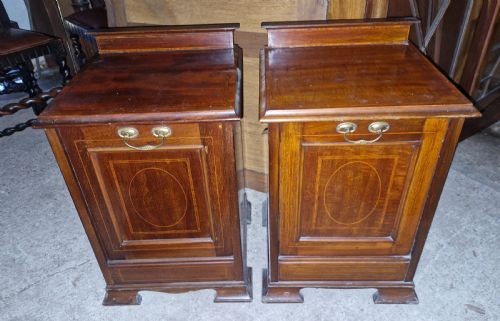


Satinwood Pedestal Cupboard
Satinwood pedestal cupboards bring a pale, reflective elegance to a room, offering compact bedside storage with figured timber surfaces.
Satinwood Pedestal Cupboard
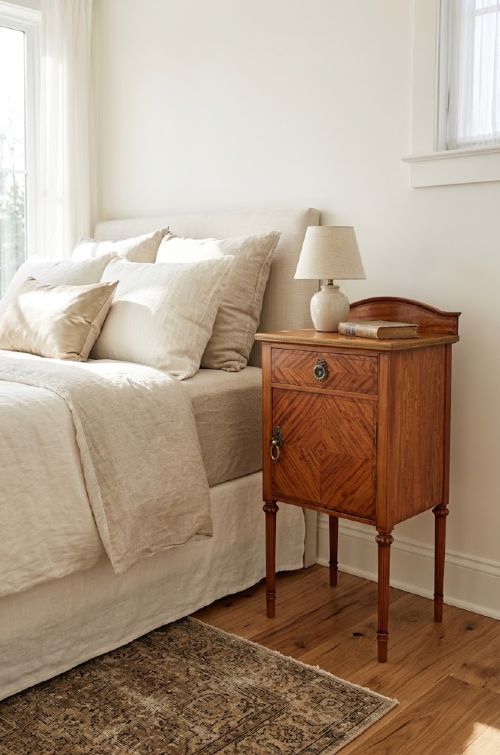
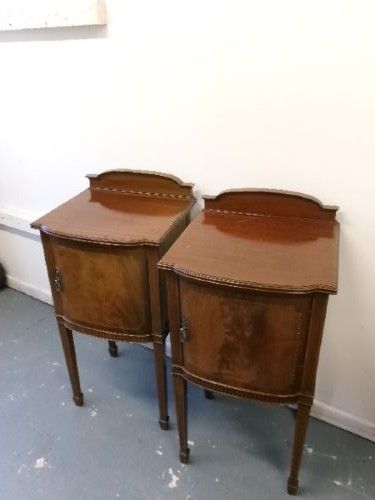
A satinwood pedestal cupboard serves primarily as a bedside cabinet or nightstand, offering enclosed storage with a vertical footprint. These pieces appear frequently from the Edwardian period and the late nineteenth century, often found as matched pairs alongside single examples.
Form variations range from bow-fronted side cabinets to low press cupboards, pot stands, and kneehole desks executed in the Sheraton Revival, Victorian, and Art Deco styles. The primary timber is combined with contrasting woods to create practical bedroom furniture of refined proportions.
Origins span English workshops of the Victorian and Edwardian eras, alongside pieces reflecting Anglo-Indian cabinet-making traditions and Neo-Classical revival influences. Buyers encounter these items functioning as bedside tables, night lockers, and compact side cabinets in period interiors.
Materials and construction
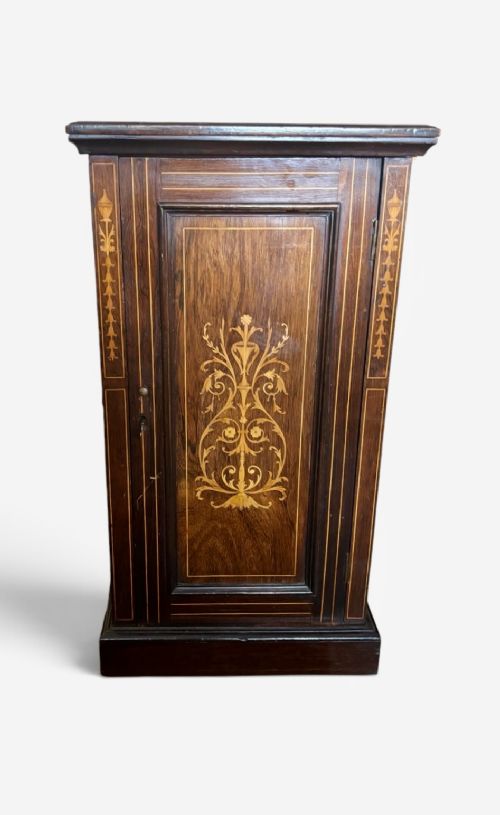
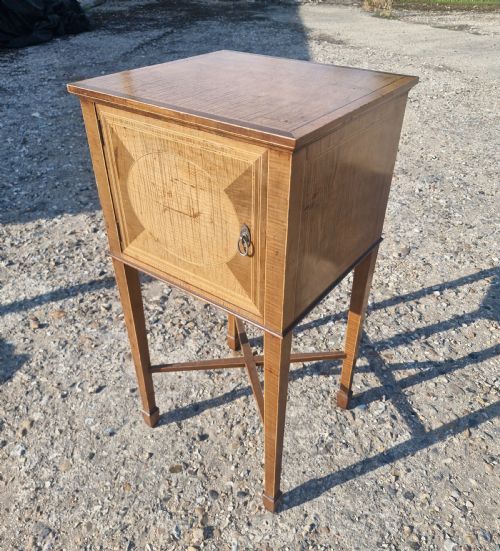
Makers utilised solid and veneered satinwood, complemented by secondary and contrasting timbers such as mahogany, rosewood, walnut, boxwood, and maple. Inlay work forms a central decorative technique, incorporating boxwood and darker woods to trace geometric lines and classical motifs across the drawer fronts and doors.
Brass fittings, including drop handles, key escutcheons, and hinges, provide functional contrast to the pale timber surfaces. Certain cabinets integrate inset marble tops, adding weight and a durable functional surface above the wooden pedestal body.
The inventory records regional cabinet-making styles, including Anglo-Indian production alongside English Sheraton Revival and Neo-Classical revival pieces.
Distinguishing quality
The degree of figuration in the satinwood veneer dictates the visual depth of the surface, ranging from straight grain to intensely mottled patterns that catch the light differently from various angles. Finer examples display meticulous matching of veneers across multiple drawers and door panels.
Precision in the marquetry and stringing separates standard production from superior cabinet-making, where contrasting inlay lines remain crisp and unbroken. Maker stamps from established firms like Morant and Co or Lamb of Manchester provide tangible evidence of workshop provenance.
Morant and Co·Maple and Co·Lamb of Manchester
The Satinwood Pedestal Cupboard Glossary
- Satinwood
- A dense, hard timber known for its lustrous, golden sheen and fine texture. It serves as the primary face veneer on high-status nineteenth and twentieth-century cabinet furniture.
- Marquetry
- The art of applying small pieces of veneer to a structure to form decorative patterns and pictorial designs. Cabinet-makers utilise contrasting woods like boxwood and rosewood to achieve this effect.
- Pedestal cabinet
- A freestanding piece of furniture built on a vertical column or enclosed base designed to hold objects on top and store items within. These serve predominantly as bedside cupboards in domestic settings.
- Sheraton Revival
- A late nineteenth and early twentieth-century design movement inspired by the neoclassical furniture of George III designer Thomas Sheraton. Pieces in this style often feature satinwood, delicate inlay, and tapered legs.
- Inlay
- A technique where timber or other materials are set into depressed sections of a base surface to create a flush decorative design. Boxwood stringing is a common form of inlay found on Edwardian cabinets.
Satinwood Pedestal Cupboard: Frequently Asked Questions
Are these cupboards sold in pairs?
Many listings feature matched pairs of bedside cabinets intended to flank a bed symmetrically. Single examples also appear frequently.
Buyers often select pairs to maintain balance in a bedroom scheme, though individual cabinets work well as isolated accent pieces.
What periods do these cabinets represent?
The pieces span the Victorian and Edwardian eras, extending into the nineteen-twenties and nineteen-thirties with Art Deco examples. Sheraton Revival styles also recur across the late nineteenth and early twentieth centuries.
Construction details and timber choices typically align with the prevailing aesthetic of each specific decade.
How do I maintain satinwood furniture?
Satinwood benefits from gentle dusting with a soft, dry cloth to protect the polished veneer surface. Avoid placing these cabinets in direct sunlight to preserve the pale golden tone of the timber.
Periodic application of appropriate wax maintains the lustre of the wood without building up a heavy residue.
What woods are used alongside satinwood?
Makers paired satinwood with mahogany, rosewood, walnut, and boxwood to create structural frames and contrasting decorative borders. Marble tops also appear on specific bedside chests.
These secondary materials provide structural stability and enhance the visual contrast of the inlay work.