
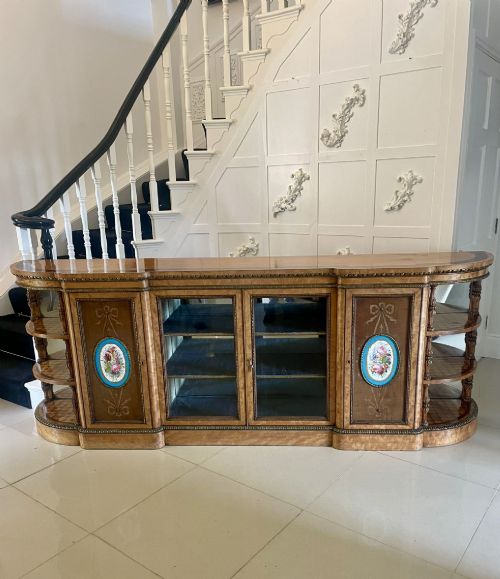
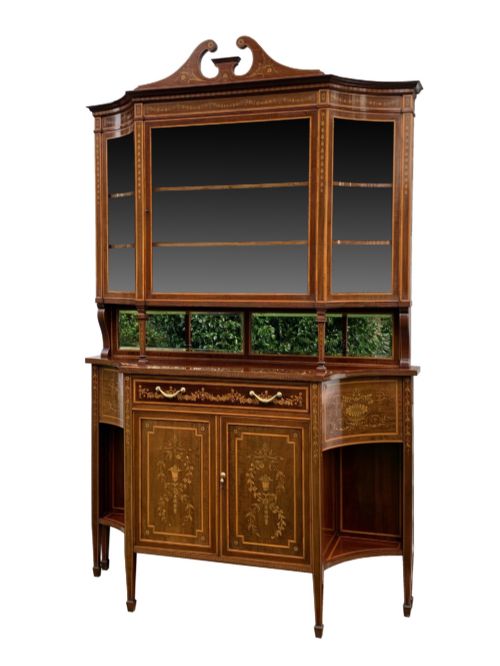
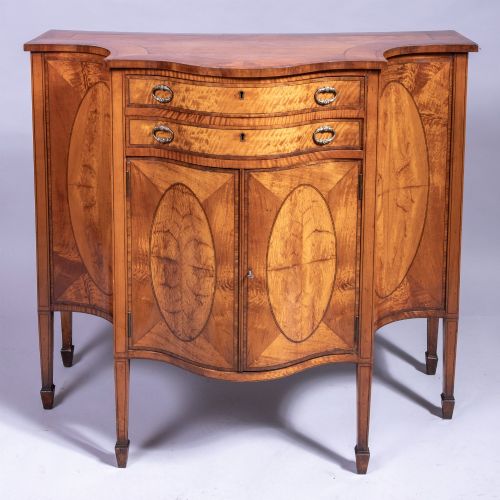
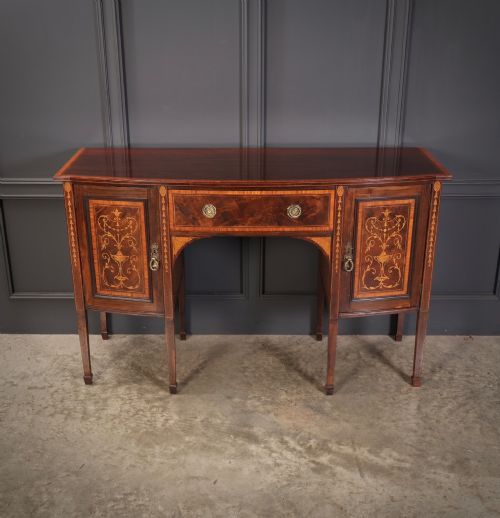






Satinwood Marquetry Sideboard
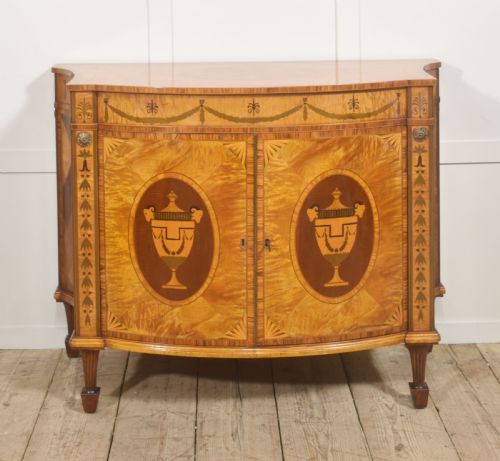
A satinwood marquetry sideboard brings warm timber tones and intricate floral or classical inlay into a room.
Satinwood Marquetry Sideboard
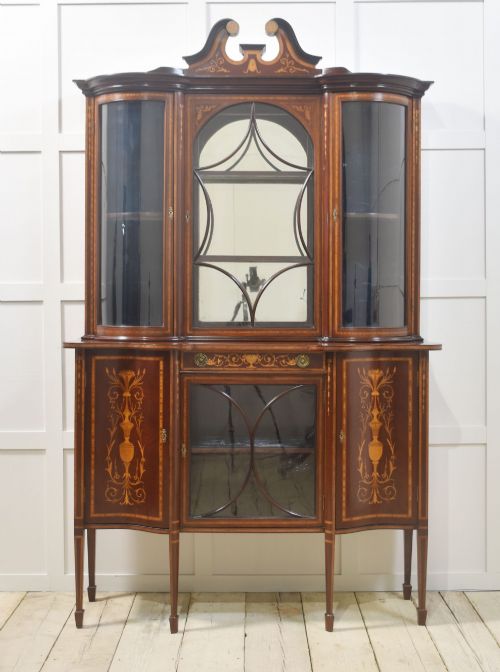
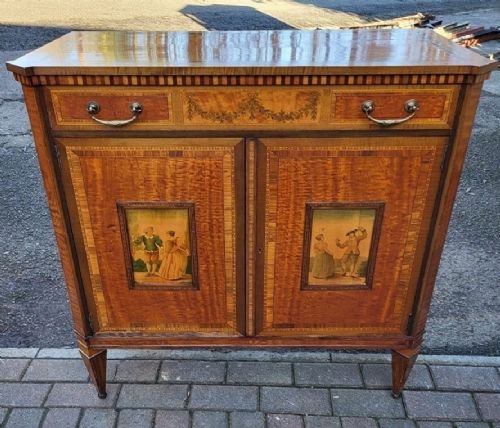
When you search for a satinwood marquetry sideboard, you encounter formal dining furniture designed for display and storage. The pieces listed span from the George III period through the Victorian and Edwardian eras, with a strong representation of Sheraton Revival designs. Most examples merge the light, blonde grain of satinwood with contrasting timber inlays to form classical motifs.
Forms extend beyond traditional sideboards to include side cabinets, display cabinets, credenzas, and commodes. You are likely to meet nineteenth-century interpretations that look back to eighteenth-century Neoclassical elegance. These items served as focal points in period dining rooms and drawing rooms, holding silver, glass, and linens.
Materials and Construction
Craftsmen built these cabinets using a carcase of mahogany, walnut, or pine, then veneered the visible surfaces with figured satinwood. They created pictorial designs through marquetry, inserting fine pieces of rosewood, boxwood, and other contrasting timbers into the ground veneer to form urns, swags, and ribbons.
Many examples incorporate cast or chased ormolu mounts, brass details, and glass panels to enhance the decorative scheme. Woods such as burr elm, burr yew, and maple appear alongside mahogany in revival pieces, reflecting the diverse timber supplies available to Victorian and Edwardian cabinetmakers.
Materials recorded on this page include satinwood, mahogany, burr walnut, ormolu, and rosewood.
Distinctions in Execution
The sophistication of the marquetry work dictates the standing of a piece, separating simple geometric stringing from elaborate pictorial compositions. Artisans who achieved subtle shading in their inlaid leaves and petals through hot sand scorching created far greater depth than those who cut flat, uniform shapes.
The choice of cabinetmaker and the selection of timber veneers further separate standard production from exceptional work. Dense, highly figured satinwood paired with robust secondary timbers and refined ormolu mounts denotes superior workshop output.
Edwards and Roberts·James Hicks·Maple and Co
The Satinwood Marquetry Sideboard Glossary
- Marquetry
- A decorative technique where small pieces of veneer are assembled to form pictorial patterns. This differs from inlay, which involves sinking designs into a solid wooden recess.
- Satinwood
- A lustrous, hard timber with a golden sheen, highly prized for fine cabinetmaking. It forms the pale background typical of late eighteenth-century and revival pieces.
- Ormolu
- Gilded bronze used for mounts, feet, and decorative handles. Makers applied this material to accent the corners and borders of cabinets.
- Sheraton Revival
- A late nineteenth-century design movement inspired by the neoclassical furniture of George Thomas Sheraton. Pieces in this style feature light timbers, tapered legs, and delicate floral inlay.
- Demi-lune
- A half-moon shape characteristic of commodes and side cabinets designed to sit flat against a wall. This curved form allowed makers to showcase sweeping veneers across the front.
Satinwood Marquetry Sideboard: Frequently Asked Questions
How do I date a satinwood sideboard?
Examine the secondary timbers inside drawers and the style of the inlay work. Pieces from the late eighteenth century show hand-cut dovetails and genuine age in the carcase construction.
Revival pieces from the Victorian and Edwardian periods often employ machine-sawn elements alongside nineteenth-century hardware. The presence of Sheraton Revival labels or specific maker signatures further clarifies the timeline.
How should I care for satinwood furniture?
Keep these pieces away from direct sunlight and steady heat sources to prevent the light satinwood veneer from darkening or splitting. Maintain a stable room temperature to protect the delicate marquetry inlay from lifting.
Apply high-quality microcrystalline wax sparingly to nourish the timber and preserve the polished finish without building up heavy residues.
What does Sheraton Revival mean?
Sheraton Revival describes furniture produced mainly during the late nineteenth and early Edwardian periods that copies the neoclassical designs of the Georgian era. These items utilise light satinwood, painted details, and intricate marquetry.
Cabinetmakers of this era combined eighteenth-century elegance with the heavier construction methods typical of Victorian workshops.