

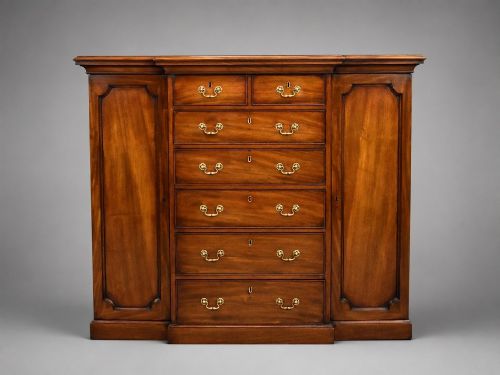


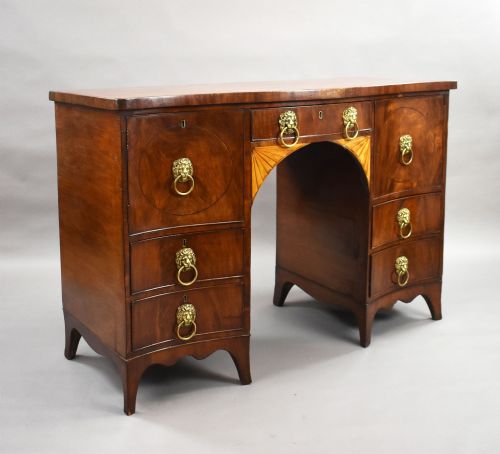
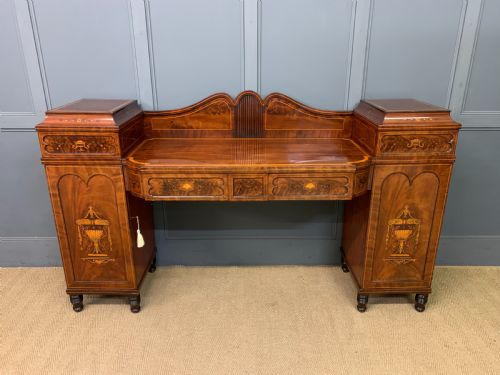


Georgian Pedestal Server
A georgian pedestal server is a grand dining room focal point, bringing structural elegance and practical service space to formal interiors.

Georgian Pedestal Server
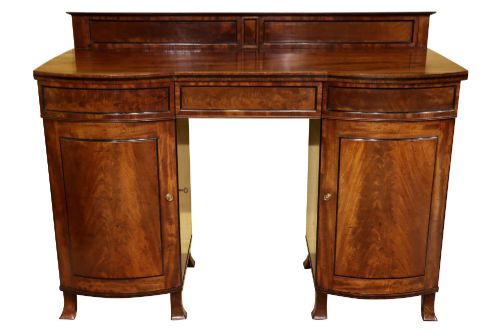
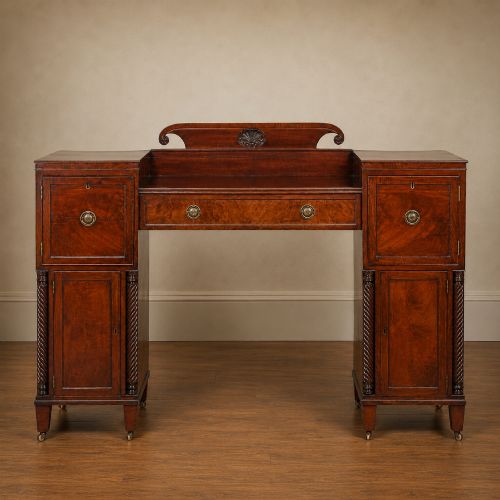
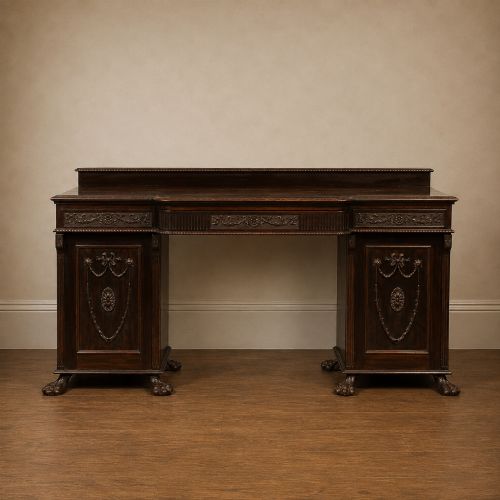
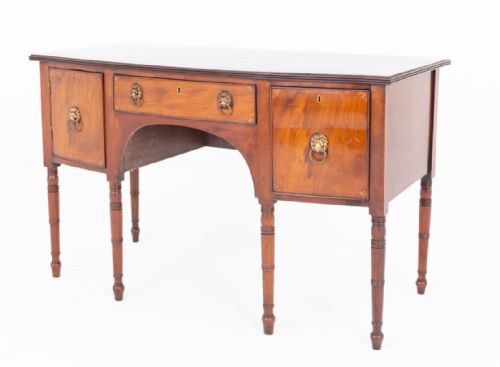
A georgian pedestal server generally appears as a substantial sideboard or associated dining furniture piece originating from the Georgian, Regency, and William IV periods, often featuring distinct flanking pedestals.
The material record on this page shows pieces predominantly built in mahogany, including flame mahogany veneer and figured varieties, occasionally accompanied by satinwood and boxwood stringing.
Makers and designers of these forms worked within Georgian, Regency, Adam Revival, and Edwardian aesthetic frameworks, creating functional items intended for elite dining rooms.
Distinctions in craftsmanship
The visual hierarchy of a pedestal server rests upon the choice of timber, where intensely figured flame mahogany or carefully matched veneer panels elevate the presence of the piece.
Subtlety and precision in inlay work, such as delicate satinwood and boxwood lines, mark the difference between standard production and superior workshop output.
The integration of original hardware, including brass galleries and mounts, preserves the integrity of the design and demonstrates higher original manufacture.
Several pieces include brass galleries specifically designed to stop rolling decanters during enthusiastic nineteenth-century dinner parties.
Gillows
The Georgian Pedestal Server Glossary
- Pedestal sideboard
- A large dining room cabinet comprising a central table section flanked by independent pedestals or cupboards. These often incorporated warming compartments or storage for dining service.
- Flame mahogany
- A distinct veneer figure obtained from the branch junctions of the mahogany tree. It creates a fiery, rippling pattern prized in high-end cabinet making.
- Brass gallery
- A decorative metal railing fitted to the top surface of a sideboard or server. It prevented serving vessels from sliding during use.
- Satinwood
- A durable, yellowish-lemon timber imported from tropical regions. It served as a contrasting inlay material for banding and stringing.
- Breakfront
- A cabinet front where the central section projects forward from the flanking wings. This configuration breaks up long horizontal lines.
Georgian Pedestal Server: Frequently Asked Questions
What is a pedestal server used for?
A pedestal server functions as a heavy dining room sideboard designed to hold serving dishes, cutlery, and beverages during formal meals. The side pedestals frequently housed plate warmers or storage for wine.
In modern interiors, these pieces serve as statement storage consoles in large dining spaces or entrance halls.
How do I identify a Georgian server?
Georgian servers are identified by dense mahogany timbers, symmetrical proportions, and classical decorative motifs such as satinwood inlay or brass galleries. They reflect the architectural tastes of the eighteenth and early nineteenth centuries.
Later revival pieces from the Edwardian era emulate these proportions but often display machine-cut veneers and lighter internal framing.
Where should I place a pedestal server?
Because of their substantial length and depth, pedestal servers require a generous wall space in a dining room or large reception area. They work best against a flat wall where their flanking pedestals and backsplashes can be fully appreciated.
Keeping them away from direct heat sources protects the fragile mahogany veneers and historic polishes.
What is flame mahogany?
Flame mahogany is a highly figured veneer cut from the fork of the mahogany tree where the grain twists. Cabinet makers used it to create dramatic, mirrored patterns across drawer fronts and doors.
This decorative wood choice is a primary indicator of higher quality workshop production.