
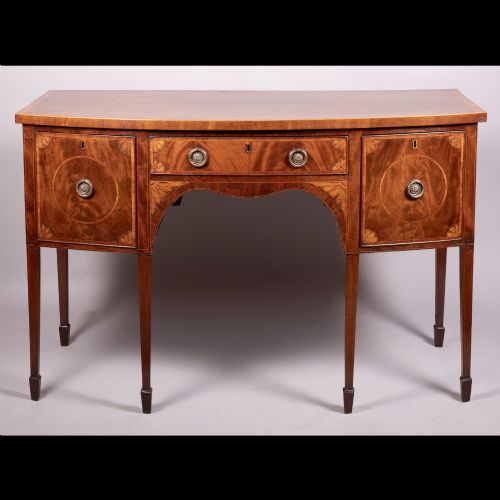


Rich Brown Mahogany Credenza
A rich brown mahogany credenza brings warmth and formal utility to a dining room, combining deep timber tones with capacious storage.

Rich Brown Mahogany Credenza
Buyers seeking a rich brown mahogany credenza encounter large storage furniture from the eighteenth, nineteenth, and early twentieth centuries, spanning Georgian, Regency, and Victorian periods. These substantial pieces function primarily as sideboards, servers, and cupboards in dining spaces.
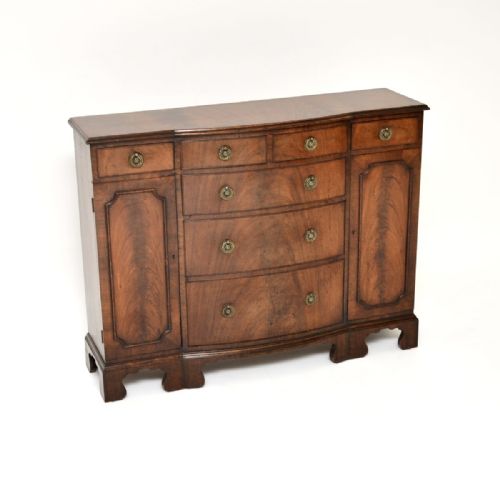
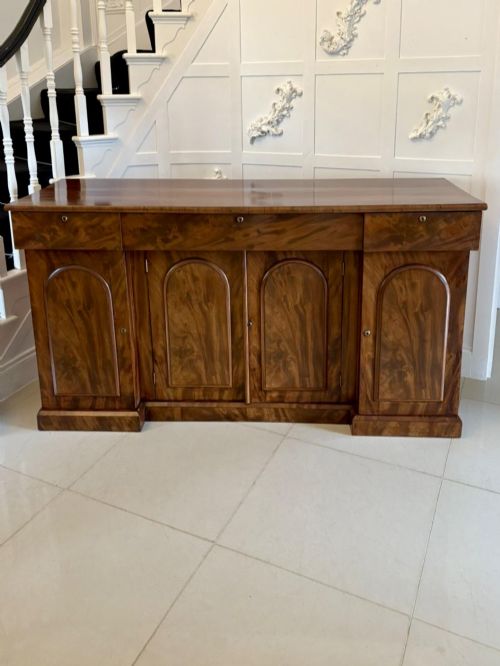
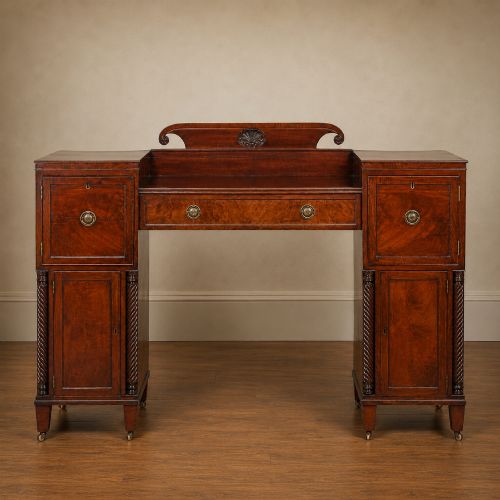
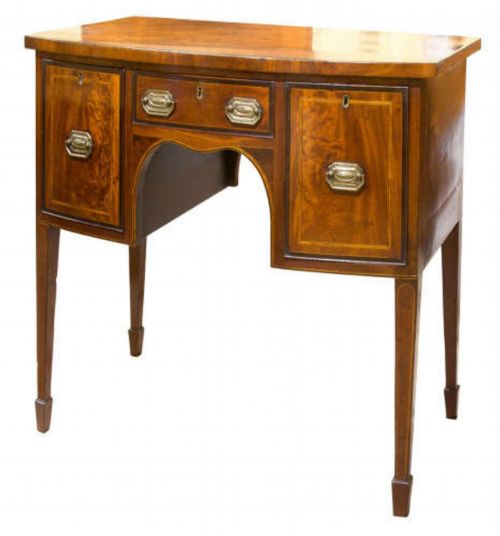
The most frequent examples on this page date from the Victorian era and the Regency period, often featuring bow-front or breakfront configurations in figured or flame mahogany. Cabinet forms range from simple two-door cupboards to elaborate pedestal sideboards and chiffoniers.
Makers utilised various regional interpretations, producing items from formal Georgian dining pieces to late nineteenth-century Chippendale revival servers and Art Deco serpentine cupboards. Each object reflects the prevailing architectural and interior demands of its decade of manufacture.
Materials and construction
Cabinet makers constructed these pieces primarily using solid mahogany and mahogany veneer, frequently selecting flame mahogany and figured timbers to create dynamic surface patterns. Secondary woods and decorative banding utilise contrasting materials such as purpleheart, satinwood, walnut, maple, and gonçalo-alvez.
Joinery techniques combined solid framing with applied veneers, supported by turned or carved supports and brass hardware. Surface finishes enhanced the natural depth of the grain, resulting in the characteristic rich brown colour prized by period cabinet makers.
Listings span multiple eras from the eighteenth century through the Art Deco period, uniting diverse stylistic revivals under the banner of mahogany storage.
Assessing quality and proportion
Quality separates pieces by the selection of the timber grain, such as strongly figured flame mahogany veneer, and the crispness of carved details. Superior examples exhibit balanced proportions, particularly in smaller or bow-front formats where restraint dictates elegance.
Internal construction and the integration of secondary timbers like purpleheart or satinwood banding indicate the standard of workshop execution. The integrity of the original brass hardware and the smoothness of drawer and door operation further distinguish finer items.
The Rich Brown Mahogany Credenza Glossary
- Bow-front
- A curved front convex in shape, frequently seen on Georgian and Regency sideboards to soften rectangular room lines.
- Breakfront
- A cabinet facade where the central section projects forward from the flanking outer sections, creating architectural depth.
- Chiffonier
- A compact sideboard or low cupboard popular in the Victorian period, often featuring a raised shelf or mirrored back.
- Flame mahogany
- A veneer cut from the fork of a mahogany tree where the grain creates a flickering, flame-like pattern.
- Pedestal sideboard
- A form consisting of two distinct pedestals joined by a central serving table or recess, prominent in Regency design.
Rich Brown Mahogany Credenza: Frequently Asked Questions
Where should I place a mahogany credenza?
These large storage items suit dining rooms, grand hallways, or spacious living areas where their length and depth can be accommodated without crowding the floor plan.
Ensure placement avoids direct heat sources and strong sunlight to protect the polished mahogany surface and delicate veneers from drying or fading.
How do I clean a mahogany sideboard?
Dust the timber regularly with a soft, dry cloth to prevent particulate accumulation in the carved details and veneer joints.
Apply a microcrystalline wax periodically to nourish the wood and maintain the rich brown lustre without building up heavy silicone residues.
What is the difference between a sideboard and a credenza?
Sideboards traditionally served dining rooms for storing tableware and serving food, whereas credenzas originated as lower cabinet units.
In modern usage, the terms often overlap, though antique listings here predominantly apply to dining room sideboards, servers, and chiffoniers.
How can I tell a Georgian piece from a Victorian one?
Georgian examples often display restrained classical lines, subtle stringing, and lighter proportions typical of eighteenth-century craftsmanship.
Victorian pieces tend to be heavier in scale, sometimes incorporating bolder carving, darker finishes, and more elaborate cupboard configurations.