
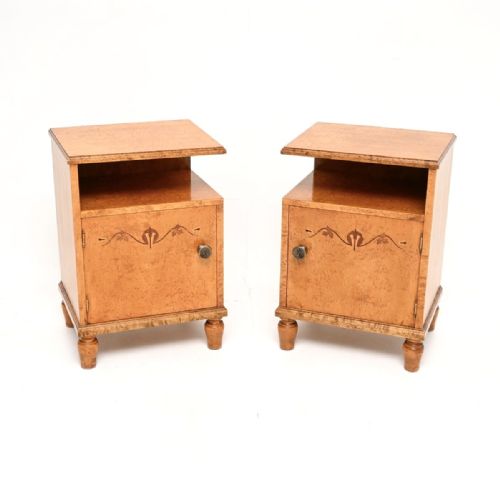
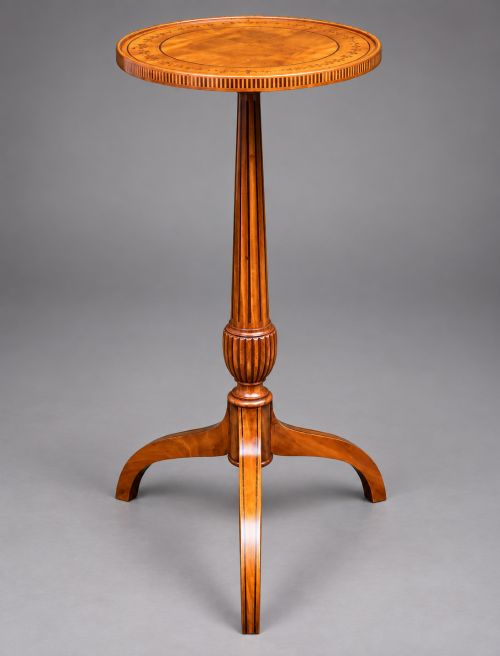
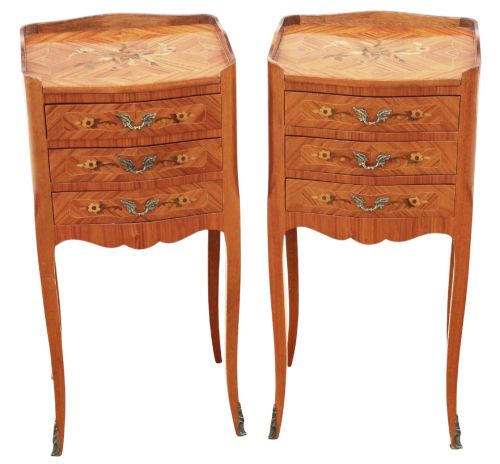


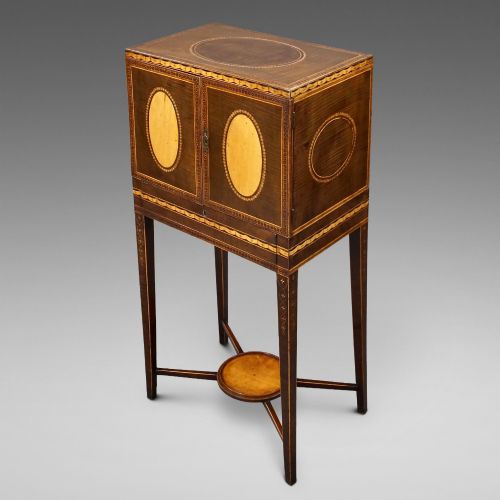
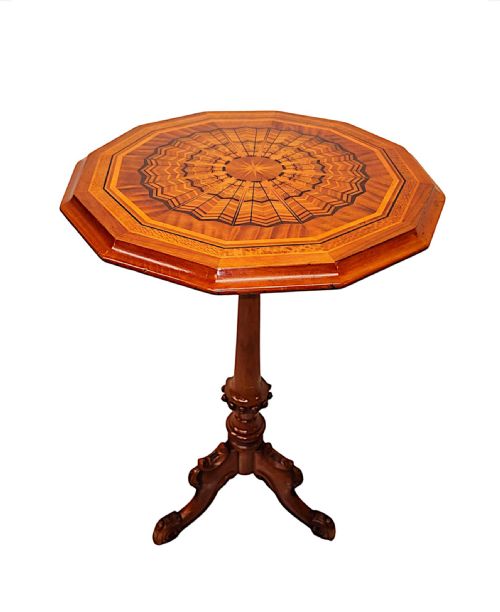
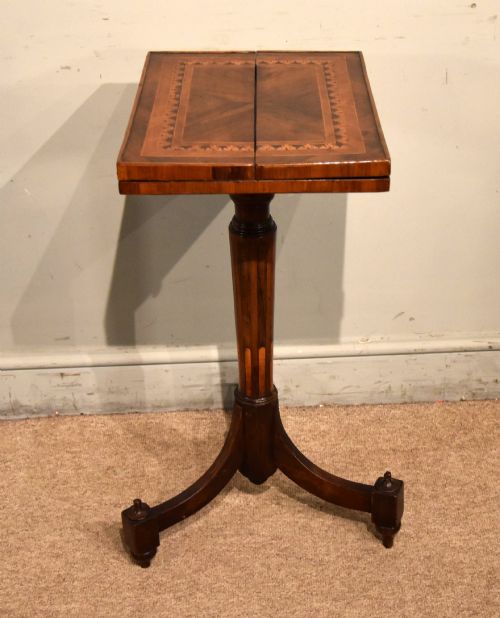
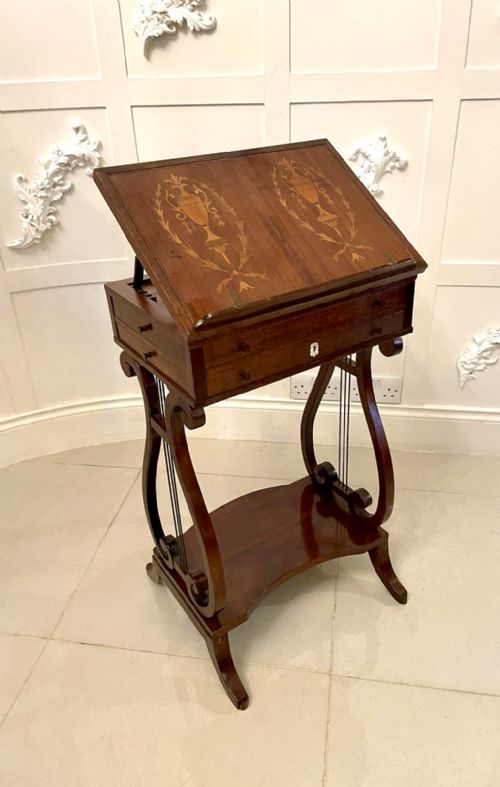
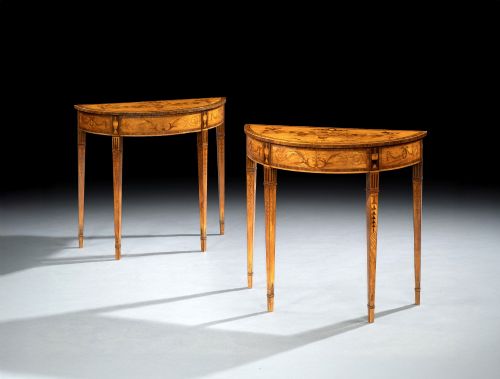

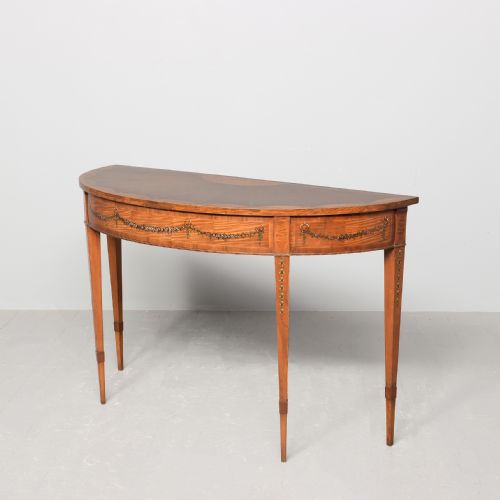
Satinwood Marquetry Side Table
A satinwood marquetry side table brings pale timber and intricate floral or pictorial inlay into a room, offering a bright surface with historical depth.
Satinwood Marquetry Side Table
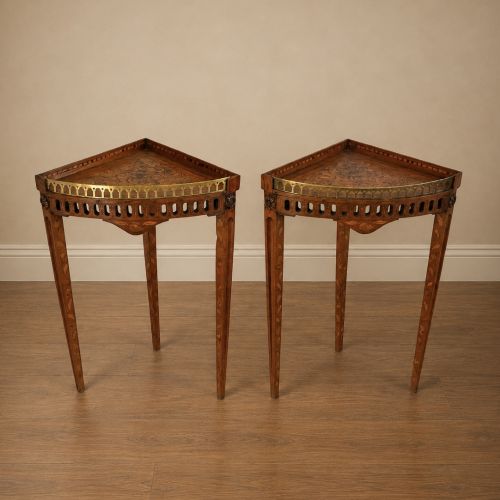
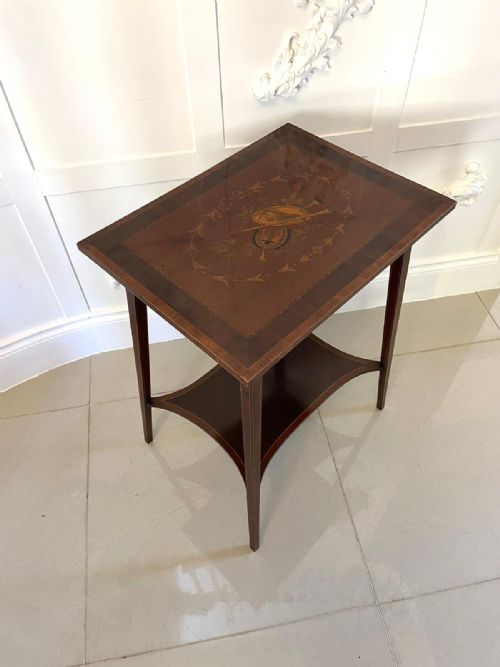
A satinwood marquetry side table is a small decorative surface designed for placement against a wall or beside seating, originating primarily in the eighteenth and nineteenth centuries. You will encounter forms ranging from George III demi-lune consoles to Edwardian occasional tables and Sheraton Revival designs.
The materials span native and exotic timbers, with satinwood providing a pale, light-reflecting ground for contrasting veneers. Marquetry patterns utilise darker woods such as mahogany, rosewood, boxwood, and ebony to form foliage, urns, and geometric borders.
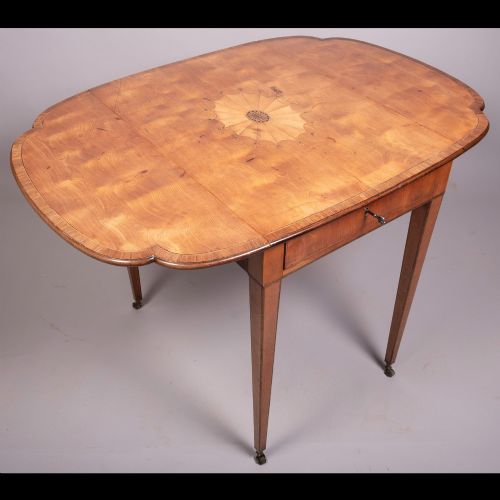
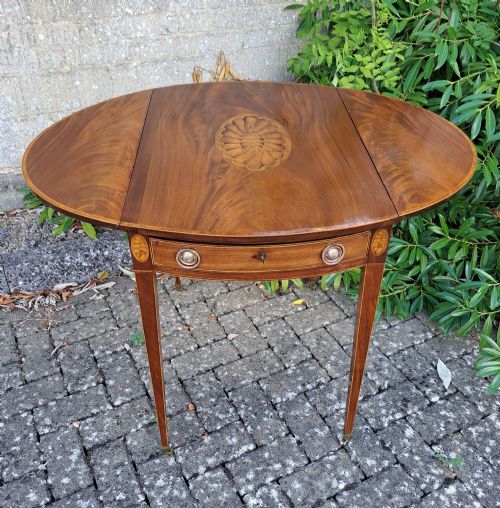
Pieces from this selection include pembroke tables, kidney-shaped surfaces, and octagonal centre tables. The Edwardian and Victorian eras contributed numerous revival pieces that emulate the earlier Georgian and Sheraton aesthetic.
Materials and marquetry technique
Cabinetmakers constructed these tables using a stable secondary timber carcass, such as mahogany or pine, overlaid with fine veneers of satinwood. The primary satinwood ground received hand-cut recesses into which contrasting woods like boxwood, ebony, and harewood were fitted to create pictorial marquetry.
Additional detail relied on shading the veneer pieces by scorching them in hot sand, giving petals and ribbons a three-dimensional depth. Brass galleries, mounts, and giltwood accents frequently completed the construction, particularly on demi-lune and serpentine forms.
The listings feature satinwood combined with mahogany, rosewood, and boxwood across periods spanning the eighteenth century through the Edwardian era.
Distinctions in craftsmanship
Quality rests in the precision of the veneer cutting and the complexity of the marquetry design. Superior examples display tightly fitted inlay without excessive filler, maintaining crisp lines across complex curves like serpentine and kidney shapes.
The choice and figuring of the satinwood timber itself dictate the visual impact of the piece. Tables that utilise dense, highly figured feather-grain satinwood paired with varied tonal timbers command attention over plain veneer surfaces.
Gillows·Donald Ross·Howard & Son's
The Satinwood Marquetry Side Table Glossary
- Satinwood
- A dense, lustrous tropical timber with a golden sheen that forms the primary ground for many eighteenth and nineteenth-century decorative tables. It takes a high polish and reflects light effectively.
- Marquetry
- A technique where different coloured wood veneers are cut and assembled to form pictorial or decorative patterns on a furniture surface. It differs from inlay by covering the entire background.
- Harewood
- Sycamore wood that has been stained grey, often utilised in Georgian and Sheraton marquetry work to provide a cool contrasting tone. It appears alongside boxwood and ebony.
- Pembroke table
- A small rectangular table with hinged drop leaves on either side, often fitted with a drawer. Introduced in the eighteenth century, these pieces utilise satinwood and mahogany veneers.
Satinwood Marquetry Side Table: Frequently Asked Questions
Where should I place a satinwood side table?
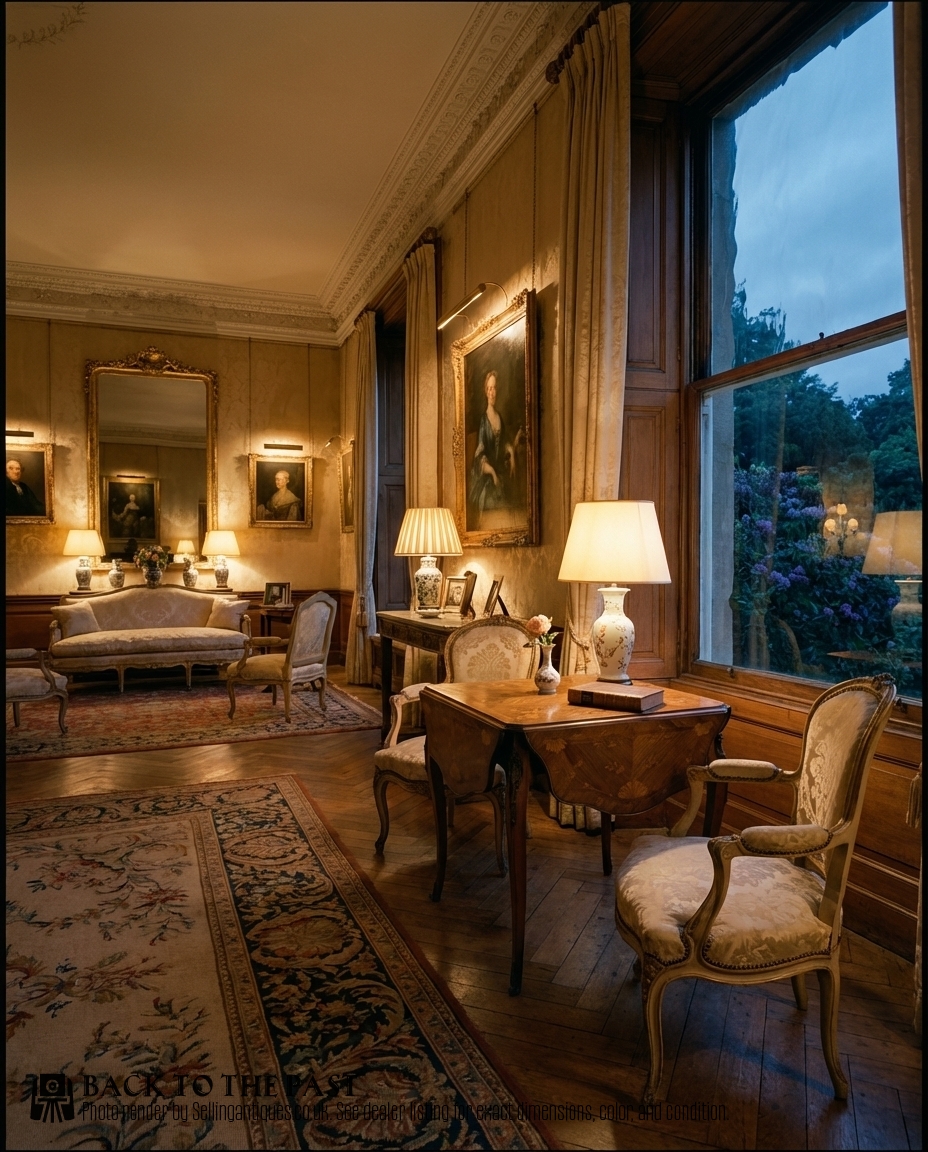
These tables suit reception rooms, hallways, and drawing rooms where their reflective timber brightens dark corners. They function well as lamp tables or display surfaces for small decorative objects.
Keep them away from direct sunlight and strong heat sources to protect the delicate satinwood veneer and prevent the marquetry from drying out or fading over time.
How do I clean the veneer?
Dust the surface regularly with a soft, dry cloth following the grain of the wood. Avoid modern liquid polishes, silicone sprays, and damp cloths, which can penetrate hairline cracks in old polishes.
Apply a traditional beeswax sparingly once or twice a year to nourish the timber and maintain the soft lustre of the antique polish.
Are these tables sturdy enough for daily use?
Most antique satinwood tables were built for light decorative use rather than heavy weight-bearing tasks. Occasional and lamp tables handle books and small lamps comfortably, but heavy loads should be avoided.
Moving the table requires lifting it by the main frame rather than pulling by the top or delicate legs, protecting the joints and stretcher bases.
How do I distinguish an original eighteenth-century table from a later revival?
Examine the construction methods, timber shrinkage, and secondary woods used in the carcass. Eighteenth-century pieces typically show hand-cut dovetails and natural ageing in the grain.
Revival pieces from the Victorian and Edwardian eras often utilise machine-sawn components, standardised fixings, and brighter, uniform finishes characteristic of late nineteenth-century workshops.