
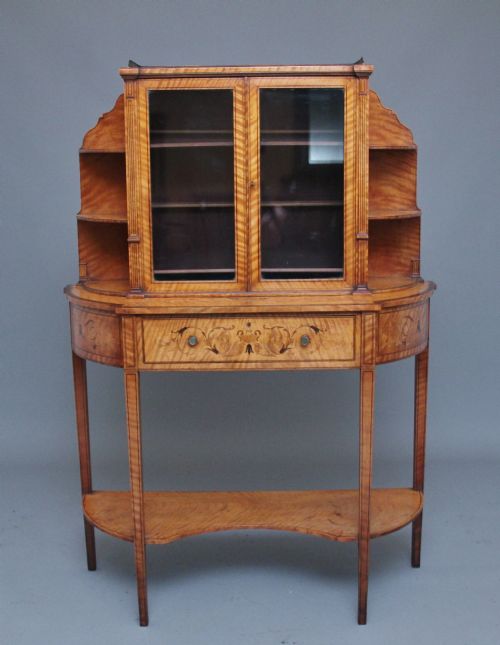
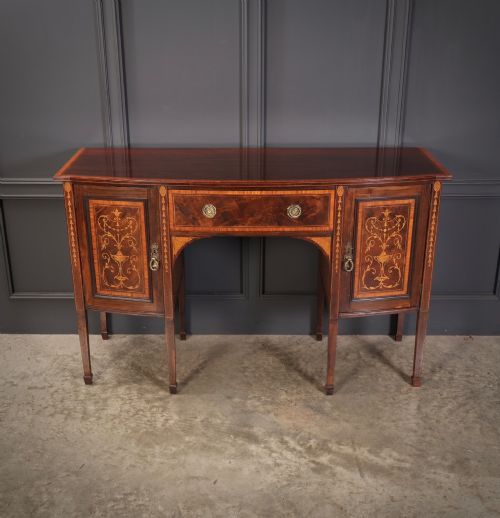
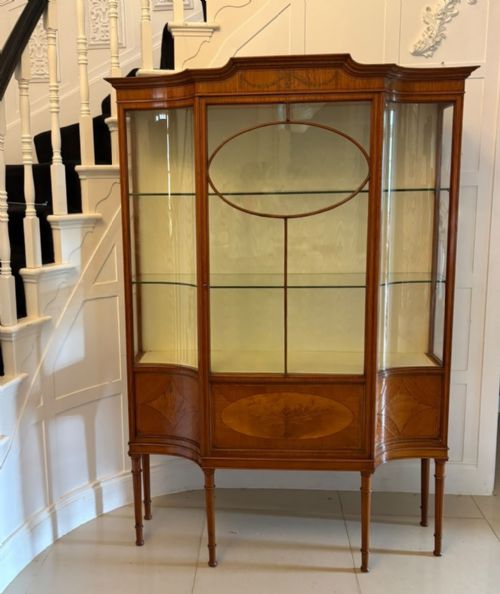
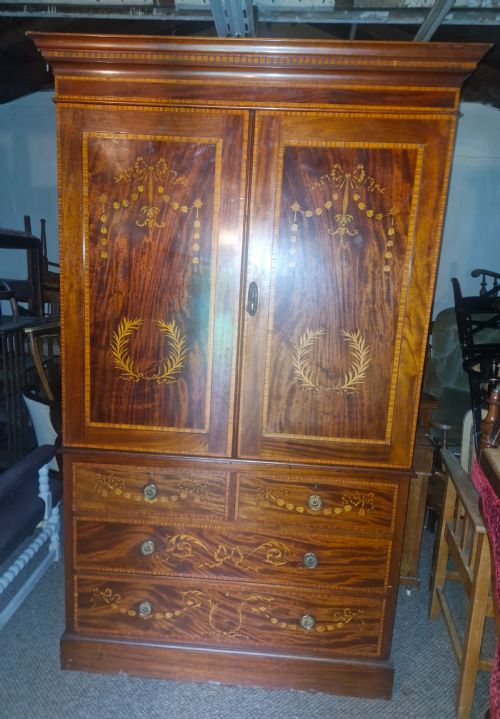
Satinwood Marquetry Cabinet
Satinwood marquetry cabinet designs bring together fine timbers and intricate floral or pictorial inlay for elegant display and storage.
Satinwood Marquetry Cabinet
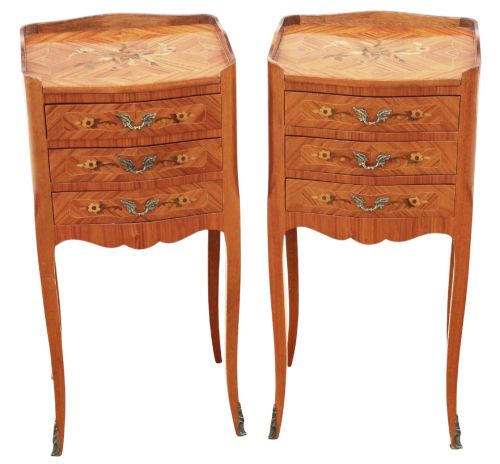
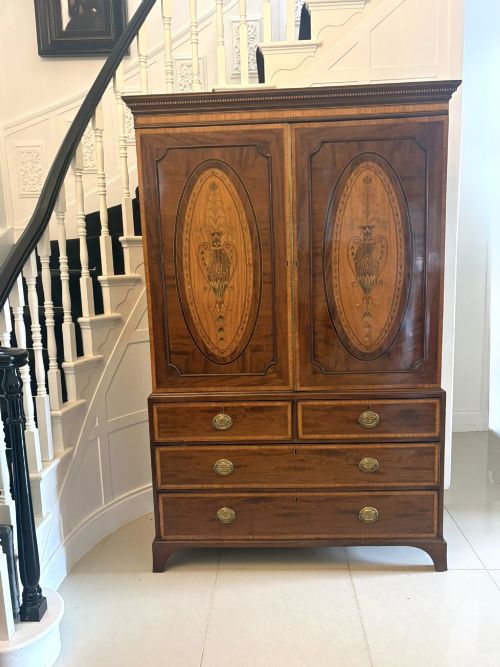
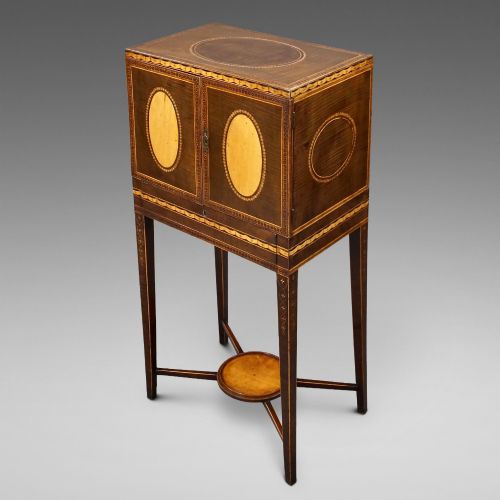
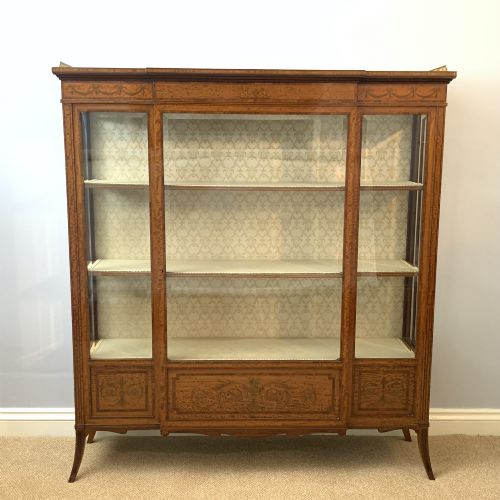
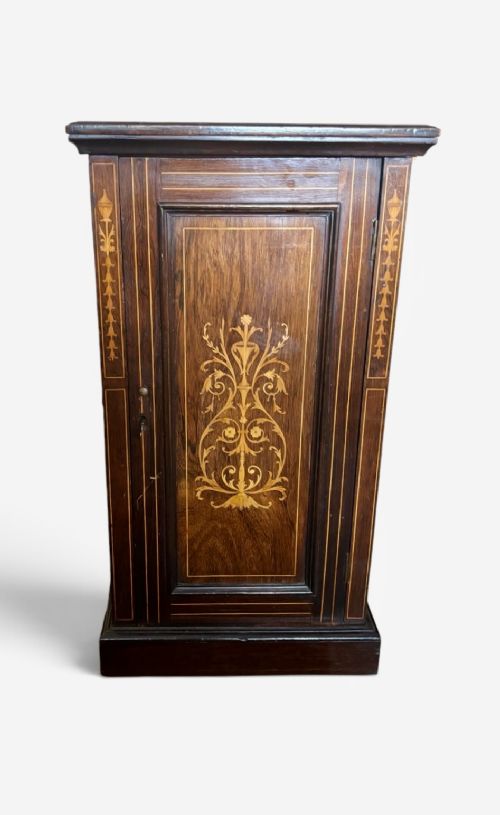
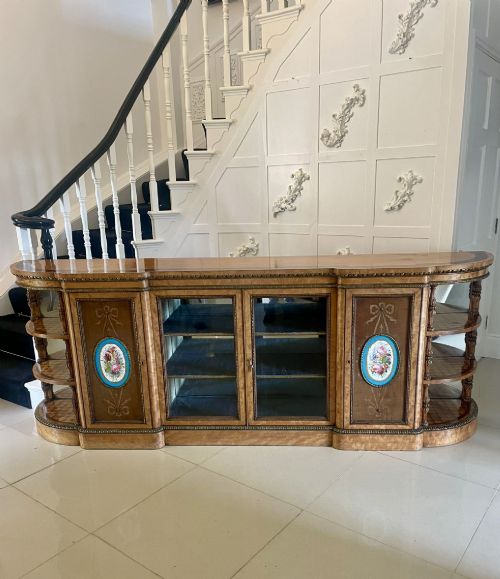
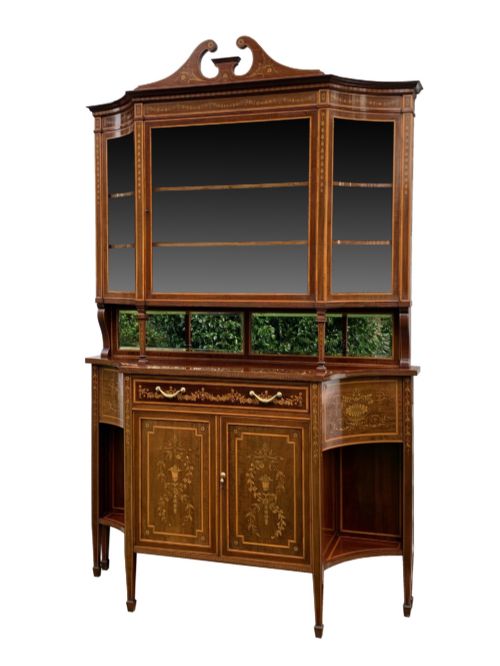
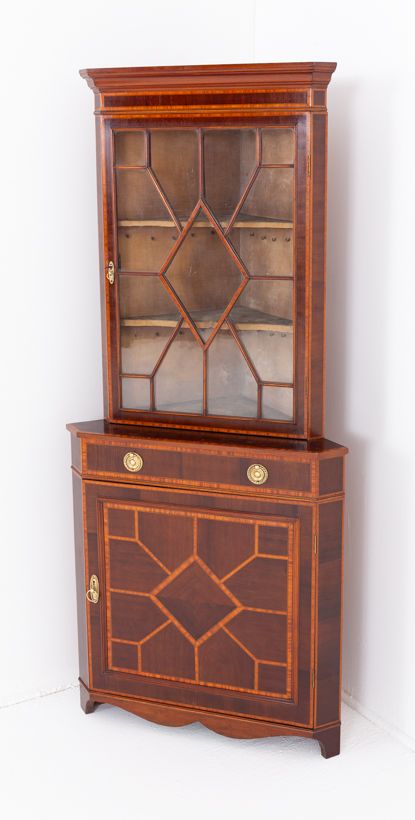
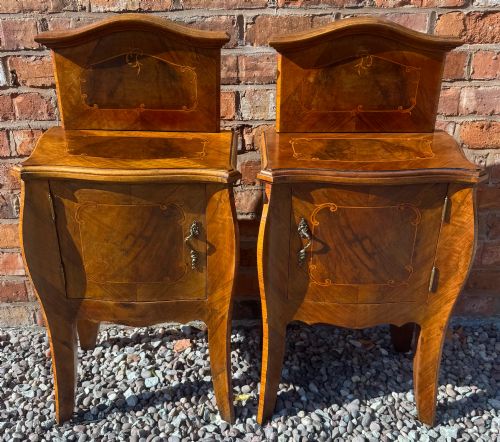
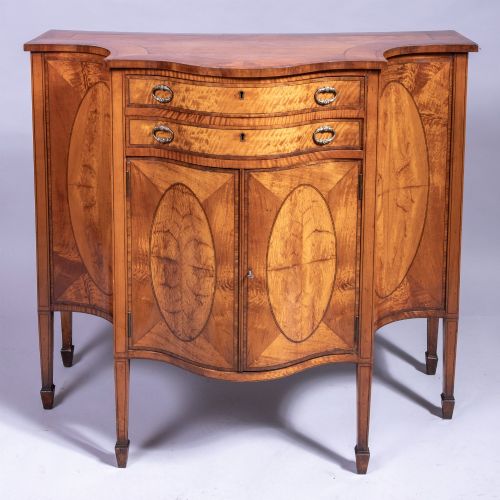
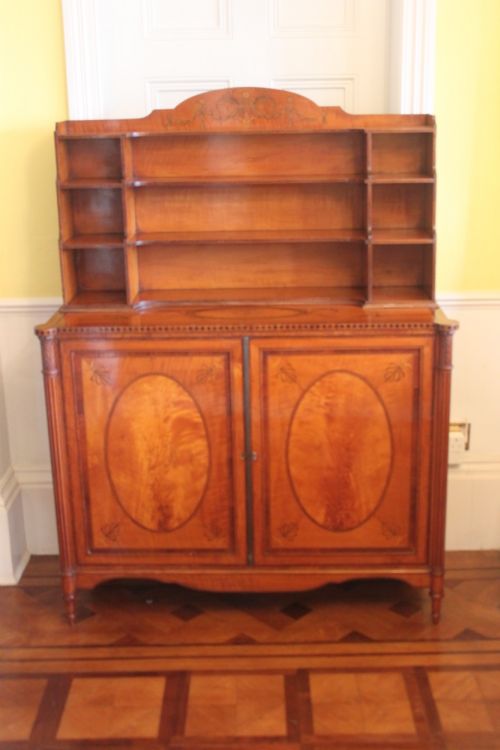
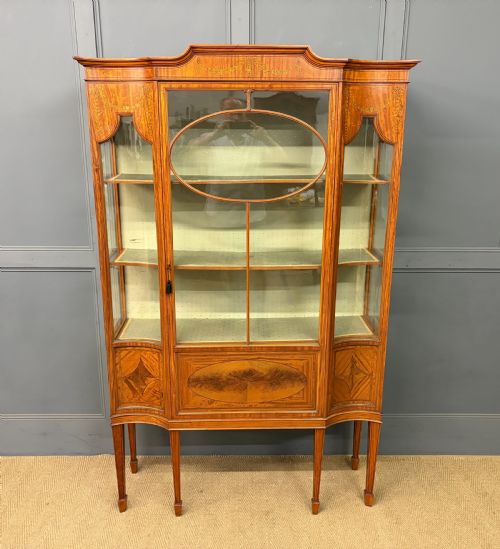
A satinwood marquetry cabinet unites the pale, shimmering grain of satinwood with precise wood veneers cut into pictorial or geometric patterns. These pieces span display cabinets, side cabinets, and compact bedside versions originating from the eighteenth, nineteenth, and early twentieth centuries.
The items found here frequently display the influence of Sheraton Revival and Edwardian aesthetics, combining structured mahogany or satinwood carcases with contrasting fruitwood and boxwood details. Collectors encounter upright display cases with glazed doors alongside lower side cabinets and specialised cabinets on stands.
Originating in periods of high craftsmanship, these works served to showcase porcelain, books, and curiosities in formal drawing rooms and parlours. Their continued appeal lies in the interplay of light across the golden satinwood surfaces and the minute detail of the floral marquetry.
How they were made
Cabinet makers constructed the primary carcase using solid mahogany, oak, or pine, onto which they applied thin veneers of satinwood, rosewood, and kingwood. Selected portions of timber received careful bleaching or staining to create deliberate tonal contrasts within the composition.
Marquetry panels were assembled by cutting tightly fitted pieces of fruitwood, boxwood, and assorted dyed veneers together in a packet, then setting them into a contrasting ground veneer. Additional enrichment often included cast or gilt ormolu mounts, brass stringing, and delicate glass panels framed in timber.
Several bedside cabinets hiding intricate games compendiums remind us that Victorians took their parlour entertainment very seriously indeed.
What varies in quality
The distinction between standard commercial output and superior craftsmanship rests in the depth and precision of the marquetry cutting. Finer examples exhibit microscopic joints in the veneer work, where multiple timber species create subtle shading without relying on heavy surface engraving.
Structural integrity and secondary woods also dictate the tier of a piece, with top-grade makers utilising solid mahogany linings and hand-cut dovetails rather than modern fasteners or uniform pine carcasing. The integration of high-status mounts in ormolu or porcelain plaque insets further separates workshop tiers.
Edwards & Roberts·Maple & Co.·James Hicks·Druce & Co.·Shapland & Petter·Waring & Gillow
The Satinwood Marquetry Cabinet Glossary
- Marquetry
- The art of forming decorative patterns by fitting together thin slices of wood veneer of various colours and grains onto a carcase. This technique differs from inlay by covering the entire surface in a mosaic design.
- Satinwood
- A hard, durable timber possessing a natural golden sheen and a satin-like texture that reflects light across the grain. It was heavily favoured by elite cabinet makers during the eighteenth and revival periods.
- Ormolu
- Gilded bronze mounts and decorative ornaments applied to furniture to accent corners, friezes, and feet. The technique involves coating cast bronze with a mercury and gold amalgam.
- Stringing
- Thin, narrow strips of contrasting wood embedded into grooves in the primary timber to create delicate borders and geometric outlines. It defines the edges of panels and table tops.
- Compactum
- A large, highly organised wardrobe or storage cabinet combining multiple internal compartments, drawers, and hanging spaces. Victorian examples represent the height of fitted domestic convenience.
Satinwood Marquetry Cabinet: Frequently Asked Questions
What rooms suit a satinwood marquetry cabinet best?
Drawing rooms, formal dining spaces, and quiet studies provide the balanced light and traditional context that these golden timber tones require.
Placing them away from direct sunlight preserves the delicate fruitwood veneers and prevents the satinwood from darkening unevenly over the decades.
How do I care for antique satinwood surfaces?
Routine maintenance requires only a soft, dry cloth to remove dust without disturbing the historic polish or wax layers.
Harsh chemical polishes and silicone sprays must be avoided entirely, as they penetrate open grain and degrade the underlying veneer adhesives.
Are these cabinets suitable for everyday storage?
Display cabinets and glazed bookcases excel at holding china, glassware, and small collections while keeping dust at bay.
Side cabinets and bedside versions offer convenient enclosed shelving for modern living spaces without compromising on historic character.
How do I distinguish Sheraton Revival from original pieces?
Sheraton Revival pieces typically date from the late nineteenth or early twentieth century and feature machine-cut elements alongside hand-finish details.
Original eighteenth-century furniture displays distinct tool marks, hand-sawn secondary timbers, and subtle signs of age in the shrinkage of the wood.