







Satinwood Marquetry Box
Satinwood marquetry box examples bring together light timbers and intricate patterned inlays, offering a refined method for storing small valuables.
Satinwood Marquetry Box
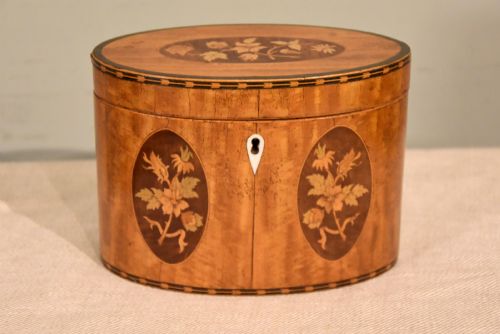
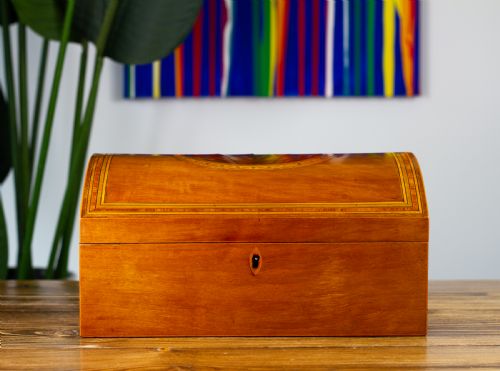
A satinwood marquetry box draws the eye with its pale, lustrous timber and contrasting floral or geometric veneer work. These pieces emerge predominantly from Georgian and Victorian periods, reflecting the tastes of the eighteenth and nineteenth centuries.
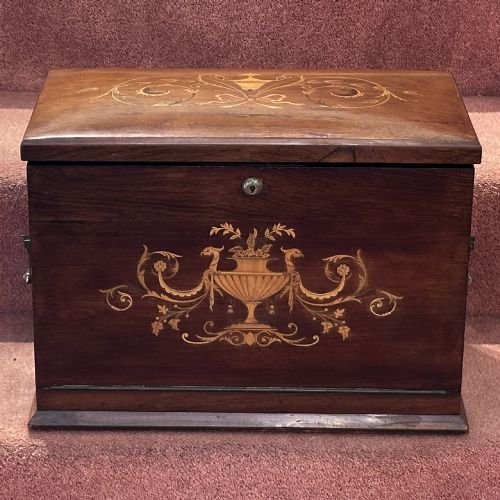
Tea caddies form the most common variety encountered on this page, alongside stationery boxes, decorative receptacles, and small display tables. Makers utilised the smooth grain of satinwood as a canvas for elaborate inlays using boxwood, harewood, and ebony.
Examples range from compact octagonal and oval tea caddies to larger tabletop cabinets and work tables. Each item demonstrates the high regard cabinet makers held for figured timber and detailed surface decoration.
How they were made
Craftsmen built the carcases using solid timbers such as mahogany or pine as a stable base before applying thin veneers of satinwood and harewood to the surfaces. Marquetry panels were assembled by cutting contrasting wood veneers together to form floral, shell, or geometric motifs.
Inlays of boxwood, ebony, and bone provided sharp definition and dark outlines to the lighter satinwood background. Brass fittings, including locks, hinges, and carrying handles, were integrated to complete the functional aspects of each box.
Satinwood Marquetry Box Retail Price Guide 2026
Typical asking prices for satinwood marquetry box among the pieces listed under this phrase on Sellingantiques today, from the lower quarter to the upper quarter. They describe what is for sale here now, not the wider market.
A tiny bone escutcheon ensures that even the keyhole of an eighteenth-century tea caddy receives decorative treatment.
What varies in quality
Quality rests on the precision of the veneer work and the complexity of the contrasting timbers utilised in the marquetry. Finer examples display tight, seamless joins in the inlay and rich figuring within the primary satinwood grain.
The sophistication of the design, such as elaborate shell or floral motifs executed with multiple wood types, separates standard utilitarian pieces from high-status items. Original brass hardware and intact internal fittings further distinguish the better pieces.
The Satinwood Marquetry Box Glossary
- Marquetry
- Decorative veneer applied to a furniture structure to form intricate pictures or patterns. Craftsmen cut multiple layers of contrasting wood veneers simultaneously to achieve tight fits.
- Satinwood
- A durable, yellowish timber prized for its smooth texture and reflective, chatoyant grain. It serves as the primary ground for many eighteenth and nineteenth century decorative boxes.
- Caddy
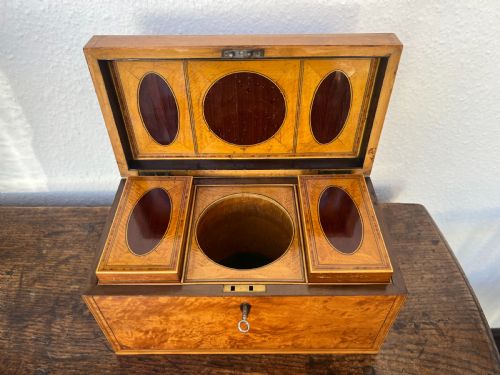
- A small container originally designed for storing loose tea leaves securely. These boxes frequently feature internal compartments and lockable lids.
- Harewood
- Sycamore timber that has been stained grey, often utilising iron solutions. It provides a cool, muted tone that contrasts effectively against warm satinwood.
- Bijouterie
- A small display table or case intended for presenting small decorative objects and curiosities. These pieces often incorporate glazed panels and velvet-lined interiors.
Satinwood Marquetry Box: Frequently Asked Questions
How do I date a satinwood box?
Dating relies on assessing the timber preparation, structural construction methods, and stylistic cues present in the inlay work. Georgian examples often display lighter framing and classical motifs like shells, whereas Victorian versions tend toward heavier proportions.
Secondary woods inside the carcase, such as pine or mahogany, also offer clues to the period of manufacture. Examining the wear on the base and the style of the brass lock helps confirm the era.
What were tea caddies used for?
Tea caddies served to store expensive tea leaves securely under lock and key in the household. Servants or homeowners measured out the precious leaves for each service.
Many caddies contained internal lidded compartments to separate different varieties of tea. Some also featured a central glass mixing bowl.
How should I clean satinwood?
Maintenance requires gentle dusting with a soft, dry cloth to protect the delicate veneer and historical polish. Moisture and direct sunlight can damage the timber and cause the marquetry to lift.
Applying a specialist microcrystalline wax occasionally helps nourish the wood surface. Avoid modern solvent-based polishes entirely.
What is the difference between marquetry and inlay?
Marquetry involves covering the entire surface of a piece with fitted veneer pieces to form a pictorial design. Inlay refers specifically to recessing pieces of wood or metal into a solid timber ground.
Both techniques create decorative patterns, but marquetry yields a complete veneer skin over the carcase. These boxes predominantly utilise marquetry for their lid and panel decorations.