

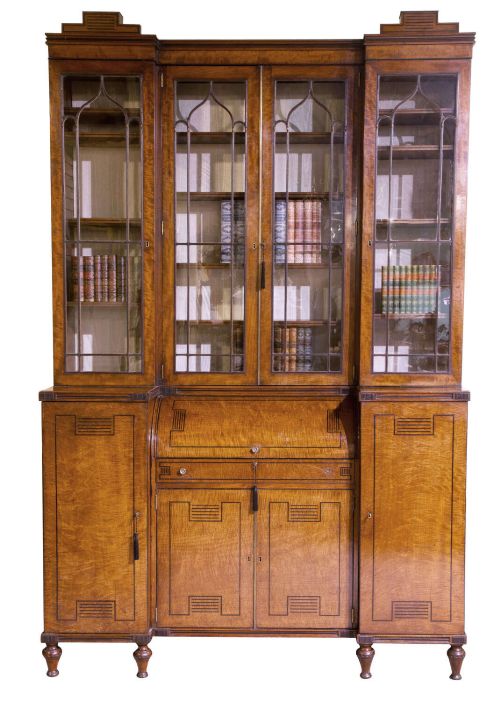
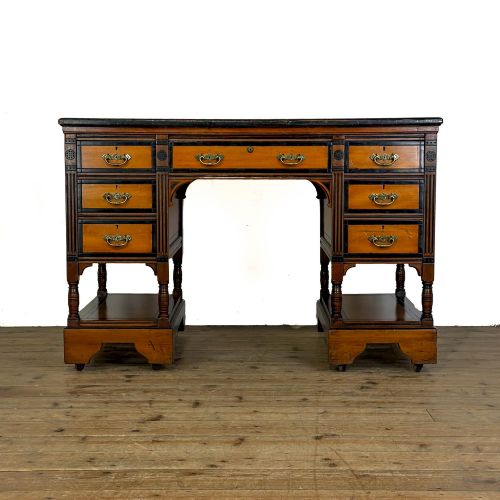
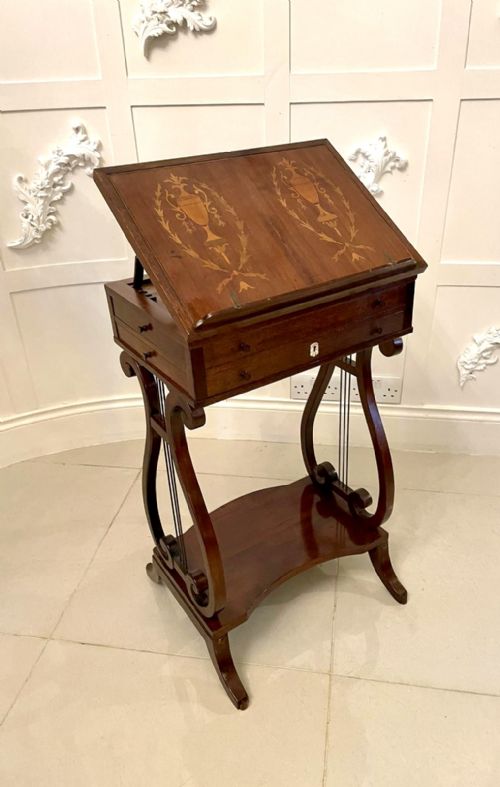
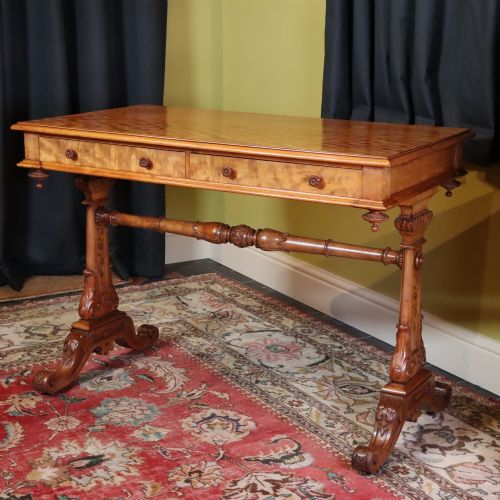
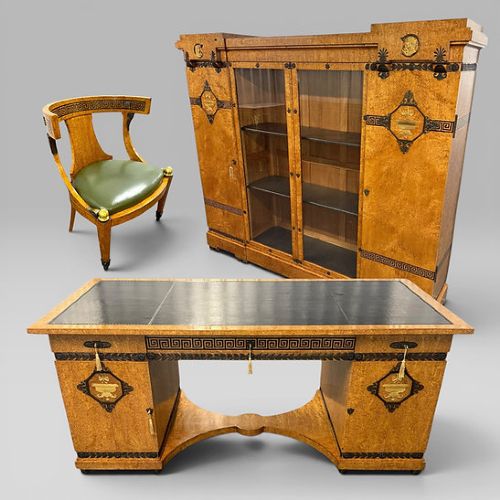


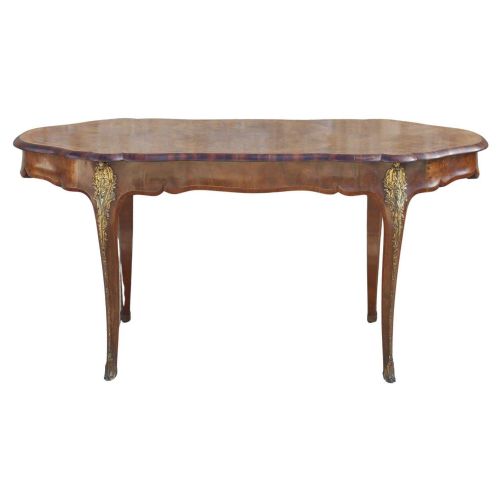


Satinwood Library Desk
A satinwood library desk offers a pale, figured surface that brings light into a study.
Satinwood Library Desk
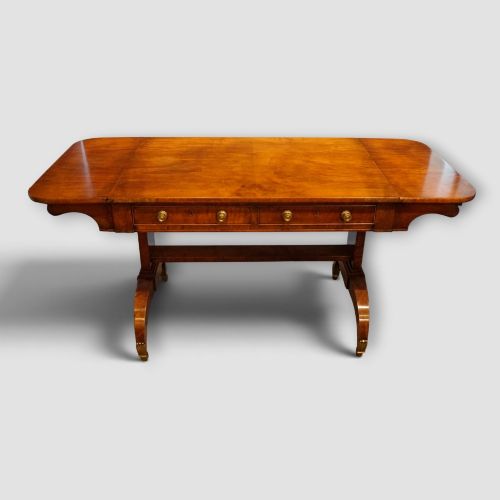
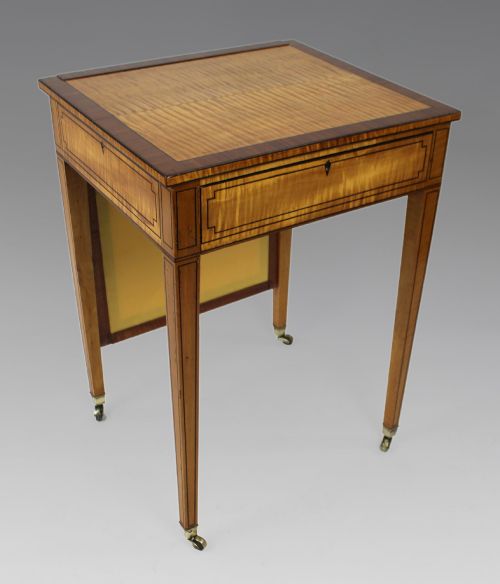
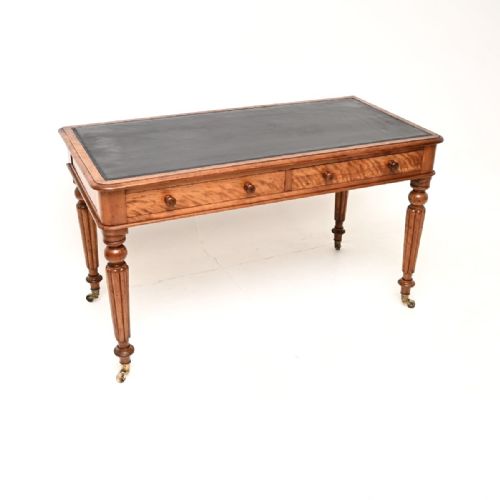
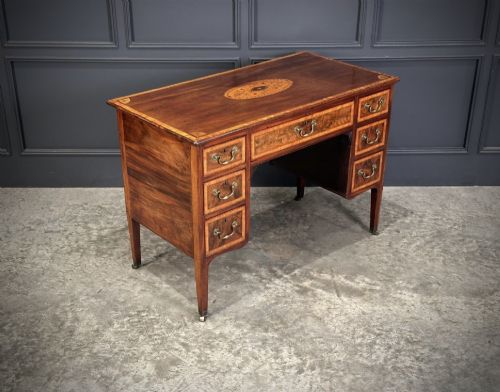
A satinwood library desk is a fitted writing place designed for a study, library or drawing room. When you examine the pieces gathered here, you encounter writing tables, pedestal desks and knee-hole forms fashioned from fine timbers.
The examples available range from compact side tables and reading pieces to substantial executive desks and partners pieces. They bridge the eighteenth century, the Regency era, and the later Victorian and Edwardian periods.
Makers often combined satinwood with mahogany, rosewood or calamander to create contrasting borders and panels. You will find freestanding tables meant for the centre of a room alongside knee-hole configurations designed to sit against a wall.
Materials and Construction
Cabinetmakers utilised dense timbers, laying veneers of satinwood and mahogany over sturdy structural carcases. Marquetry and parquetry patterns were meticulously cut and fitted into the surfaces to form geometric borders and floral motifs.
Brass handles, locks, ormolu mounts and leather writing inserts were integrated into the design. Tables often featured graduated drawers with hand-cut dovetails, supported by turned or cabriole legs.
Satinwood Library Desk Retail Price Guide 2026
Typical asking prices for satinwood library desk among the pieces listed under this phrase on Sellingantiques today, from the lower quarter to the upper quarter. They describe what is for sale here now, not the wider market.
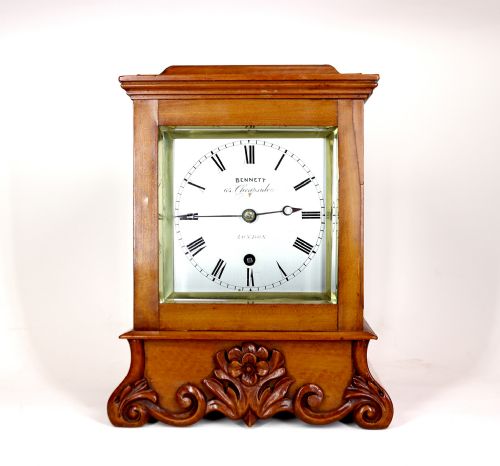
Some tiny library clocks managed to keep ticking inside satinwood cases while owners struggled to finish their letters.
Distinctions in Quality
Quality rests in the selection of the timber and the precision of the cabinetwork. The finest pieces display densely figured grain and harmonious banding that follows the contours of the writing surface without disruption.
Consider the execution of the marquetry and the crispness of any inlaid stringing. Superior examples retain original brassware, smoothly operating drawers, and well-finished secondary woods inside the framing.
Edwards and Roberts·Mercier Freres·Sir John Bennett·James Shoolbred·Howard and Sons·Heal and Son·Gillows
The Satinwood Library Desk Glossary
- Satinwood
- A hard, yellow timber with a lustrous sheen used for cabinetmaking and fine veneers. It takes a high polish and reflects light across the top of a desk.
- Partners desk
- A large double-sided writing table fitted with drawers and cupboards on both faces. It allowed two people to work opposite one another in a library.
- Marquetry
- The art of forming decorative patterns using thin pieces of wood veneer. Craftsmen arranged contrasting timbers like mahogany and satinwood to create pictorial scenes or geometric borders.
- Parquetry
- A geometric mosaic of wood pieces used for surface decoration. It frequently appears on tabletops and drawer fronts in repeating triangular or square patterns.
- Sofa table
- A rectangular occasional table with drop leaves at either end. They were originally designed to stand in front of a sofa for writing or needlework.
Satinwood Library Desk: Frequently Asked Questions
Where should I place a freestanding desk?
A freestanding desk is finished on all sides and looks best positioned in the middle of a room. This allows the polished satinwood grain and any marquetry details to be appreciated from every angle.
Ensure there is enough clearance around the piece for chairs to pull out comfortably. It creates a striking focal point when viewed away from the walls.
What is the difference between a side table and a writing table?
A side table generally has a simpler frame intended for display or occasional use against a wall. A writing table is specifically constructed with drawers and a comfortable height for sitting down to write.
Many pieces listed as side tables double as writing tables because they feature fitted drawers and finished backs. Look closely at the depth of the knee space and drawer configuration to determine its primary function.
How can I tell a Victorian desk from an Edwardian one?
Victorian desks tend to feature heavier proportions, deeper tones, and rich marquetry or parquetry patterns. Cabinetmakers in this era often favoured robust construction with elaborate brass handles and locks.
Edwardian pieces frequently display lighter, more slender forms inspired by earlier eighteenth-century designs. They often incorporate subtle inlay work and brighter satinwood veneers that reflect a shift toward airier interiors.