



Satinwood Kidney Desk
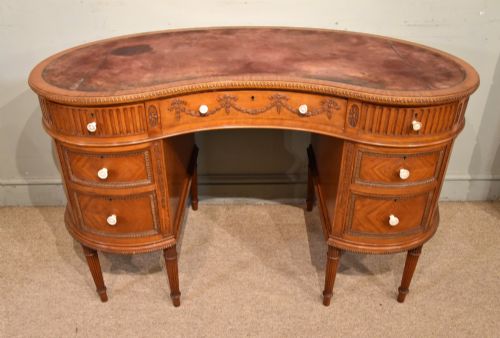
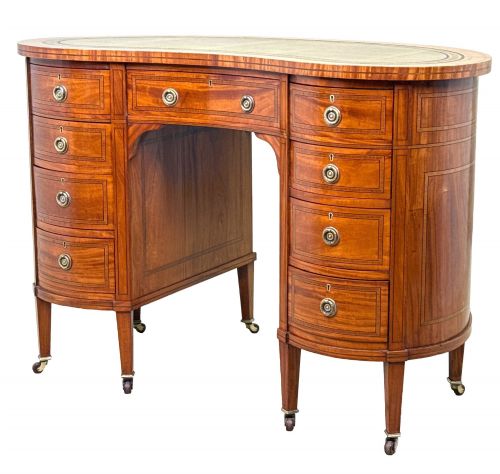
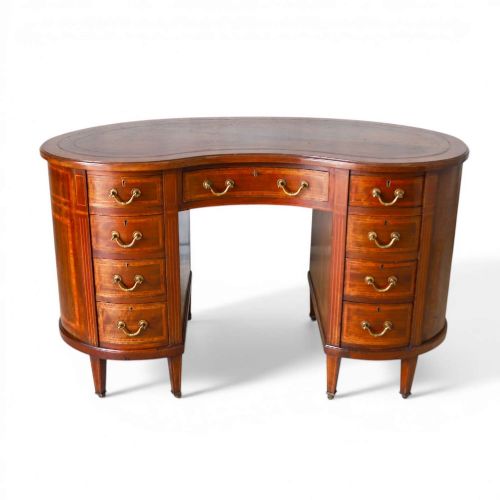
A satinwood kidney desk brings curved elegance and figured timber to a study, offering a distinctive workspace shaped for the room.
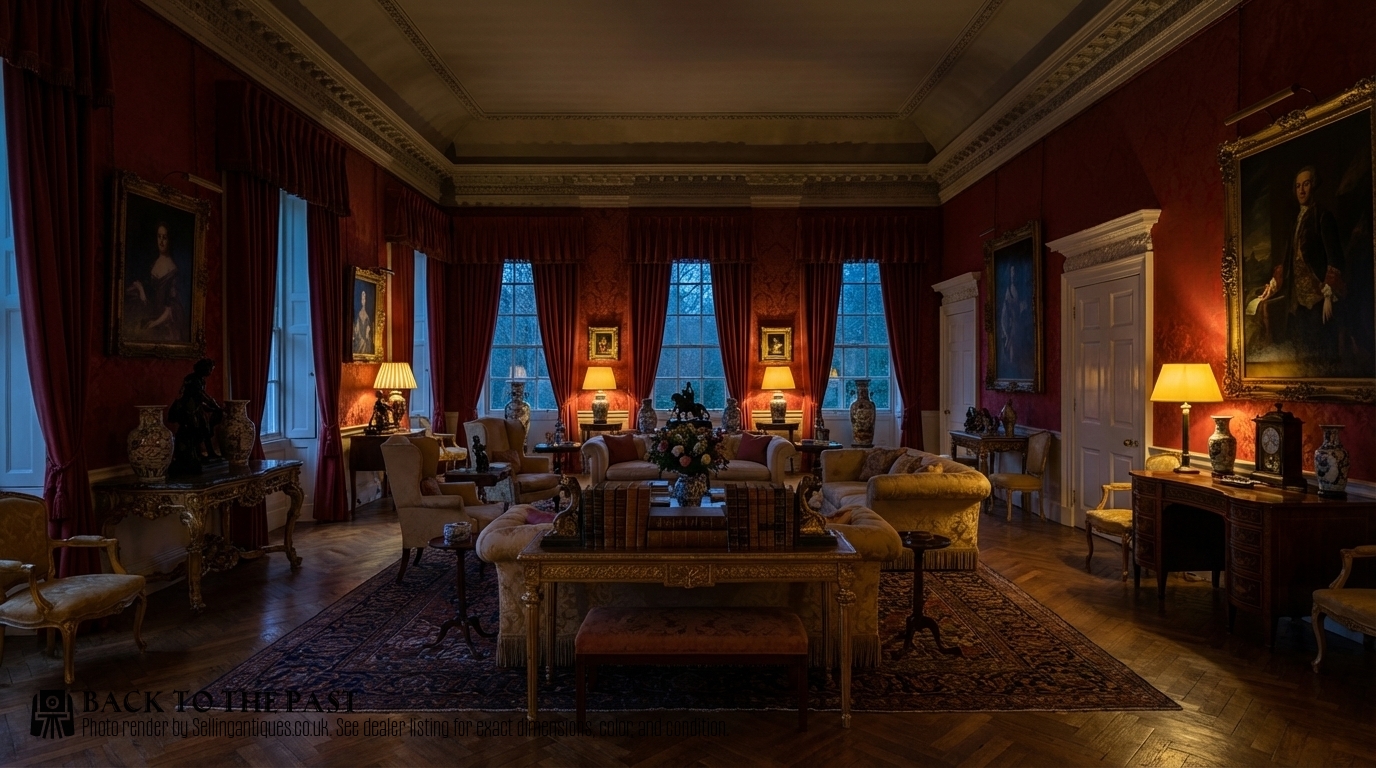
Satinwood Kidney Desk
A satinwood kidney desk provides a curved writing surface designed to wrap comfortably around the user, appearing in Victorian, Edwardian, and late nineteenth-century forms.
Most examples found on this page date from the Edwardian period or the late nineteenth century, often reflecting a Sheraton Revival aesthetic in their proportions.
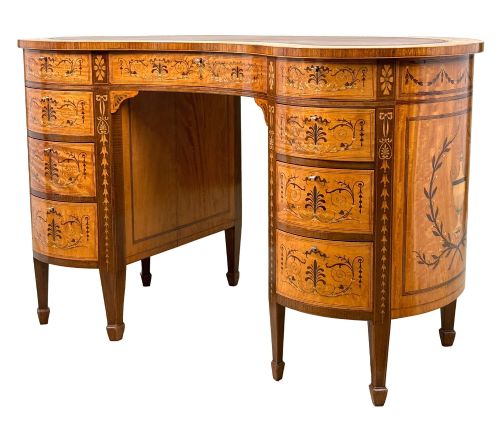
These pieces range from compact writing tables to substantial nine-drawer desks, frequently incorporating contrasting timber inlays alongside the principal satinwood.
How they were made
Cabinet makers constructed these desks using solid and veneered timbers, pairing satinwood with mahogany, oak, rosewood, and kingwood.
Inlay work utilised boxwood and other contrasting woods to form decorative stringing and motifs, while writing surfaces were inset with leather.
Shaped to hug the writer, these desks ensure nobody ever feels left out in the cold.
What varies in quality
The choice of timber figure dictates much of the visual character, with finely selected satinwood veneers creating a more striking surface grain.
The precision of the boxwood inlay and the execution of marquetry details distinguish standard production from superior cabinet work.
Maple & Co·Edwards & Roberts
The Satinwood Kidney Desk Glossary
- Satinwood
- A durable hardwood known for its golden lustre and smooth, satin-like sheen, frequently used as a veneer on fine furniture.
- Kidney shape
- A curved desk or table contour resembling a bean, designed to allow the user to sit within the curve.
- Sheraton Revival
- A late nineteenth-century design movement drawing inspiration from the neoclassical furniture of George Sheraton.
- Marquetry
- Decorative patterns formed by fitting together thin veneers of various coloured woods on a supportive background.
Satinwood Kidney Desk: Frequently Asked Questions
What is a satinwood kidney desk?
A satinwood kidney desk is a curved writing table finished in light-reflecting satinwood veneer, shaped to accommodate the user within its concave front.
These pieces emerged strongly during the Victorian and Edwardian periods, often featuring delicate inlay work and multiple drawers.
How do I date a kidney desk?
Dating relies on the construction materials, secondary timbers, and stylistic markers such as Sheraton Revival influences typical of late nineteenth and early twentieth-century pieces.
Maker marks, where present, help pinpoint the workshop of origin during the Victorian or Edwardian eras.
Are these desks comfortable for daily writing?
The curved kidney shape allows the user to sit close to the centre while having easy access to side drawers.
Original leather writing surfaces provide a traditional skiver texture suited to correspondence and light desk work.
What woods are used besides satinwood?
Mahogany frequently forms the underlying carcase or secondary timber, while rosewood, kingwood, and boxwood appear in borders and inlay.
Oak is also found in drawer construction and internal framing on various nineteenth-century examples.