
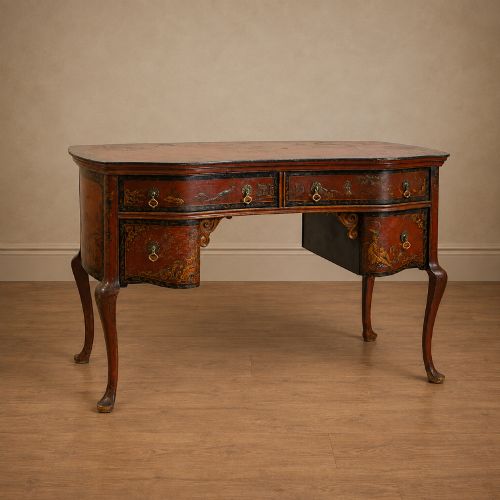
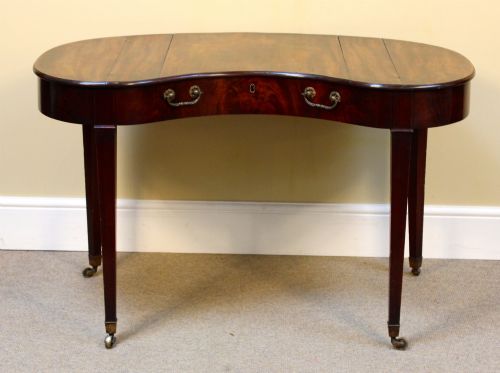
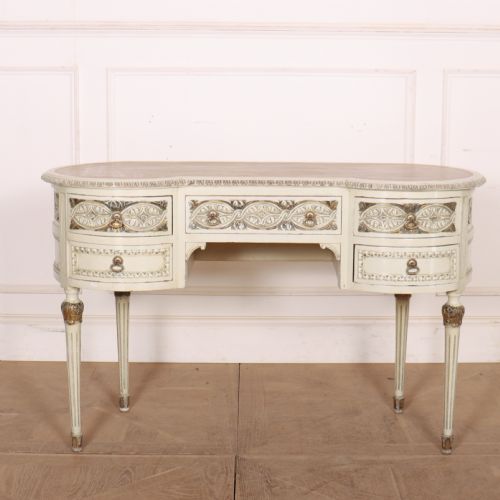


Kidney Shaped Vanity Desk
A kidney shaped vanity desk brings serpentine curves and practical elegance to a room, offering a deep curved kneehole for effortless seating.
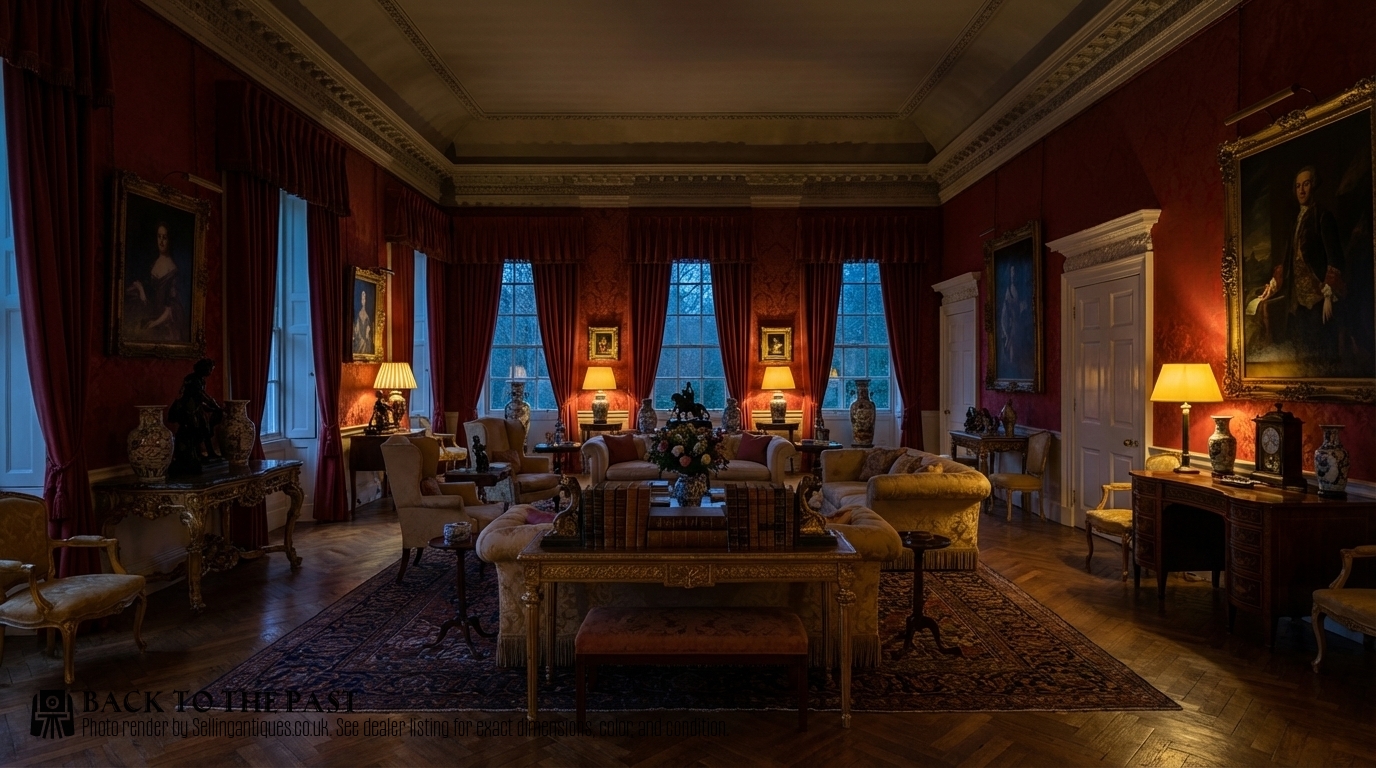
Kidney Shaped Vanity Desk
When you search for a kidney shaped vanity desk, you seek a distinctive curved writing or dressing surface designed to wrap comfortably around the user. These pieces function as both a workspace and a dressing table, combining a graceful concave front with ample surface area.
On this page, you are most likely to meet examples from the Victorian, Edwardian, and Georgian periods. The forms range from simple freestanding mahogany tables to elaborate painted versions.
Makers shaped these items from woods such as mahogany, satinwood, and burr walnut, often mounting them on slender legs with brass details. The curved silhouette remains the defining feature across every listed example.
How they were made
Cabinet makers constructed the curved framework using solid woods and veneers like mahogany, satinwood, and burr walnut. Achieving the signature kidney outline required precise bending and joining of timber to maintain structural integrity along the concave front.
Surface decoration involved intricate techniques such as marquetry inlay, hand painting, and lacquer work in styles including Chinoiserie and Neoclassical revival. Many pieces incorporated leather writing inserts bordered by gilt tooling.
Makers fitted brass handles, galleries, and sabots to accent the timber frames, while drawers utilised traditional dovetail joinery to ensure durability.
The listings span the Georgian, Victorian, and Edwardian periods, utilising materials such as mahogany, satinwood, lacquer, and brass.
What varies in quality
The sophistication of the timber selection and surface ornamentation separates standard utility pieces from exceptional examples. Finer items display figured mahogany, burr walnut, or elaborate marquetry work rather than plain painted surfaces.
The precision of the joinery along the difficult curved apron and the crispness of any carving or gilt bronze mounts dictate the overall execution. Subtle details, such as finely matched veneer grains and high-grade brass hardware, elevate the standing of a desk.
Edwards & Roberts
The Kidney Shaped Vanity Desk Glossary
- Kidney-shaped
- Describing a piece of furniture featuring a concave front and convex back resembling the organ of the same name. This contour allows the user to sit closer to the centre of the desk.
- Marquetry
- The art of applying decorative pieces of veneer to a structure to form intricate patterns or pictures. Craftsmen utilise various coloured woods to achieve tonal depth.
- Sabot
- A metal sleeve or shoe fitted to the foot of a piece of furniture. It protects the timber and often incorporates cast brass detailing.
- Freestanding
- Finished on all sides so the piece can sit in the middle of a room rather than against a wall. This allows access from multiple angles.
Kidney Shaped Vanity Desk: Frequently Asked Questions
What is a kidney shaped vanity desk?
A kidney shaped vanity desk is a specialised table featuring a curved front that indents towards the user, providing a comfortable seating recess. These items serve double duty as compact workspaces and dressing tables.
The distinctive shape appeared frequently during the Victorian and Edwardian eras, executed in woods like mahogany and satinwood with decorative finishes.
Where should I place a kidney shaped desk?
Because many examples feature finished backs, you can position a kidney shaped vanity desk away from the wall in the middle of a room. This placement highlights the serpentine curves from every angle.
They also fit neatly into bedroom corners or bay windows where standard rectangular furniture might obstruct movement.
How do I date a kidney shaped desk?
Dating relies on examining the timber, secondary woods, hardware, and decorative style such as Chinoiserie or Neoclassical revival. Victorian and Edwardian pieces often exhibit distinct veneer choices and leg designs.
Construction methods like drawer dovetailing and the type of secondary wood inside the drawers provide further clues to the period of manufacture.
Were these used for writing or dressing?
These versatile pieces served both purposes historically, functioning as lightweight writing tables or as dressing tables with the addition of a mirror. The surface space accommodated writing materials or cosmetics equally well.
Many listings note the dual capability as either a desk or a dressing table depending on how the original owner utilised it.