
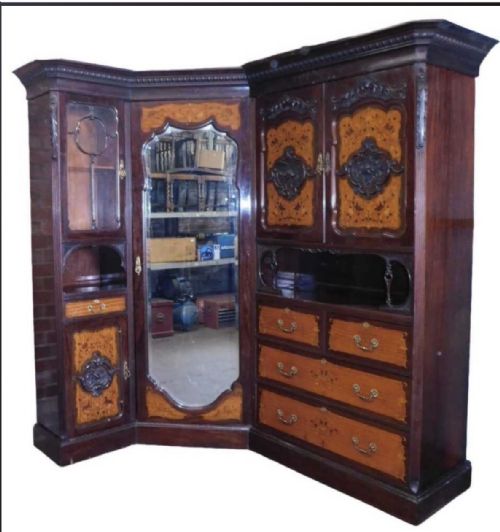


Satinwood Inlay Mirror
Satinwood inlay mirror examples bring together polished timbers and pale exotic veneers to brighten period rooms.
Satinwood Inlay Mirror
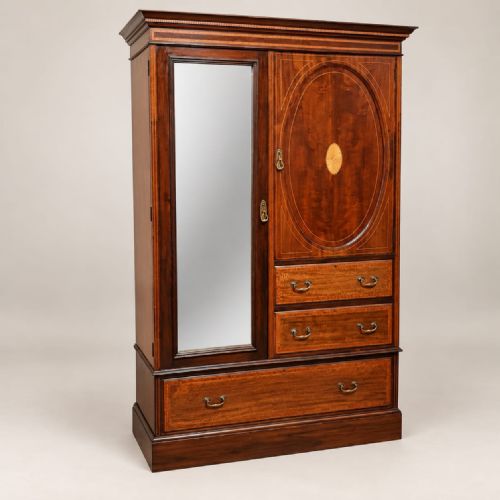
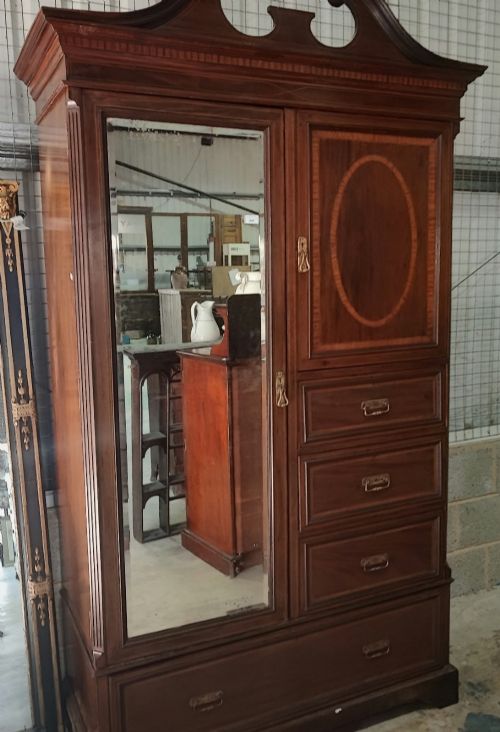
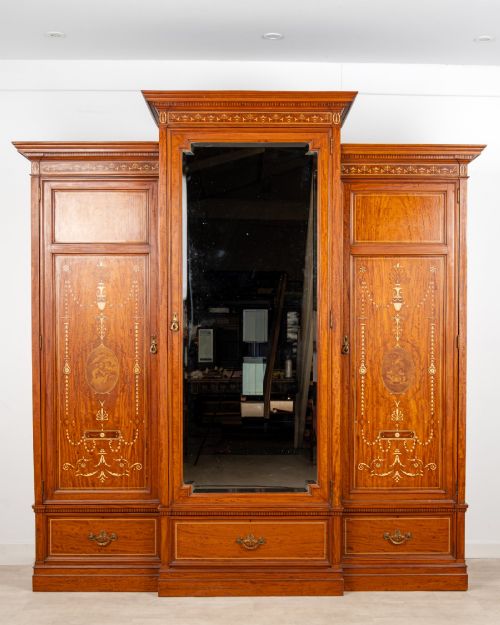
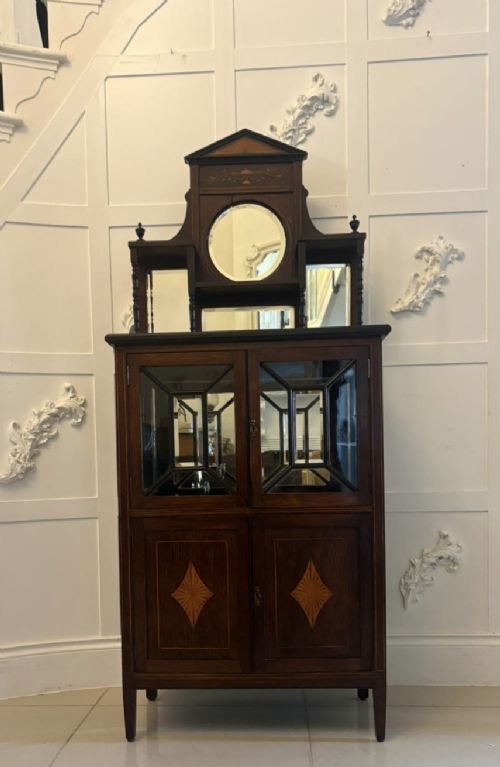
A satinwood inlay mirror selection includes wall-hanging specimens, cheval stands, and dressing table glasses that reflect the refined tastes of Georgian, Victorian, and Edwardian makers. Buyers searching for a satinwood inlay mirror frequently encounter large bedroom wardrobes, compactum cabinets, and overmantel frames featuring contrasting banded borders.
The objects span from late eighteenth-century George III toilet glasses to Edwardian Sheraton Revival pieces built around mahogany and rosewood carcasses. Most surviving examples integrate mirror plates into larger functional items such as dressing tables, armoires, and display cabinets.
Originating largely from British workshops of the nineteenth and twentieth centuries, these items demonstrate how cabinetmakers utilised bright tropical woods to highlight central glass panels. The forms vary from small tabletop toilet swivel mirrors to tall floor-standing cheval mirrors designed for reception rooms and bedrooms.
Quality Variations in Construction and Design
The standard of execution in inlay work defines the division between standard production pieces and exhibition items, visible in the tightness of timber joints and the complexity of marquetry motifs. Superior pieces exhibit crisp, hand-cut botanical or neoclassical motifs with minimal filler, whereas lesser examples rely on simpler banded lines.
The clarity and depth of the mirror glass itself, alongside the preservation of the original polished wooden finish, indicate the care an object received over successive centuries. Heavier, multi-section wardrobe frames and freestanding cheval mirrors demonstrate greater structural ambition than simple hanging wall plates.
Some nineteenth-century dressing tables incorporate secret rising compartments designed for hiding valuables from prying eyes.
Edwards and Roberts·Gillows·Maples and Co
The Satinwood Inlay Mirror Glossary
- Satinwood
- A hard, durable timber with a characteristic golden-yellow sheen and natural lustre, highly prized for decorative furniture veneers. It was frequently employed during the Georgian and Edwardian eras to create striking contrasts against darker woods.
- Marquetry
- The art of applying small pieces of veneer to a structure to form decorative patterns and pictorial designs. Craftspeople selected various toned woods to achieve naturalistic shading without the use of paint.
- Cheval mirror
- A full-length plate suspended on a vertical frame with a pivoting mechanism, allowing the user to tilt the glass. These freestanding items became prominent additions to principal bedrooms during the nineteenth century.
- Toilet mirror
- A smaller portable glass mounted on a box base or small chest, designed for placement on a dressing table or desk. They typically feature small drawers for personal items and adjustable side arm supports.
- Compactum
- A large fitted wardrobe combining hanging space, shelving, and internal drawers within a single architectural unit. Victorian makers utilised these multi-functional pieces to maximise bedroom storage.
Satinwood Inlay Mirror: Frequently Asked Questions
How do I date a mirror frame?
Examine the timber species, construction joints, and edge bevels of the glass plate to determine the likely period of manufacture. Georgian and Victorian cabinetmaking techniques differ significantly from twentieth-century assembly methods.
Secondary woods used for carcases and backboards also provide strong chronological indicators, as do the specific styles of brass hardware and inlay patterns popular during particular decades.
Were these mirrors part of larger sets?
Many surviving examples originated as detachable components of large dressing tables, compactum wardrobes, or marble-topped washstands. Over time, mirrors and their matching bases occasionally became separated.
Freestanding cheval mirrors and wall-hanging frames were typically commissioned as standalone decorative items for hallways, drawing rooms, or master bedrooms rather than suites.
How should I clean satinwood veneer?
Maintain the polished timber surface using a soft, dry lint-free cloth to remove dust without introducing excess moisture. Avoid commercial silicone sprays that can penetrate aged finishes and degrade the wood.
If cleaning requires moisture, use a barely damp cloth followed immediately by dry buffing, keeping water well away from the edges of the mirror plate where silvering can be damaged.
What distinguishes Sheraton Revival pieces?
Sheraton Revival furniture draws direct inspiration from the neoclassical designs of the late eighteenth century, reinterpreted by late Victorian and Edwardian cabinetmakers. These works feature light satinwood grounds, symmetrical inlaid urns, bellflowers, and subtle stringing.
While original eighteenth-century pieces display distinct tool marks and construction quirks, revival items from around nineteen hundred often show more standardised machine assistance.