




Full Length Hall Mirror
A full length hall mirror brings both scale and light to a narrow entryway, reflecting light through Victorian and Edwardian spaces.
Full Length Hall Mirror
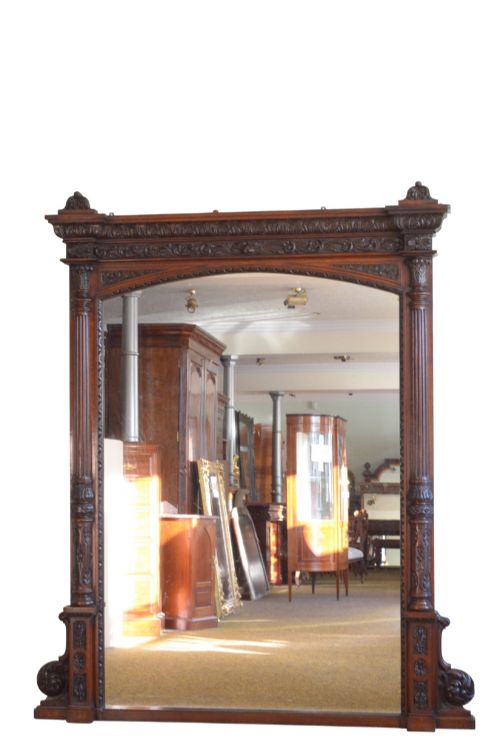
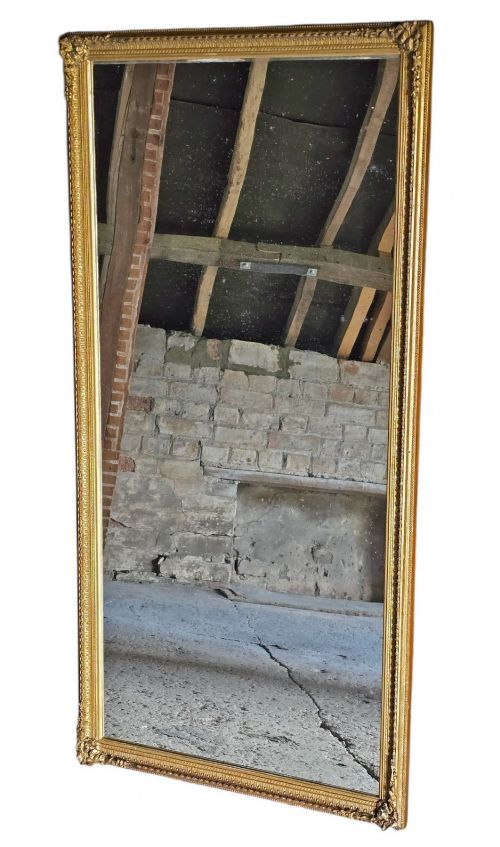
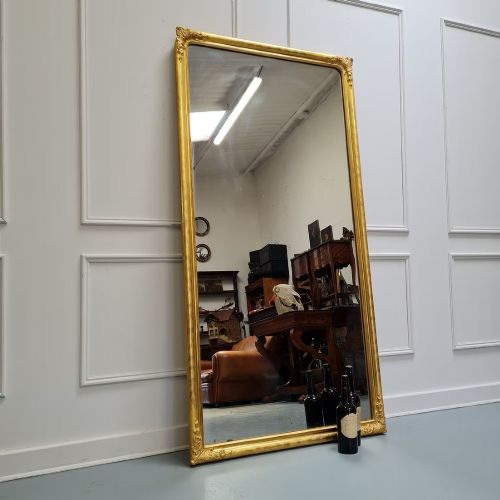
A full length hall mirror provides a practical vertical surface for checking attire before leaving the house, often taking the form of a leaner or tall wall mirror. These pieces emerge chiefly from the nineteenth century, spanning Victorian, Edwardian, and Louis Philippe aesthetic traditions.
The inventory on this page ranges from substantial English oak and mahogany frames to ornate continental giltwood and painted finishes. Buyers encounter everything from carved Gothic Revival designs to slender French wall mirrors suited to reception rooms and hallways.
How they were made
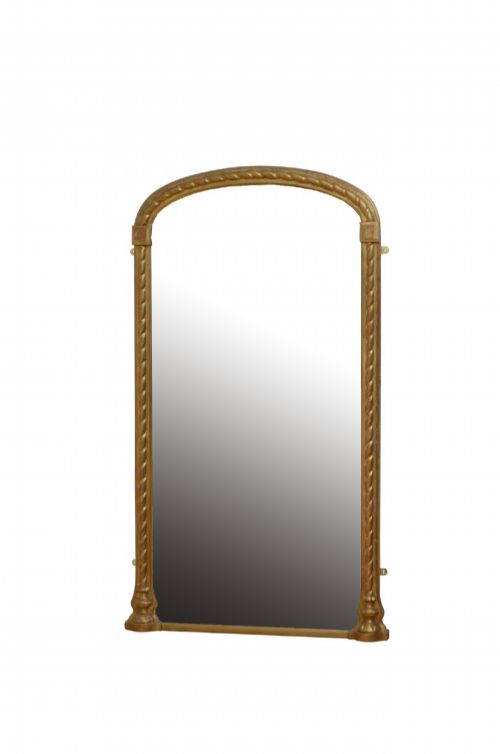
Frames are constructed from solid woods such as oak, mahogany, and ebonised timber, alongside softer woods prepared for gesso and gold leaf application. Carvers shaped rope twists, floral details, and arched crests directly into the wood or moulded them in gesso before gilding or painting.
Mirrored glass is set within these heavy frames, occasionally showing the subtle distortions or foxing characteristic of nineteenth-century manufacture. Over-painting and original gilding methods applied layers of gold leaf or metallic paint over prepared grounds.
Among the historical items sits a nineteenth-century glass fairground distortion mirror, offering a playful break from standard reflections.
What varies in quality
The distinction between standard examples and finer pieces lies in the crispness of the wood carving and the depth of the gesso work. Deeply undercut rope twists and hand-carved floral motifs demonstrate superior craftsmanship compared to simpler moulded decoration.
The integrity of the frame construction and the preservation of the original gilding or paint finish dictate the standing of the piece. Untouched surfaces retain a depth of colour that inferior or heavily restored examples lose.
The Full Length Hall Mirror Glossary
- Giltwood
- Wood that has been coated with gold leaf. This finish defines many nineteenth-century French and English frames.
- Gesso
- A plaster-like material applied to wood frames to create smooth surfaces for carving or gilding. It allows for intricate relief decoration.
- Louis Philippe
- A mid-nineteenth-century French style characterised by restrained classical proportions and gentle arched tops. These mirrors balance simplicity with decorative presence.
- Ebonised wood
- Timber treated to imitate ebony. This dark finish appears frequently on Victorian hall mirrors to create a striking contrast.
- Leaner mirror
- A tall mirror designed to rest against a wall rather than hang securely from brackets. These pieces rely on their substantial weight for stability.
Full Length Hall Mirror: Frequently Asked Questions
How do I hang a heavy hall mirror safely?
Large nineteenth-century frames require heavy-duty wall fixings anchored directly into masonry or secure studs. Professional installation is recommended given the considerable weight of solid wood and glass.
Alternatively, many tall mirrors function effectively as leaner mirrors placed directly on the floor against a wall. This method avoids drilling into walls while providing a secure base.
Where should I position a full length mirror in a hall?
Placing the mirror opposite a doorway or window maximises the natural light travelling through narrow corridors. This placement creates an immediate sense of space upon entering.
Ensure there is sufficient clearance to stand back and check attire fully. Reception rooms and wide hallways offer the ideal depth for viewing.
How do I identify a Victorian mirror?
Victorian pieces often feature robust timbers like oak and mahogany, or dense gesso ornamentation finished in gold leaf or ebonised paint. Look for stylistic cues such as Gothic Revival detailing or Aesthetic Movement proportions.
Construction methods on the reverse, including hand-cut fixings and older backing boards, help confirm the nineteenth-century origin.
Are French and English mirrors different?
French mirrors from the nineteenth century frequently employ the Louis Philippe style, featuring smooth frames with rounded upper corners and subtle painted or gilded surfaces. They lean towards understated elegance.
English counterparts in the listings tend to showcase heavier carved wood details, rope twists, and more pronounced architectural frames suited to Victorian interiors.