




Satinwood Inlaid Work Table
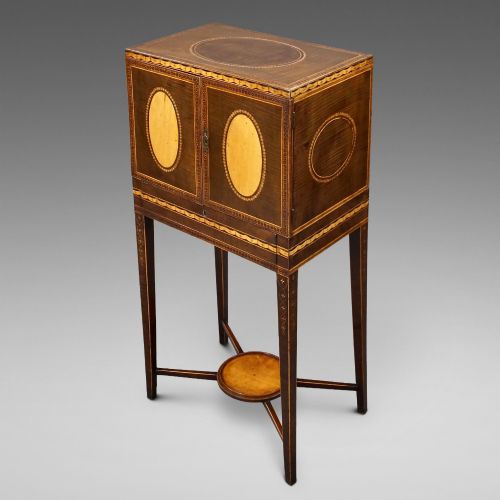
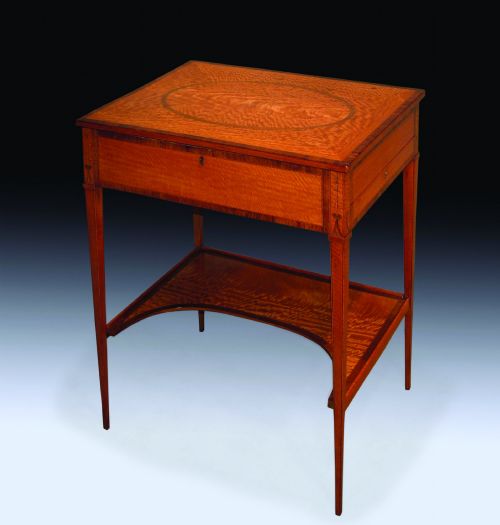
A satinwood inlaid work table brings together pale timbers and delicate marquetry to provide a functional surface for needlework and correspondence.
Satinwood Inlaid Work Table
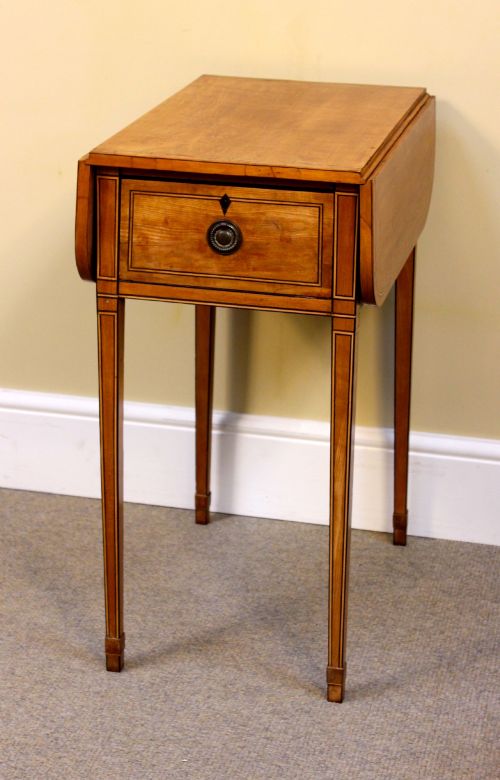
A satinwood inlaid work table combines storage for sewing implements with a decorative writing or occasional surface, appearing across Georgian, Regency, Victorian, and Edwardian periods. Buyers encounter pieces ranging from 18th Century George III and Sheraton designs to later Sheraton Revival and Edwardian interpretations.
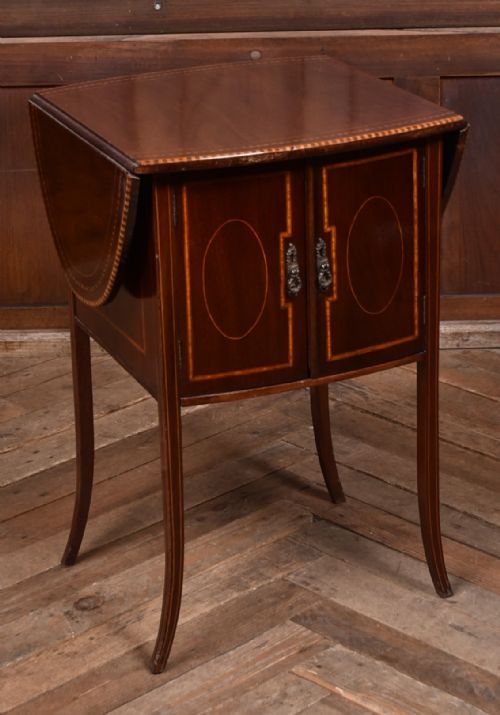
The primary forms on this page include drop-leaf sewing tables, side tables, and occasional tables featuring specialised compartments. These pieces originate from British and continental workshops, reflecting shifts in taste from strict classical proportion to ornate late Victorian and Edwardian revival styles.
Materials and technique
Cabinetmakers constructed these tables using a carcase of mahogany or pine veneered with figured satinwood, often complemented by contrasting woods such as ebony, boxwood, and rosewood for border stringing. Wood inlay and marquetry form elaborate floral or geometric motifs across the top and sides.
Makers integrated brass hardware, fabric-lined interior compartments, and drop flaps into the design, utilising hand-cut veneers and precise joining techniques. Some examples incorporate hand-painted decoration alongside traditional inlay to achieve varied surface textures.
Several tables hide secret rising compartments designed to keep private letters and thimbles out of sight.
Judging quality
The distinction between tiers rests upon the choice of timber and the precision of the marquetry. Superior examples display tightly figured satinwood with crisp, multi-wood inlay that remains flush with the surrounding surface.
Construction integrity defines the upper range, seen in the smooth operation of internal drop boxes, secret rising compartments, and well-fitted drawers. Lesser pieces exhibit simpler secondary timbers and mechanical fittings of lesser refinement.
Charles Topino
The Satinwood Inlaid Work Table Glossary
- Satinwood
- A dense, lustrous timber with a golden sheen used primarily as a veneer on fine furniture. It provides a pale, reflective surface that takes fine inlay exceptionally well.
- Marquetry
- Decorative patterns formed by fitting together contrasting pieces of wood veneer into a design. This technique covers table tops with elaborate floral motifs and classical urns.
- Drop-leaf
- A table design featuring hinged flaps that fold down to reduce the footprint or extend the surface when raised. These leaves are supported by swing brackets or pivoted wooden arms.
- Stringing
- Thin lines of contrasting timber inlaid into grooves on the surface of furniture to create geometric borders. It frames panels of satinwood and mahogany to define the structural edges.
Satinwood Inlaid Work Table: Frequently Asked Questions
How do I date a satinwood table?
Dating relies on examining the secondary timbers, the style of the inlay, and the overall structural proportions. Georgian and Sheraton pieces often display restrained classical motifs and linear stringing.
Later Victorian and Edwardian examples tend toward busier marquetry, hand-painted details, and revival styles. Hardware and internal mechanics also offer clues to the manufacturing decade.
Where should I place a work table?
These compact tables suit living areas, studies, or bedrooms as bedside or lamp surfaces. Their finished backs and detailed tops allow them to stand freestanding within a room.
Protecting the satinwood surface from direct sunlight prevents the pale timber from darkening unevenly. Keeping them away from excessive heat sources safeguards the delicate veneer and inlay.
What is Sheraton Revival furniture?
Sheraton Revival furniture refers to pieces made around the late nineteenth and early twentieth centuries that imitate the light, elegant designs of the 18th Century designer Thomas Sheraton. These items frequently feature satinwood veneers and painted floral decoration.
Makers of this period combined historical aesthetics with contemporary manufacturing methods to satisfy Victorian and Edwardian demand for refined domestic furnishings.