


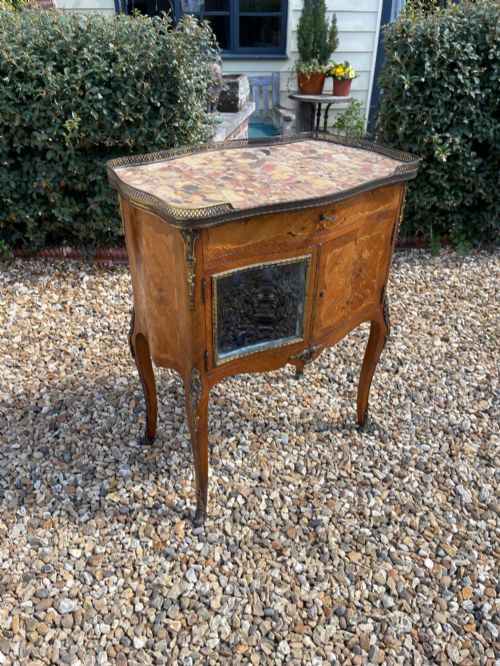


Satinwood Inlaid Display Table
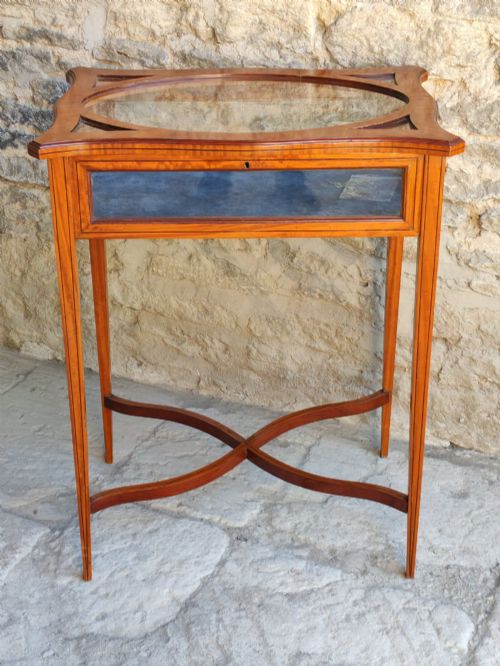
A satinwood inlaid display table brings together bright timber and glazed cabinet work to show off small treasures.
Satinwood Inlaid Display Table
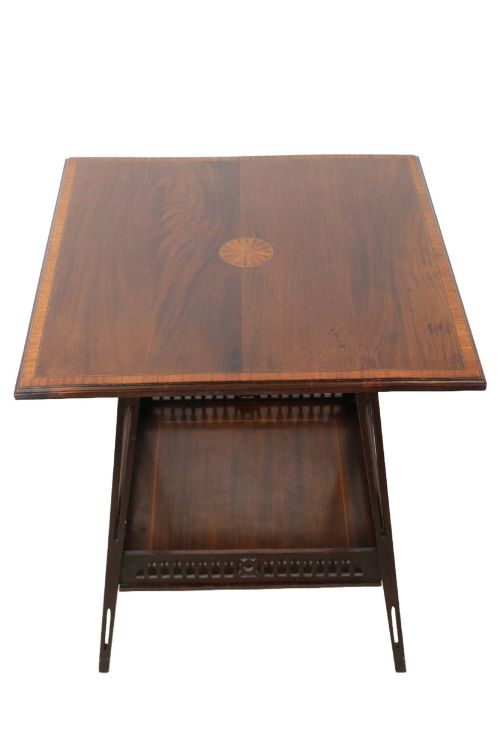
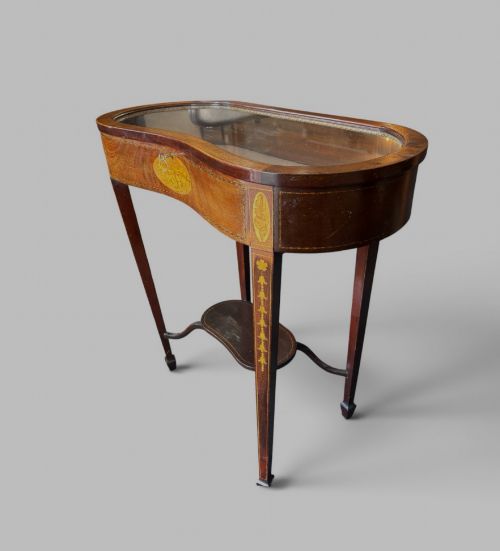
A satinwood inlaid display table is a piece of furniture designed to house and exhibit small valuables, curiosities and jewellery beneath a glass top or behind glazed panels. These tables draw heavily on the Edwardian period and the Sheraton Revival style, alongside late Victorian examples.
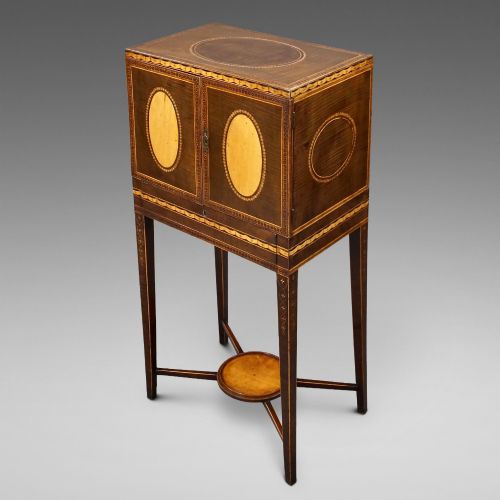
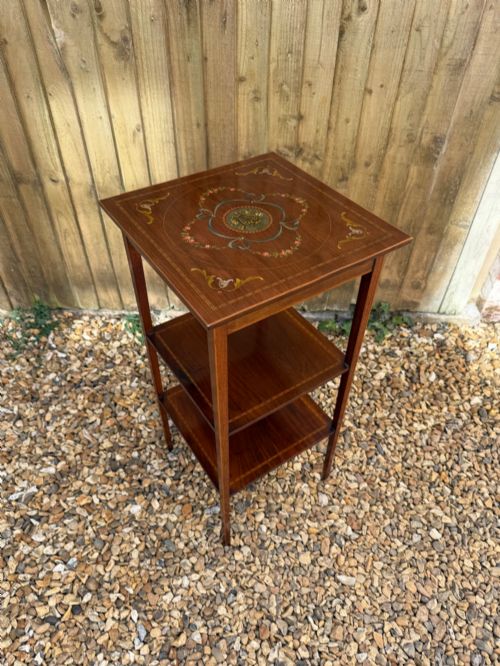
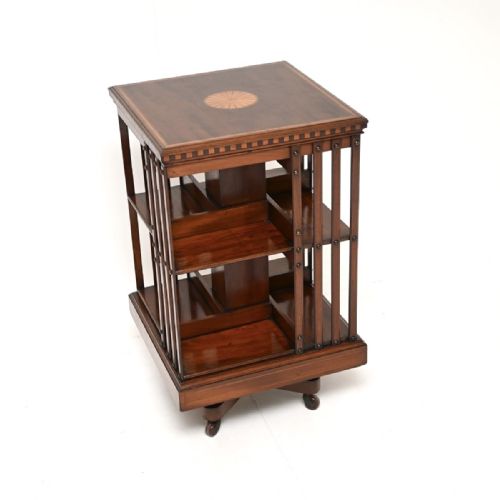
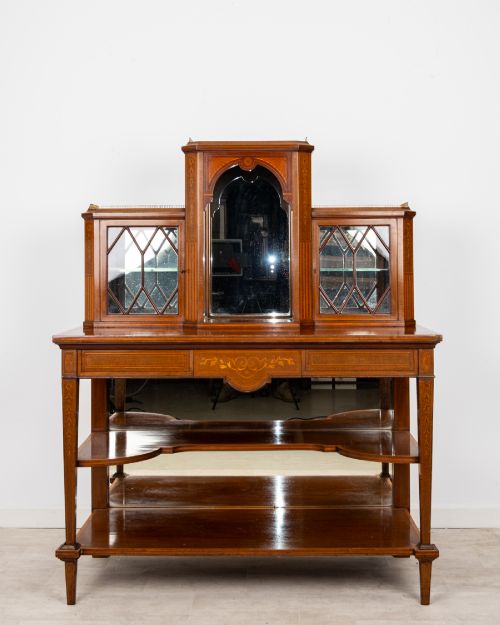
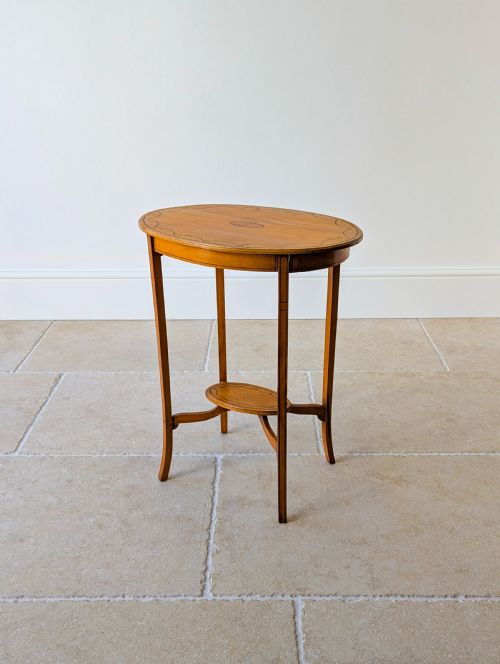
Buyers encounter various forms ranging from kidney-shaped bijouterie tables to oval occasional tables and vitrines. The construction typically combines a mahogany or satinwood carcase with intricate boxwood, rosewood, and ebony stringing or marquetry.
How they were made
Cabinet makers utilised dense hardwoods like mahogany and rosewood as a foundation, veneered with pale satinwood to create a contrasting ground for detailed decoration. Individual sections of boxwood, ebony and stained woods were hand-cut to form floral and geometric marquetry patterns.
Brass fittings, including hinges, locks and castors, complemented the glazed compartments used to protect delicate items inside. Fine stringing outlines the tops, legs and drawers of these tables to define their geometric forms.
Listings span the Victorian and Edwardian periods, featuring satinwood, mahogany, rosewood, walnut, and glass.
What varies in quality
The standard of a satinwood inlaid display table rests upon the precision of the marquetry and the choice of timbers. Crisp, tight inlay work without excessive filler distinguishes finer cabinet work from simpler production.
Proportion and the handling of secondary woods also mark the grade of the piece, as master workshops employed heavier gauge veneers and more elaborate glass framing. Structural integrity in the legs and glass seating dictates how well the table survives decades of use.
Trevor Page & Co·Shoolbred of London·Edwards & Roberts
The Satinwood Inlaid Display Table Glossary
- Satinwood
- A lustrous tropical timber known for its golden-yellow colour and reflective sheen, frequently used as a veneer in fine cabinet making.
- Bijouterie table
- A specialist display table with a glazed top and velvet-lined interior compartment intended for jewellery and small curiosities.
- Marquetry
- Decorative patterns formed by fitting together contrasting veneers of wood, bone or shell onto a structural carcase.
- Sheraton Revival
- A late nineteenth and early twentieth century design movement that reinterpreted the light, neoclassical furniture forms of the eighteenth century.
- Etagere
- An open tiered piece of furniture with multiple shelves supported by slender columns, used for displaying ornaments.
Satinwood Inlaid Display Table: Frequently Asked Questions
What is a bijouterie table?
A bijouterie table is a display piece featuring a glass-inset top that opens to reveal a lined interior compartment. These tables were designed for drawing rooms to exhibit small valuables and collections.
Most surviving examples date from the Edwardian period or the late Victorian era. They combine glazed panels with delicate leg frames and marquetry inlay.
How do I care for satinwood?
Satinwood benefits from placement away from direct sunlight and strong heat sources, which can dry and crack the delicate veneers. Regular dusting with a dry, soft cloth maintains the polished surface without harsh chemical polishes.
Care should be taken around the glass top and inlaid edges to prevent moisture ingress. Gentle handling of the hinged lid preserves the original brass fittings and joints.
What is Sheraton Revival?
Sheraton Revival is a decorative style popular around nineteen hundred that drew inspiration from eighteenth century neoclassical furniture. These pieces feature balanced proportions, tapered legs, and refined stringing.
Makers working in this style utilised satinwood, mahogany and contrasting fruitwood inlays. The aesthetic emphasises lightness and elegance over heavy Victorian forms.
Where were these tables used?
These tables stood in drawing rooms, parlours, and reception spaces of large homes during the late nineteenth and early twentieth centuries. They served both as decorative occasional furniture and as display cases for personal collections.
The glazed compartments kept delicate items free from dust while allowing guests to inspect them easily. Their compact footprint made them versatile for various spots in a room.