
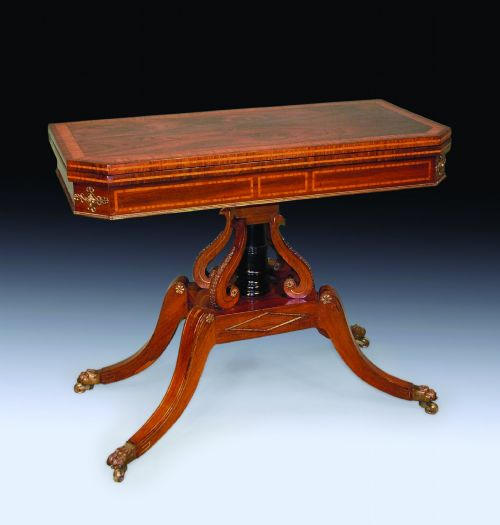
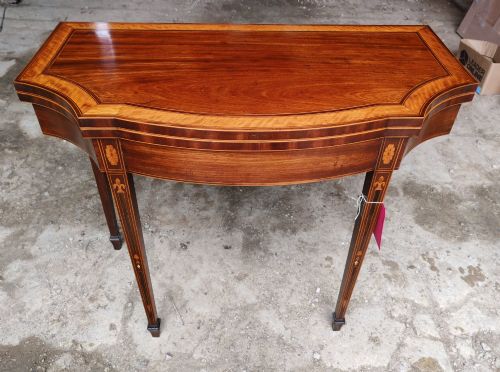
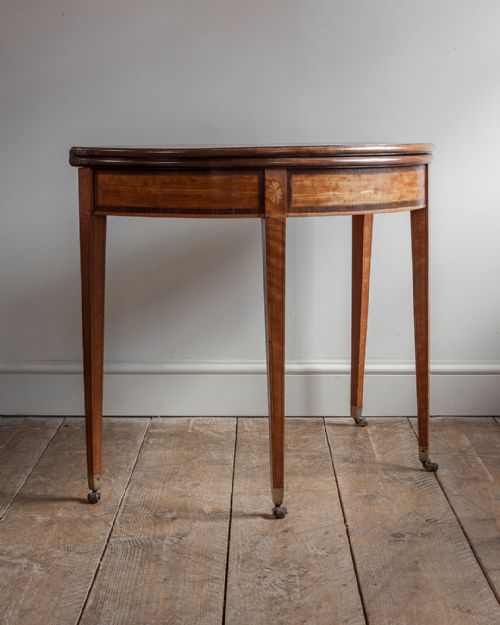
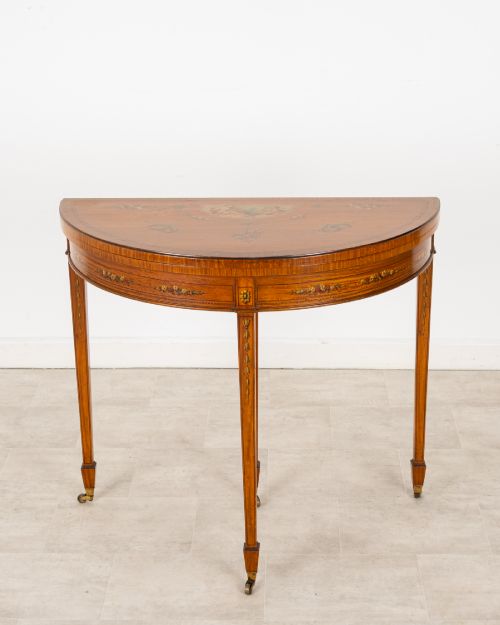


Satinwood Fold Over Table
Satinwood fold over table designs combine rich timber grains with clever pivoting leaves to transform from compact consoles into generous gaming surfaces.
Satinwood Fold Over Table
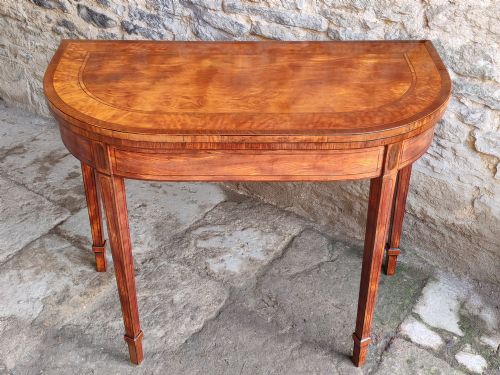
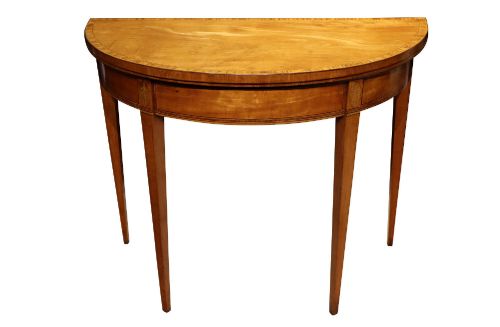
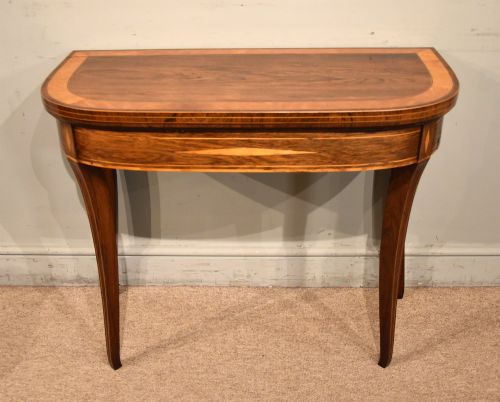
A satinwood fold over table serves as a dual-purpose piece, functioning primarily as a slim console or side table before opening its hinged leaf to reveal a baize-lined surface for cards, games, or taking tea. These versatile items appear frequently in Georgian, Regency, and Edwardian forms across the inventory.
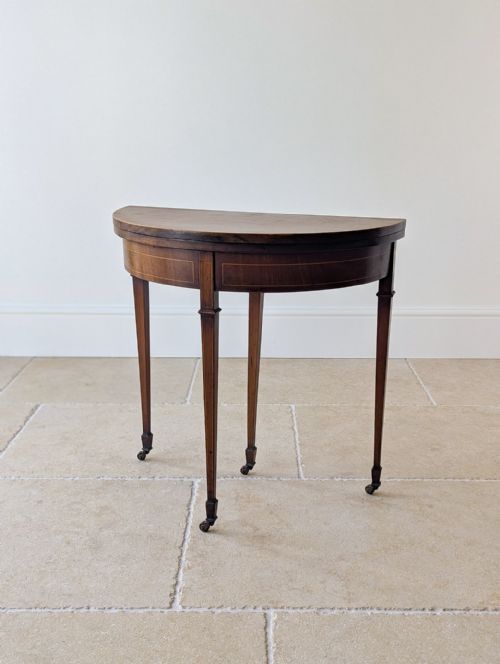
The dominant silhouette on this page is the demi-lune or semi-elliptical shape, designed to hug a wall when closed and swing open on a pivoting gateleg or sliding action. Makers combined satinwood with contrasting timbers like mahogany, rosewood, and kingwood to construct these functional parlour items.
How They Were Made
Cabinetmakers constructed these tables using solid carcases and frames faced with finely sliced timber veneers. Satinwood provided the primary golden-yellow ground, accented with crossbanding in kingwood, rosewood, or tulipwood to frame the top and edges.
Inlay and marquetry defined the decorative technique, utilising boxwood, ebony, and satinwood to create geometric stringing, fan motifs, or elaborate painted panels. Workshops joined structural components with traditional mortise and tenon joints while securing the folding leaves with brass hinges.
Tables hiding a secret green baize inside wait patiently for an evening of eighteenth-century whist.
What Varies in Quality
The distinction between ordinary and superior pieces rests upon the selection of timber and the precision of the marquetry. Top-tier examples display richly figured, highly reflective satinwood veneers paired with crisp, tight stringing and harmonious crossbanding that aligns perfectly at the joints.
Construction fidelity also dictates standard, visible in the smoothness of the pivoting mechanism and the stability of the folding leaf when open. Hand-painted classical motifs or floral swags executed with fine brushwork elevate a piece above standard veneered production.
The Satinwood Fold Over Table Glossary
- Demi-lune
- A half-moon shape used for table tops and consoles. This form allowed the furniture to sit flat against a wall when folded.
- Crossbanding
- A strip of veneer applied perpendicularly to the grain of the main surface. It creates a contrasting border around the edge of a table top.
- Marquetry
- The art of forming decorative patterns using fitted pieces of various coloured veneers. Craftsmen applied this technique to tabletop surfaces to depict floral or geometric motifs.
- Stringing
- Thin, narrow lines of contrasting wood inlaid into channels in the timber surface. It defines panels and outlines geometric shapes on cabinet fronts and tabletops.
- Gateleg
- A hinged leg that swings outward to support a folding tabletop leaf. This mechanical support secures the extended surface during card games or tea.
Satinwood Fold Over Table: Frequently Asked Questions
How do you open the top?
The top leaf pivots on hinges attached to the rear of the frame, rotating outward on a central pivot or a swinging gateleg. Lifting the hinged leaf requires sliding or swinging the supporting leg outward to bear the weight of the extended surface.
Owners must ensure the mechanism moves freely without forcing the timber. Once the leg locks into position, the unfolded leaf rests flat and stable.
Where were they placed in a home?
These tables stood against walls in reception rooms, hallways, and parlours when closed to save space. Their shallow demi-lune or rectangular profiles allowed them to function as decorative side consoles beneath mirrors or paintings.
When guests arrived for card games or evening entertainment, servants or hosts moved the tables into the centre of the room. Opening the leaf created an immediate surface for gaming counters, cards, or tea services.
How do you tell Georgian from Edwardian examples?
Georgian examples, dating from the eighteenth century, typically display hand-cut veneers, subtle stringing, and heavy, dense mahogany or oak carcases beneath the satinwood. Their proportions tend to be robust, reflecting eighteenth-century cabinetmaking traditions.
Edwardian pieces, built around nineteen-hifdred to nineteen-ten, often showcase Sheraton Revival styling with lighter framing, machine-cut veneers, and sometimes delicate hand-painting. They frequently combine mahogany with satinwood inlay and feature slender, tapered legs.
How do you care for satinwood veneer?
Satinwood furniture requires protection from direct sunlight and extreme humidity fluctuations to prevent the delicate veneers from fading or lifting. Maintaining a stable indoor climate preserves the natural golden lustre of the timber.
Cleaning should involve only a soft, dry cloth to remove dust, avoiding modern silicone polishes that damage antique finishes. Occasional applications of traditional beeswax help nourish the wood grain.