


Satinwood Console
A satinwood console brings a bright, figured timber surface to a hallway or drawing room, prized for its pale golden warmth.
Satinwood Console
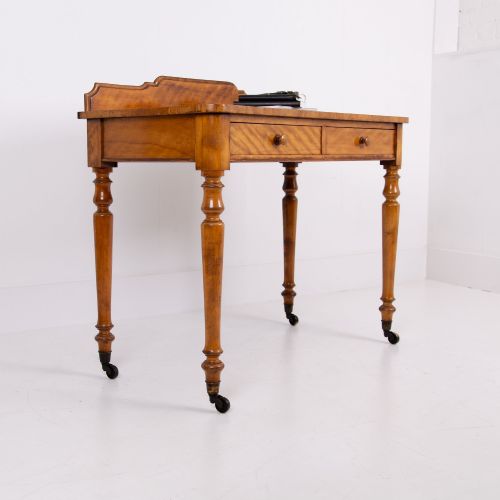
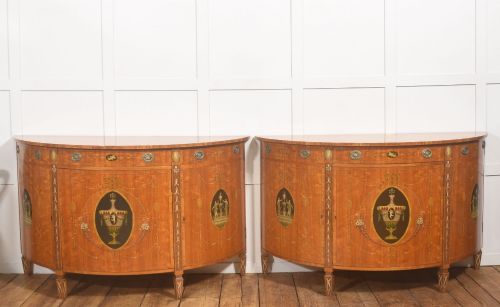
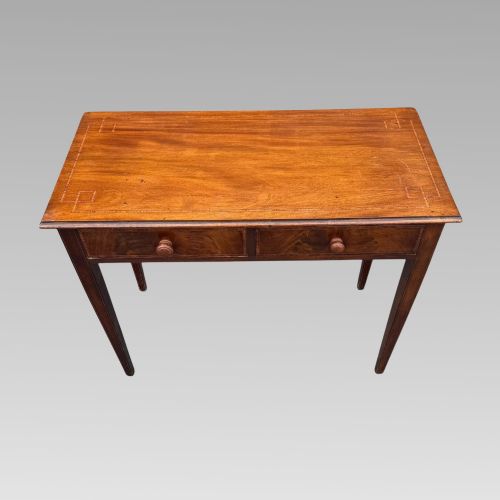
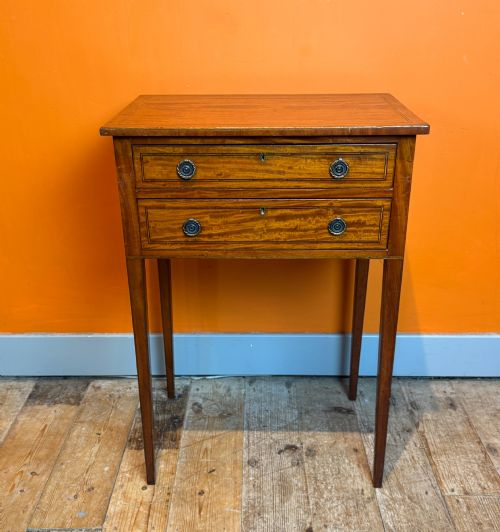
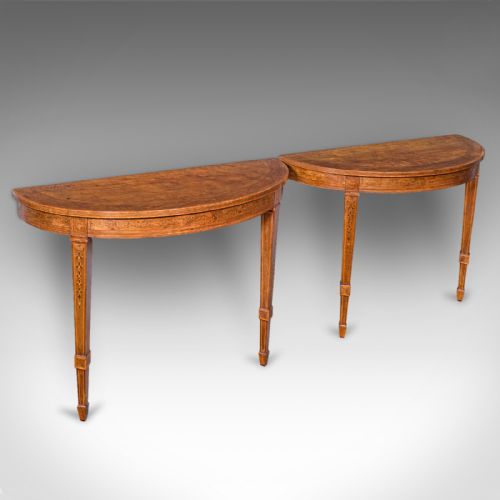
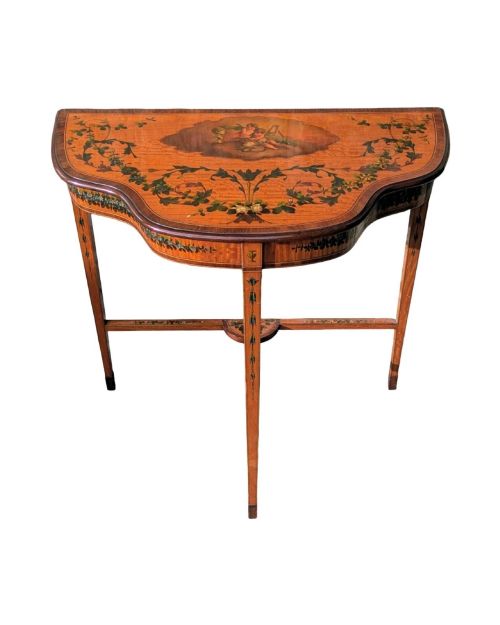
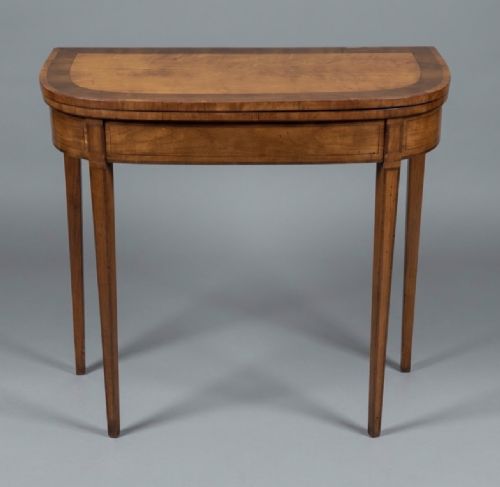
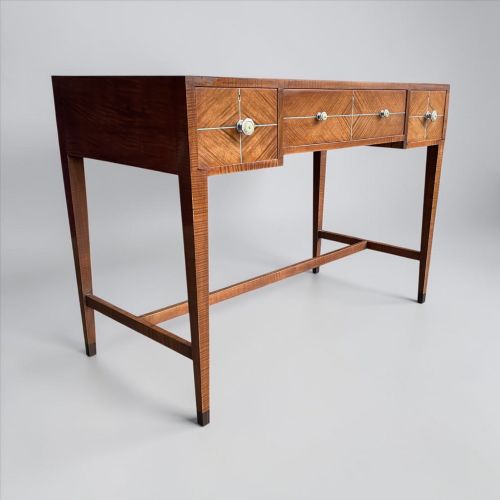
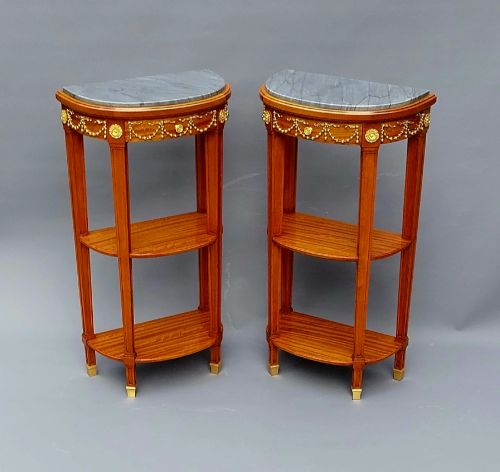
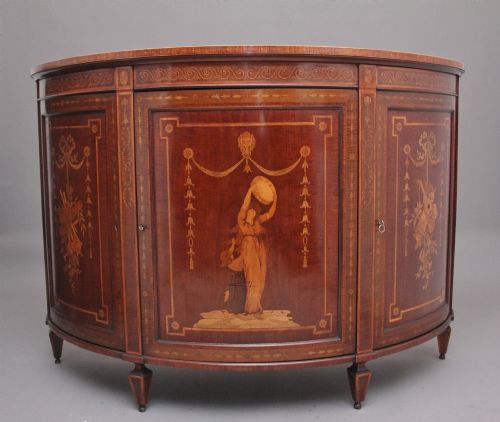
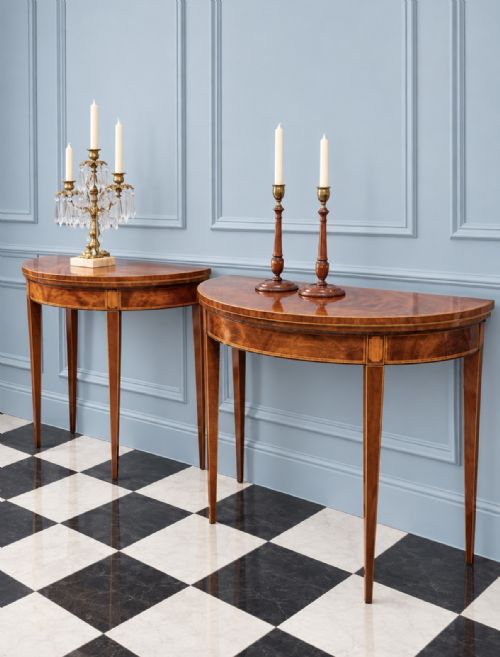
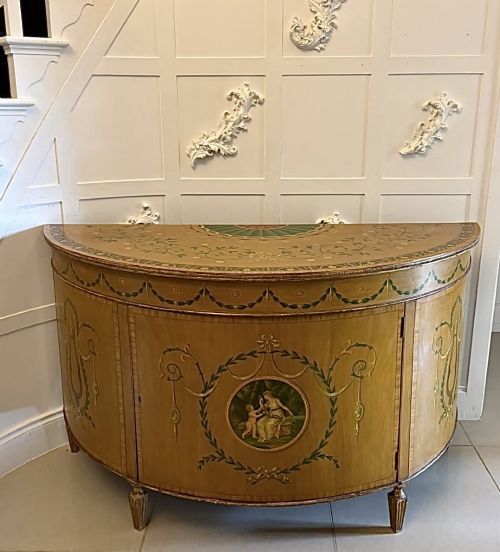
A satinwood console spans foundational periods from the eighteenth century through the Georgian and Edwardian eras, appearing in forms such as side tables, card tables, and demi-lune cabinets.
The buyer meets these pieces in various configurations, including folding card tables and painted side pieces reflecting Sheraton and Neoclassical styles.
Origins stretch from English workshops to French makers, utilising the distinctive grain of satinwood alongside mahogany and rosewood.
Materials and technique
Craftsmen built these tables using timber frames faced with satinwood veneers, often incorporating crossbanding in rosewood, mahogany, and boxwood to frame the top surfaces.
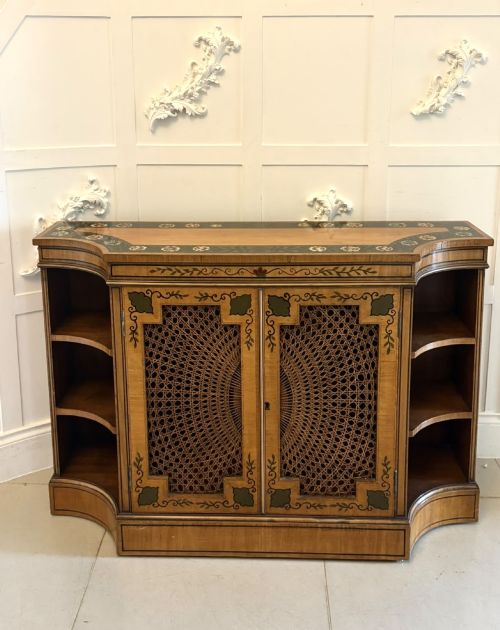
Marquetry and hand-painted classical panels adorn many of the superior examples, paired with structural elements in timber and brass mounts.
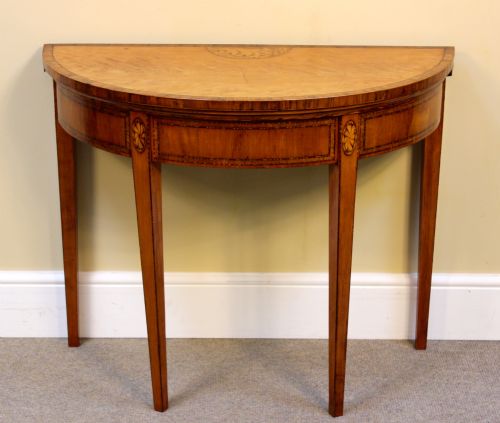
Joinery techniques accommodated folding tops for games tables and demi-lune shapes designed to sit flat against a wall.
Satinwood Console Retail Price Guide 2026
Typical asking prices for satinwood console among the pieces listed under this phrase on Sellingantiques today, from the lower quarter to the upper quarter. They describe what is for sale here now, not the wider market.
Current listings span the eighteenth, nineteenth, and early twentieth centuries, utilising materials like satinwood, rosewood, brass, and painted timber.
Assessing quality
The distinction between tiers rests upon the crispness of the marquetry, the complexity of the hand-painted panels, and the choice of contrasting timbers used for crossbanding.
Superior examples display balanced proportions in demi-lune shapes and stability in the timber grain, whereas simpler pieces rely solely on plain satinwood veneers without inlay.
Bath Cabinet Makers·Charles Bevan·Christopher Dresser
The Satinwood Console Glossary
- Demi-lune
- Having a half-moon shape, this format allows console and card tables to stand flush against a wall.
- Crossbanding
- A strip of veneer applied to the border of a tabletop with the grain running perpendicular to the centre.
- Marquetry
- Decorative patterns formed by fitting together small pieces of tinted wood and other materials into a veneer.
- Sheraton
- A neoclassical design style popular in the late eighteenth century characterised by straight lines and classical motifs.
Satinwood Console: Frequently Asked Questions
What is a satinwood console used for?
These tables provide a decorative surface in entrance halls and reception rooms for lamps, mirrors, or small objects.
Many examples include folding tops designed specifically for card games and social gatherings.
How do I identify a Georgian piece?
Georgian examples display specific characteristics like hand-painted decoration, crossbanding in rosewood, and eighteenth-century structural joinery.
Makers of this era favoured symmetric demi-lune shapes and detailed marquetry work.
What is the difference between a console and a side table?
A console table traditionally sits flat against a wall, frequently taking a semi-circular demi-lune form.
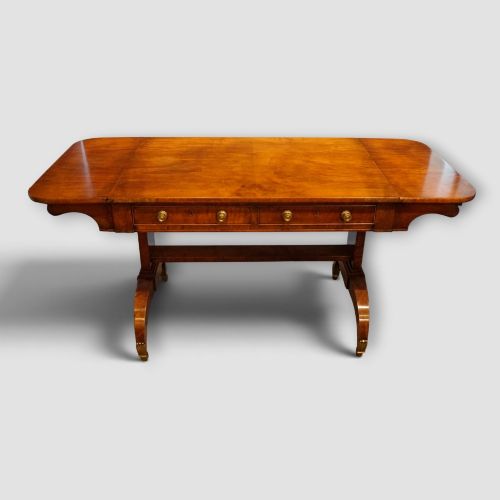
Side tables can stand freestanding in a room and often feature drawers or drop leaves.
How do I care for satinwood furniture?
Keep these timber pieces away from direct sunlight and sudden temperature changes to protect the delicate veneer.
Clean surfaces gently with a dry cloth and avoid excessive moisture on painted or polished panels.