




Sailing Vessel Wall Art
Sailing vessel wall art brings the historic drama of maritime exploration and seafaring life directly into your interior spaces.
Sailing Vessel Wall Art
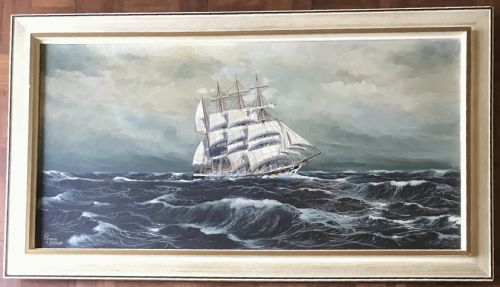
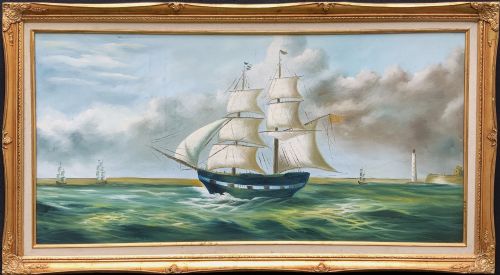
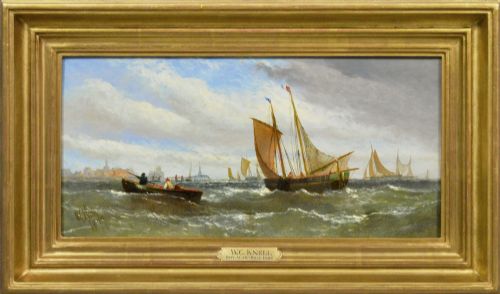
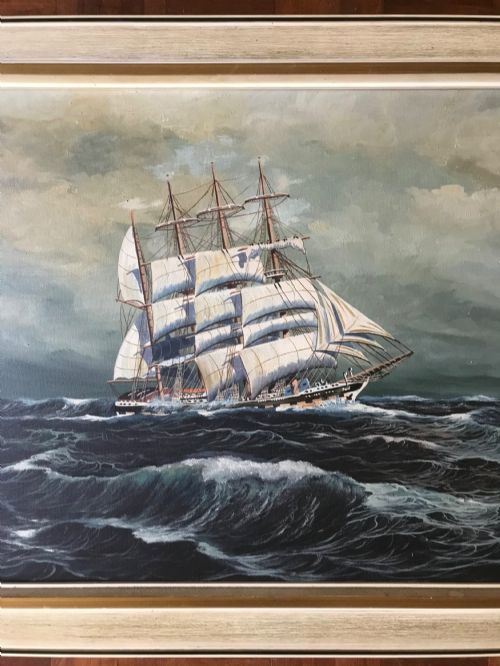
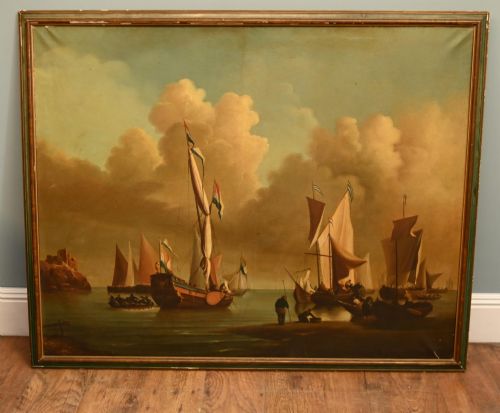
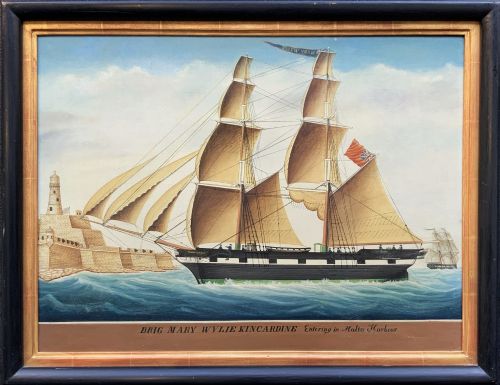
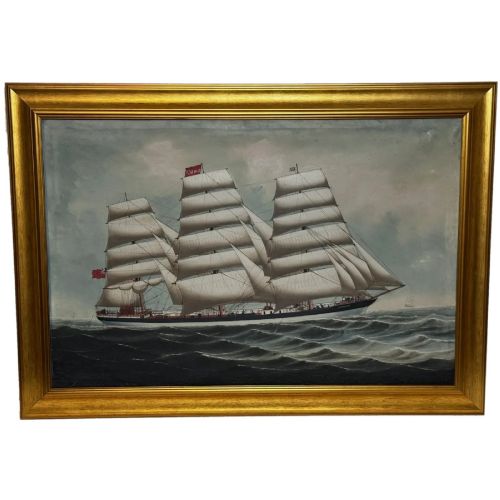
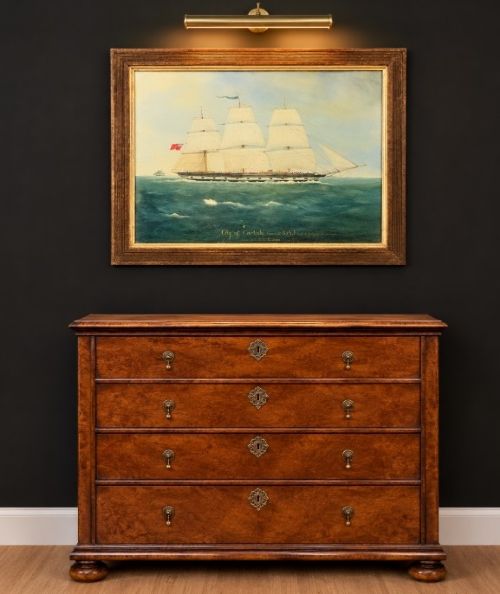
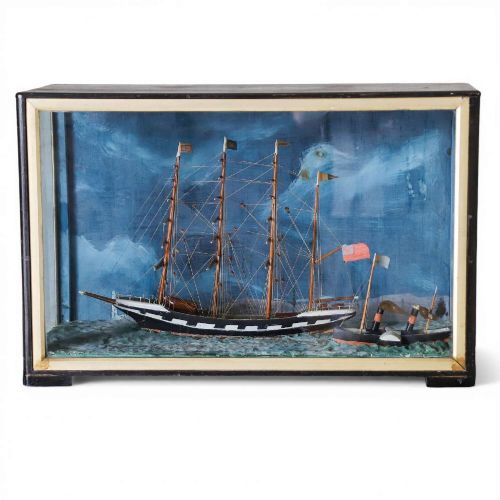
Sailing vessel wall art encompasses maritime paintings, watercolours, dioramas, and framed depictions of ships navigating oceans, rivers, and harbours. Buyers searching this phrase look for historical representations of galleons, barques, schooners, and merchant vessels under sail. The selection draws primarily from nineteenth-century oil paintings and watercolours, alongside Edwardian and Victorian maritime folk art.
Materials and Techniques
Artists and makers constructed sailing vessel wall art using traditional mediums including oil on canvas, oil on panel, and watercolour on paper. Canvases are frequently stretched over wooden frames and occasionally housed within giltwood surrounds that complement the marine subject matter. Lithographs and scratch-built wooden elements also form part of the material record.
Three-dimensional dioramas utilise carved and painted wood, glass cases, and canvas elements to create depth within maritime shadow boxes. Painters applied oil and watercolour pigments to depict turbulent seas, coastal figures, and detailed rigging upon wooden panels or woven canvas supports.
Sailing Vessel Wall Art Retail Price Guide 2026
Typical asking prices for sailing vessel wall art among the pieces listed under this phrase on Sellingantiques today, from the lower quarter to the upper quarter. They describe what is for sale here now, not the wider market.
Some nineteenth-century sailors whittled ships in their spare time, resulting in charmingly lopsided wooden barques that defy naval engineering.
Quality Variations
Quality in sailing vessel wall art rests upon the precision of maritime rigging, the accurate depiction of hull architecture, and the artist's handling of light upon water and sky. Superior works demonstrate a thorough understanding of nautical anatomy and atmospheric conditions during gales or calm passages. Weaker examples exhibit stiffness in wave rendering and generalized vessel proportions that lack specific maritime knowledge.
The integrity of the physical medium further distinguishes the range, from fully restored oil paintings on canvas to naive wooden dioramas showing honest patination. Finer works retain their original framing and surface vibrancy, while lesser pieces suffer from heavy overpainting or material degradation across paper and panel supports.
Reginald Arthur Borstel·Bernard Gribble·Bonaventura Peeters·Charles William Adderton·Daniel Sherrin·Joseph Heard·Paul Jean Clays·Gustave de Breanski
The Sailing Vessel Wall Art Glossary
- Barque
- A sailing vessel with three or more masts having the fore and mainmasts square-rigged and the mizzenmast fore-and-aft rigged.
- Diorama
- A three-dimensional scene enclosed in a glass-fronted case depicting ships at sea utilising carved wooden models and painted backgrounds.
- Galleon
- A large sailing warship with multiple decks used primarily by European nations from the sixteenth through the eighteenth centuries.
- Lithograph
- A print produced from a flat stone or metal plate on which the image area is created using a greasy substance.
- Manner
- A term indicating a work created in the style of a specific artist without being an original production by their hand.
Sailing Vessel Wall Art: Frequently Asked Questions
What periods do these maritime artworks cover?
The selections span from the eighteenth century through to the mid-twentieth century, with a heavy concentration of Victorian and nineteenth-century pieces. Earlier works often depict historical engagements or named merchant ships.
Later Victorian and Edwardian examples capture coastal shipping and harbour scenes with heightened atmospheric realism. Folk art dioramas and scratch-built models provide alternative nineteenth-century interpretations of these sailing vessels.
How do I hang a heavy diorama securely?
Cased dioramas and framed oil paintings on wooden panels require robust wall fixings due to their substantial weight and glass elements. Heavy-duty picture hooks attached directly to wall studs or masonry anchors provide the necessary structural support.
Ensure the hanging wire or integrated brackets on the reverse match the weight distribution of the specific wooden case or heavy giltwood frame.
How can I tell watercolour from oil paintings?
Watercolour paintings utilise thin, transparent pigments on paper supports and typically require protective glass framing to prevent moisture damage. Oil paintings feature thicker, textured pigments applied to canvas or wooden panels and usually remain unglazed.
Examining the surface under magnification reveals the weave of the canvas or the absorbent texture of the paper beneath the pigment.
What subjects besides open sea battles appear?
Artworks frequently portray ships at anchor in specific harbours such as Valletta or Portsmouth, or navigating coastal waters during storms and calm breezes. Merchant vessels, fishing boats, and named barques feature prominently alongside scenes of ships entering port.
Folk art depictions often focus on specific working vessels and coastal trade routes rather than grand naval engagements.