

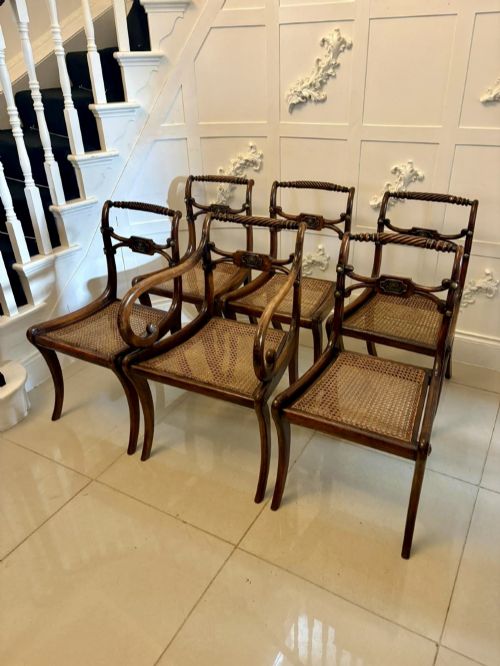
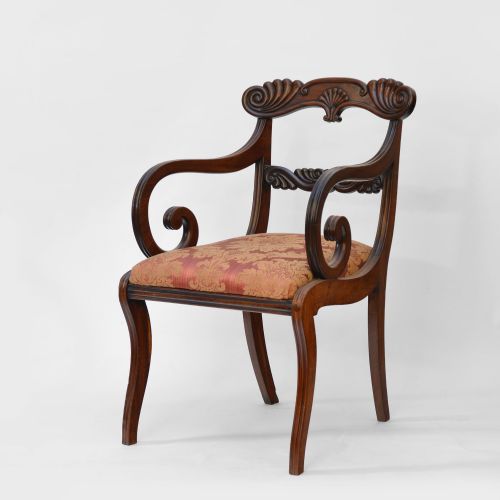


Sabre Leg Carver Chairs
Sabre leg carver chairs are elegant seating pieces defined by their distinctive sweeping supports, offering both comfort and strong period character.
Sabre Leg Carver Chairs
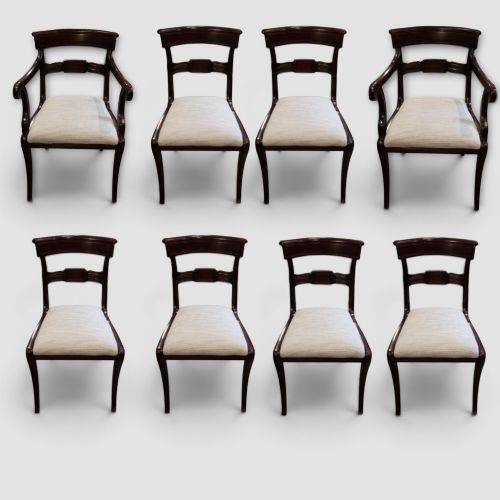
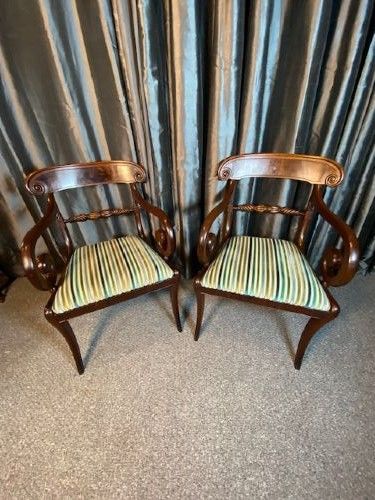
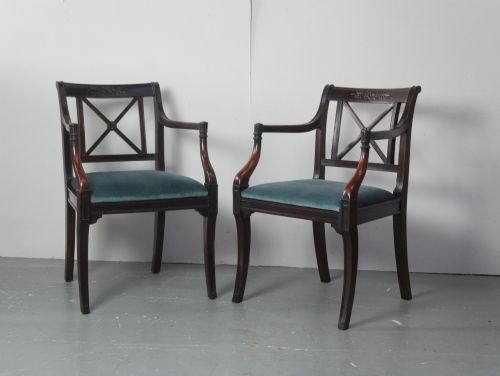
Sabre leg carver chairs are principal seats featuring integrated armrests, designed originally for the heads of dining tables or for use at a desk. When exploring sabre leg carver chairs, you encounter forms ranging from authentic Regency period examples to later Edwardian revivals.
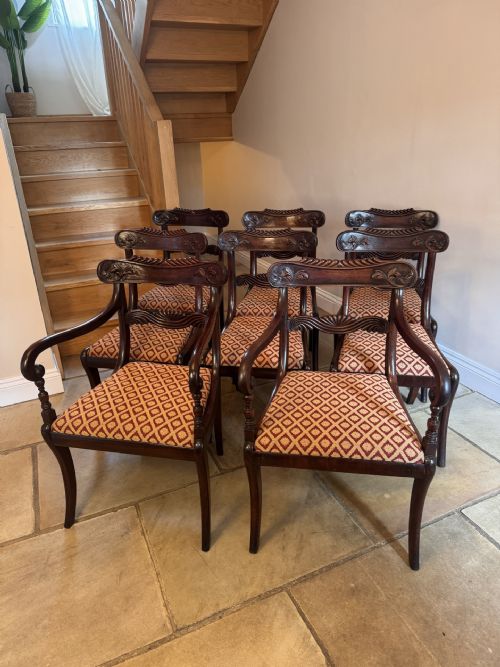
The inventory on this page spans the Georgian and Regency eras, extending into nineteenth century and early twentieth century interpretations. Mahogany predominates as the primary timber, often shaped into open armchairs, elbow chairs, and robust dining suites that include a single carver alongside matching single chairs.
Makers and designers of the early nineteenth century favoured this outward-curving leg profile to impart a sense of movement and lightness. You will find individual armchairs, pairs, and larger sets configured for formal dining rooms and studies.
Construction and Materials
Cabinetmakers constructed sabre leg carver chairs primarily from solid mahogany, utilising its dense grain to support the sweeping curves of the rear legs without snapping. Joinery relied on traditional mortise and tenon techniques to ensure stability under the stress of daily use.
Seating platforms incorporate drop-in pads or upholstered frames covered in materials such as leather, velvet, woven fabric, or cane work. Details like brass inlays, ebonised finishes, and gilding occasionally accent the timber framework on grander pieces.
Sabre Leg Carver Chairs Retail Price Guide 2026
Typical asking prices for sabre leg carver chairs among the pieces listed under this phrase on Sellingantiques today, from the lower quarter to the upper quarter. They describe what is for sale here now, not the wider market.
Even Regency cabinetmakers occasionally needed to sit comfortably after a long day of curving timber.
Assessing Craftsmanship
The distinction between standard production and superior work lies in the fluidity of the leg sweep and the crispness of any carved wooden details. Finer examples display seamless joints where the arm supports meet the seat rail.
Selection of timber grain significantly alters the visual weight of the chair, with highly figured mahogany commanding greater attention. Original surfaces and minimal structural alterations preserve the integrity prized by collectors.
Henry Maxwell
The Sabre Leg Carver Chairs Glossary
- Carver chair
- An armchair designed specifically for use at the dining table, featuring open arms to accommodate wide garments. These seats typically accompanied sets of matching single chairs for the other guests.
- Sabre leg
- A chair leg that curves outward in a concave sweep resembling a cavalry saber. This form gained immense popularity during the Regency period.
- Elbow chair
- An alternative term for an armchair, referencing the supportive rests positioned at elbow height. These pieces served dual purposes in drawing rooms and studies.
- Pollard oak
- Timber taken from the upper branches of pollarded oak trees, producing dense and highly figured grain patterns. It appears in select Regency furniture.
- Cane seat
- A woven mesh seating surface constructed from rattan strips. This technique provides a resilient and breathable foundation.
Sabre Leg Carver Chairs: Frequently Asked Questions
What is a sabre leg carver chair?
A sabre leg carver chair is an armchair featuring distinctive concave-curved legs that sweep outward, commonly associated with the Regency style.
These pieces served as prominent seating at dining tables or desks, combining structural strength with refined classical aesthetics.
Are these chairs comfortable for daily use?
Most examples provide firm support through traditional upholstered pads or woven cane foundations, designed for formal dining.
Living with them requires normal care for antique timbers and delicate fabric surfaces to maintain their condition over time.
How do I identify a Regency period chair?
Authentic Regency pieces typically exhibit dense mahogany timbers, precise joinery, and specific classical motifs characteristic of the early nineteenth century.
Comparing the stretcher placement and leg curvature against documented examples helps confirm the period of manufacture.
Can I mix carvers with standard dining chairs?
Mixing carvers with side chairs reflects historical dining practices where hosts occupied the head seats while guests used armless chairs.
Matching timber tones and leg styles ensures a cohesive arrangement around the dining table.