
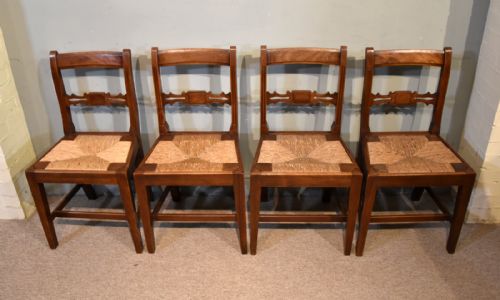
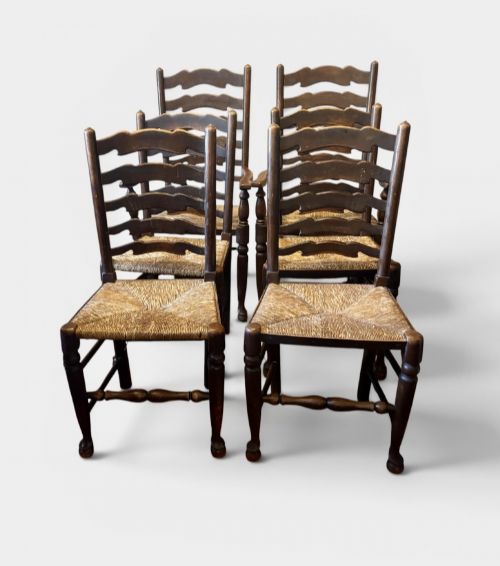


Rustic Woven Seat Chairs
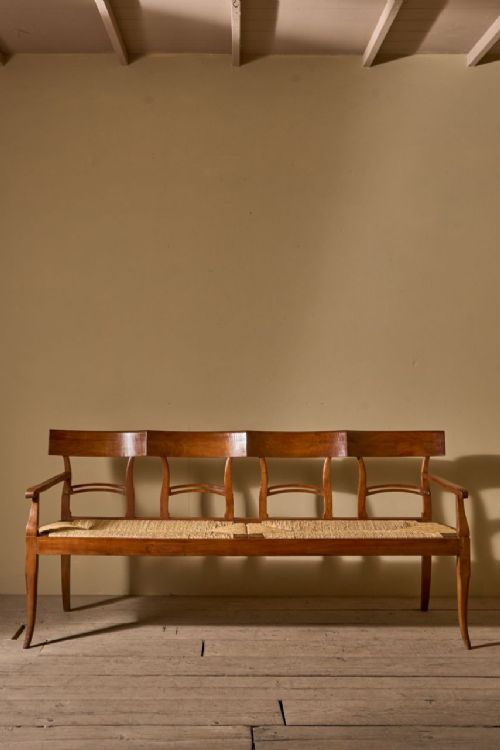
These rustic woven seat chairs combine honest domestic timbers with durable natural cordage, offering enduring character for everyday sitting.
Rustic Woven Seat Chairs
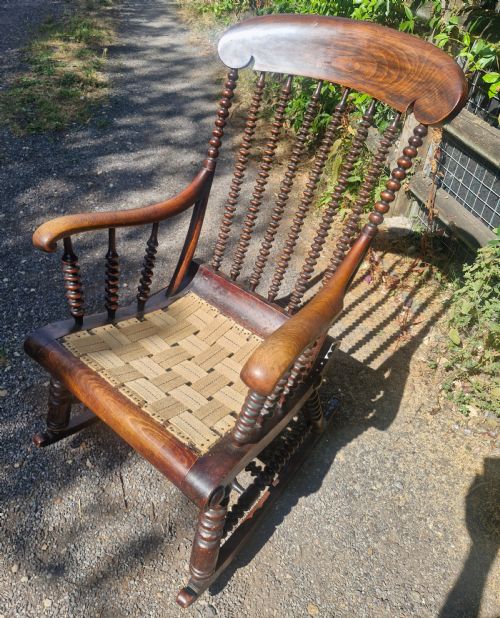
The materials and constructions reflect regional domestic traditions across English, French, Scottish, and Irish country workshops. Common formats include single side chairs, matched sets for dining tables, and low rocking chairs built for utility.
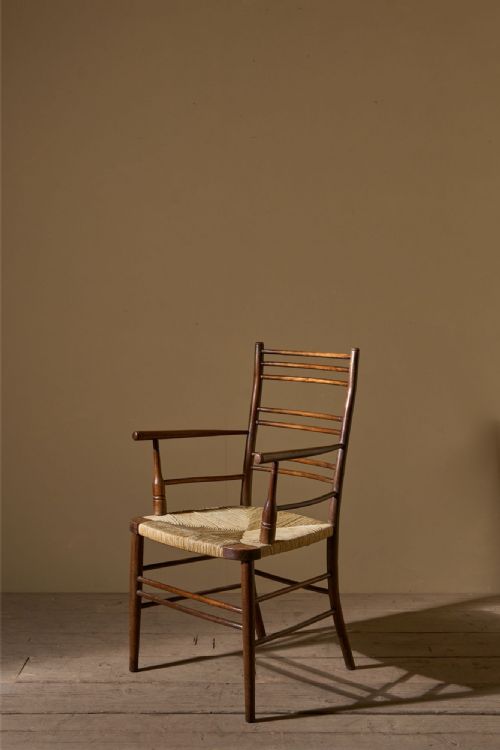
Makers utilised locally available resources such as elm, oak, fruitwood, and ash to construct durable frames suited to everyday kitchen and farmhouse use. The resulting pieces range from plain utilitarian seating to refined vernacular styles like the Arts and Crafts interpretation.
Evaluating craftsmanship and integrity
Quality depends upon the tightness and regularity of the weaving, as well as the preservation of the original rush or straw cordage. Tightly packed natural fibres demonstrate superior skill and provide better longevity during daily sitting.
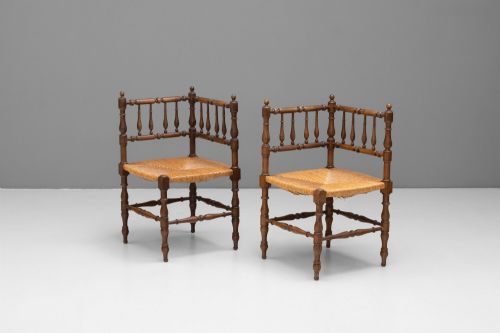
The selection of timber grain and the structural tightness of the joined framework distinguish finer vernacular items from simpler utilitarian seating. Well-turned spindles and robust corner joints indicate careful workshop production.
Some child-sized rocking chairs retain the exact wear marks left by small feet swinging against the lower stretchers centuries ago.
The Rustic Woven Seat Chairs Glossary
- Rush
- A pliable wetland plant material used for weaving traditional chair seats. It provides a smooth, hard-wearing surface when tightly twisted.
- Ladderback
- A chair style featuring horizontal slats set between two upright rear posts. This vernacular design is frequently paired with woven rush seating.
- Spindleback
- A seating form constructed with numerous thin turned wooden rods supporting the backrest. These members are typically held in place by bored wooden rails.
- Súgán
- An Irish term for twisted straw or hay rope utilised for country chair seats. It represents a traditional regional method of utilising local farm materials.
- Vernacular
- Everyday utilitarian objects designed according to local customs and practical needs rather than academic architectural styles. These pieces utilise regional timbers and traditional workshop techniques.
Rustic Woven Seat Chairs: Frequently Asked Questions
Can I use these chairs at a dining table?
Many of these pieces were originally built for kitchens, dining rooms, and country houses. Matched sets and single chairs function well around modern dining tables.
Ensure you check the seat height against your table clearance before purchasing. Dining chairs and ladderbacks generally offer comfortable proportions for regular meals.
How do I date an older wooden chair?
Examine the tool marks, timber selection, and joint construction methods visible on the frame. Hand-turned spindles and pegged joints often suggest eighteenth or nineteenth-century production.
Changes in hardware styles and regional design traits also help narrow down the period. Comparing the turning profile to dated examples provides a reliable guide.
Are woven seats strong enough for daily sitting?
Traditional rush and grass seats woven tightly over sturdy hardwood frames offer substantial support for everyday use. Proper tension in the cordage distributes weight securely across the rails.
If the weaving feels loose or brittle, professional re-weaving can restore its original strength. Gentle handling ensures these natural materials survive for decades.