
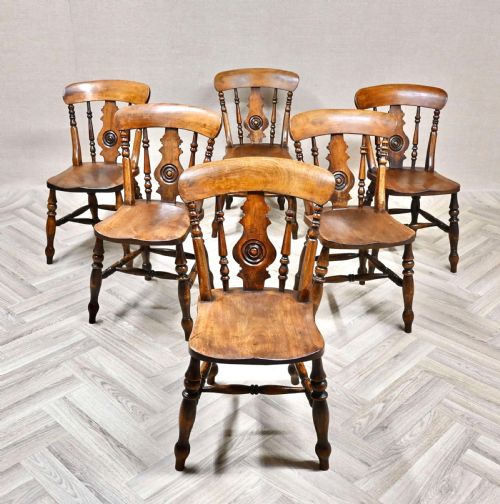
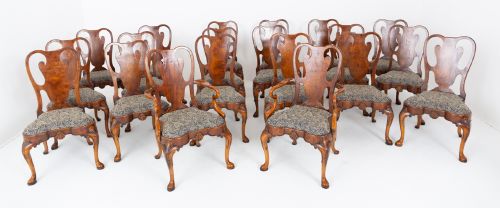
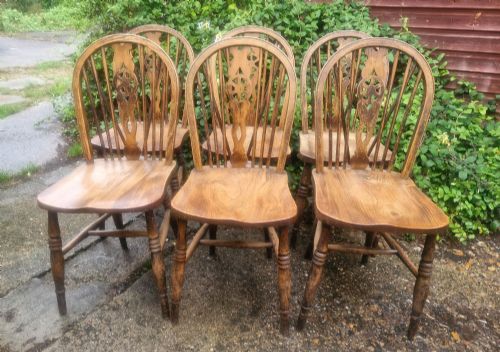
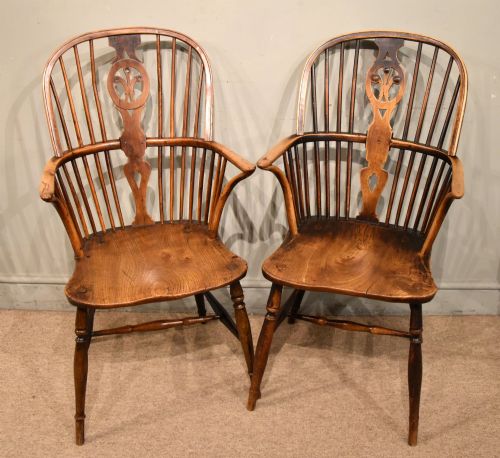
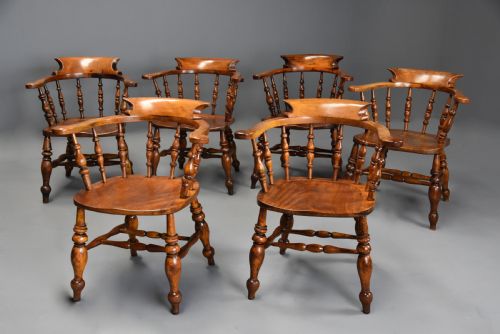
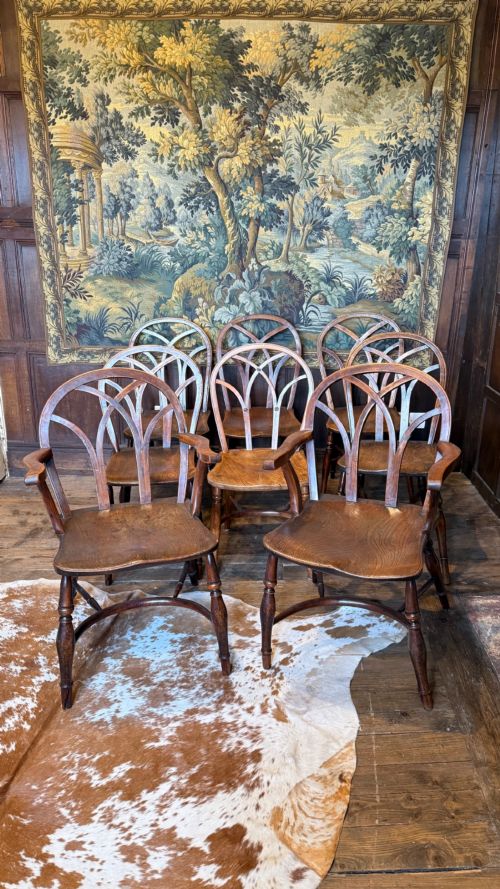
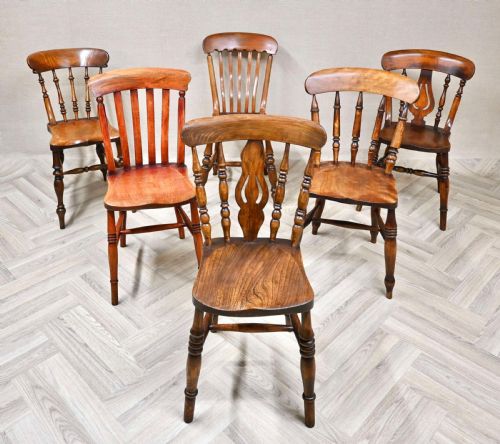

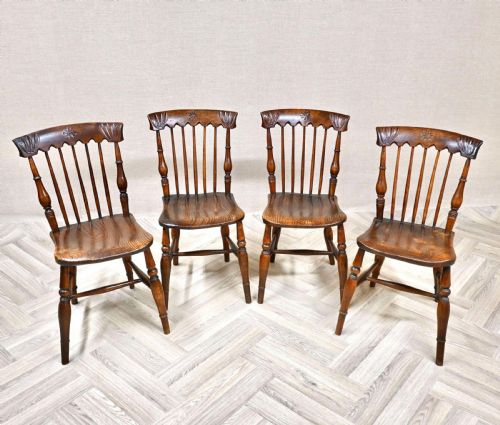


Elm Carved Dining Chairs
These elm carved dining chairs offer vernacular comfort and solid timber character, bringing robust seating and practical history into your home.
Elm Carved Dining Chairs
Elm carved dining chairs encompass a practical domestic seating tradition, ranging from provincial kitchen chairs to formal sets produced across various periods. You will frequently encounter nineteenth-century Windsor forms alongside English country vernacular designs and regional seating types.
The selection extends from single armchairs to matched sets of dining chairs, taking influences from Georgian styles, Victorian country tastes, and Queen Anne revival forms. Makers utilised the resilient grain of elm alongside supporting timbers like beech, ash, and oak to create sturdy seating.
Regional variations span from Welsh high-back armchairs and smokers bows to Swiss back stools and Chinese scholars chairs. This variety reflects both local domestic workshops and diverse cabinet-making traditions adapted for daily dining use.
Construction and Materials
Makers selected elm for its interlocking grain and resistance to splitting, which made it ideal for carved or shaped solid seats. Turners and joiners combined elm seats with supporting timbers such as ash, beech, and oak for spindles, legs, and steam-bent bows.
Traditional construction relies on wedged tenon joints and turned components integrated into thick timber saddles. Surfaces were finished by hand, utilising simple polishing or leaving the native timber grain exposed through years of domestic friction.
Listings feature elm combined with ash, beech, oak, and yew across nineteenth-century, Georgian, and Victorian periods.
Judging Quality
Quality rests upon the selection of timber figures and the structural integrity of the joints connecting the seat to the legs and back. Superior examples display balanced proportions in turned spindles and clean execution in carved fiddle backs or wheel backs.
The degree of original surface patina and the uniformity within larger sets dictate the standing of a group. Matched sets maintaining consistent timber colour and minimal replacement parts hold greater architectural presence around a dining table.
Fred Walker Rockley
The Elm Carved Dining Chairs Glossary
- Windsor
- A chair built with a solid wooden seat into which the legs and back spindles are directly tenoned. These chairs often feature steam-bent bows and sculpted armrests.
- Vernacular
- Objects designed by local craftsmen using regional traditions and readily available materials rather than following strict high-style metropolitan fashions. This style prioritises everyday utility and durability.
- Fiddle back
- A chair back featuring a central splat shaped like the silhouette of a fiddle or violin. It appears frequently in Georgian and nineteenth-century seating designs.
- Smokers bow
- A low-backed Windsor armchair with a continuous curved rail sweeping around to form the armrests. These sturdy seats were common in nineteenth-century public houses and kitchens.
- Carver
- An armchair designed to match a set of smaller side chairs, typically placed at the head of a dining table. They share the decorative vocabulary of the surrounding dining chairs.
Elm Carved Dining Chairs: Frequently Asked Questions
How do I clean elm chairs?
Clean elm chairs using a soft, dry cloth to remove dust without disturbing the historic surface. Avoid commercial wet polishes that can penetrate open grain and soften old timber.
Apply a microcrystalline wax sparingly if the wood appears dry, buffing gently to maintain a natural finish. Regular gentle dusting remains the best method for preserving nineteenth-century and Georgian surfaces.
Are these chairs comfortable for daily use?
Solid elm seats are carved with anatomical depressions designed for extended sitting during meals or desk work. The sturdy braced construction provides reliable support without requiring heavy upholstery.
Some examples include rush seating or fabric pads for added cushioning. Their ergonomic Windsor backs and supportive armrests make them practical for everyday dining.
How do I mix different chair styles?
Combining different chair styles works best when pieces share a common material like elm or a similar regional vernacular origin. A matched set provides uniformity, whereas paired armchairs and side chairs create a gathered aesthetic.
Keep table heights and seat proportions in mind to ensure comfortable knee clearance. Consistency in wood tone helps tie diverse nineteenth-century and Georgian forms together in one room.