




Early 19th Century Hall Chairs
Early 19th century hall chairs are striking wooden seats designed for grand entrances, offering crisp heraldic carving and robust timber construction.
Early 19th Century Hall Chairs
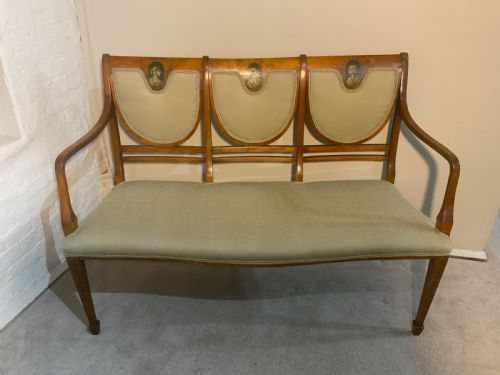
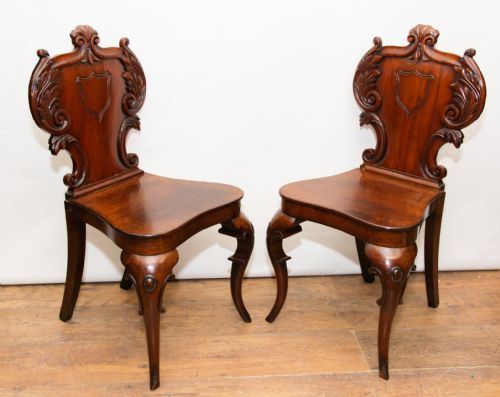
When you search for early 19th century hall chairs, you encounter formal timber seating designed for the entranceways of grand houses rather than comfortable parlour use. These pieces often arrive as pairs or sets, featuring solid wooden seats and carved backs intended to display family crests or motifs.
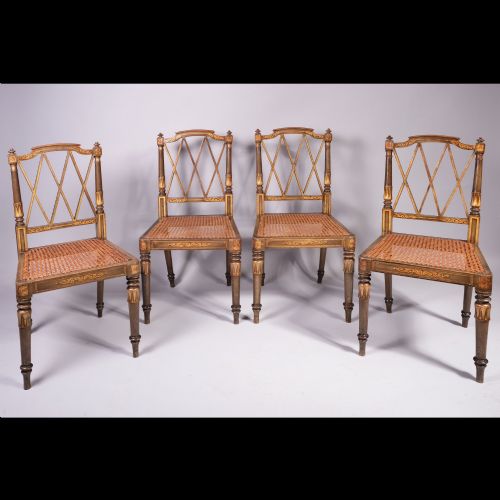
The selections span Regency and Victorian eras, alongside related forms like side chairs, settee adaptations, and occasional country vernacular pieces. Mahogany and oak dominate the timber selection, frequently paired with painted finishes or gilt highlights.
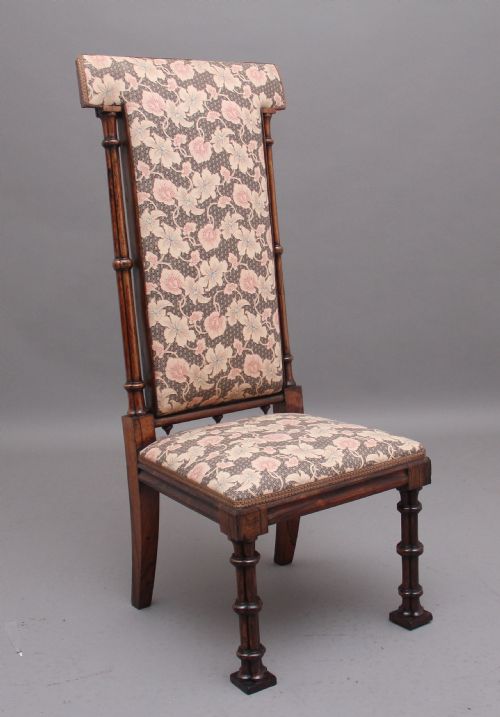
Makers of the period utilised traditional joinery to ensure these upright seats withstood daily use in busy hallways. Alongside standard side chairs, the inventory includes rarer configurations like rush-seated elm variants and Gothic-influenced rosewood designs.
How they were made
Cabinetmakers constructed these chairs primarily using dense hardwoods such as mahogany, oak, satinwood, and elm, selected for structural strength. Timber components were expertly joined, shaped, and turned to form the distinctive rigid backs and solid wooden seats characteristic of the type.
Surface decoration involved meticulous hand-carving, paint application, and occasional gold leaf detailing to accentuate heraldic motifs and architectural lines. Some examples incorporated woven cane or rush seating, demonstrating a variety of traditional craft techniques within the same period.
Early 19th Century Hall Chairs Retail Price Guide 2026
Typical asking prices for early 19th century hall chairs among the pieces listed under this phrase on Sellingantiques today, from the lower quarter to the upper quarter. They describe what is for sale here now, not the wider market.
The inventory records side chairs, settee adaptations, and armchairs alongside standard hall chairs.
What varies in quality
Quality in these hall chairs rests upon the crispness of the timber carving and the depth of the natural patina accumulated over generations. Superior examples exhibit tightly grained mahogany or satinwood with harmonious proportions and sharply defined relief work on the backsplats.
The integrity of the original construction and the sophistication of regional or revival styles dictate the standing of a piece within the range. Simpler country vernacular versions in elm sit alongside refined Regency models that display advanced design ambition and superior material selection.
Marsh and Tatham
The Early 19th Century Hall Chairs Glossary
- Hall chair
- A rigid wooden seat traditionally placed in an entrance hall, featuring a solid seat and a carved or painted back panel.
- Regency
- An English design style spanning the early 19th century, known for classical restraint and inspiration drawn from ancient Greece and Rome.
- Patina
- The surface sheen and mellowing developed by hardwood timber through age, handling, and regular polishing.
- Backsplat
- The central vertical wooden member of a chair back, frequently carved with crests, shields, or architectural tracery in this period.
- Vernacular
- Furniture made by local regional craftsmen using traditional methods and native timbers, often displaying simpler or utilitarian forms.
Early 19th Century Hall Chairs: Frequently Asked Questions
Where were early 19th century hall chairs placed?
These chairs were positioned along the walls of grand entrance halls, vestibules, and corridors rather than around dining tables. Their upright posture and lack of upholstery discouraged prolonged lounging, serving instead as waiting seats for visitors.
Because they lined the main thoroughfares of large houses, their backs were carved to remain visible even when the seats were pushed against the wall.
Are hall chairs comfortable to sit on?
Hall chairs generally offer firm, upright seating due to their solid wooden or rush-seated construction. They were built for formal architectural impact rather than relaxation.
Households utilised them for brief moments while waiting to be announced, which explains the absence of plush cushioning on the standard forms.
How do I identify a Regency hall chair?
Regency hall chairs typically display classical motifs such as scrolling foliage, turned legs, and painted or gilt accents. The timber is frequently figured mahogany or satinwood.
They reflect an era influenced by archaeological discoveries, setting them apart from later, heavier Victorian interpretations.
Can I mix different styles of hall chairs?
Pairs and sets naturally maintain visual harmony, but single hall chairs integrate effectively into modern hallways as accent pieces. Their strong architectural backs function well against plain walls.
Combining distinct periods, such as placing a Gothic revival rosewood chair near a Regency mahogany piece, creates a curated interior display.