


Rustic Wooden Trestle Desk
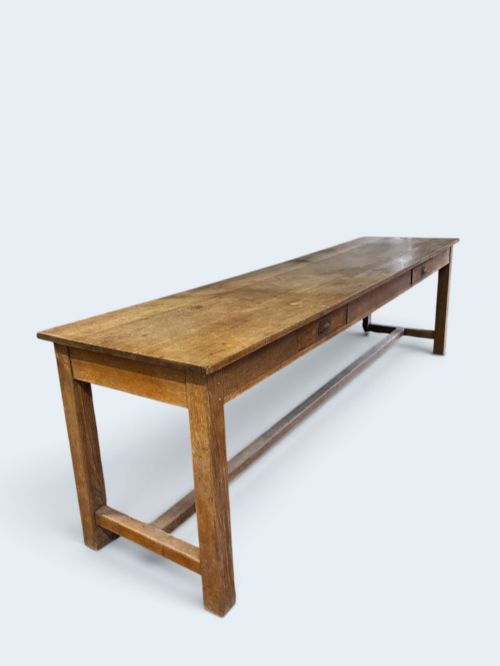
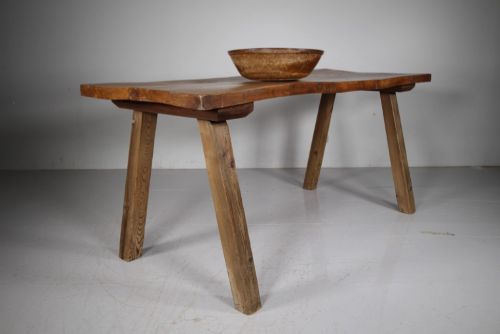
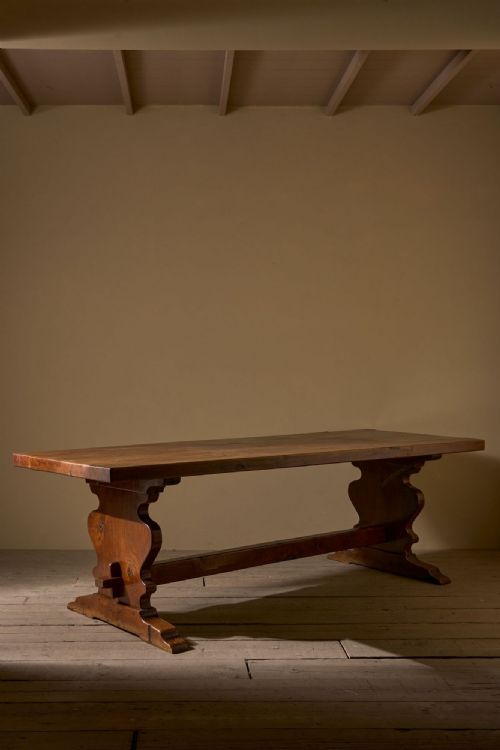
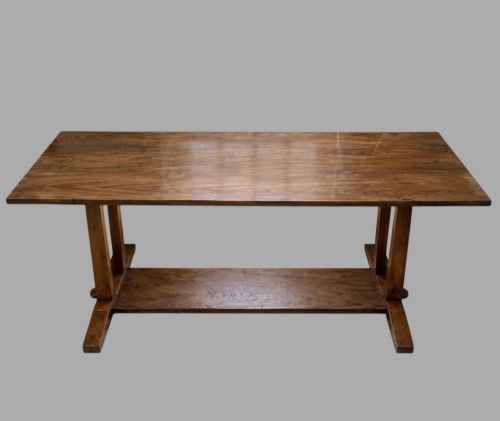
These rustic wooden trestle desk examples combine sturdy upright supports with heavy timber tops to provide robust workspaces with distinct historical character.
Rustic Wooden Trestle Desk
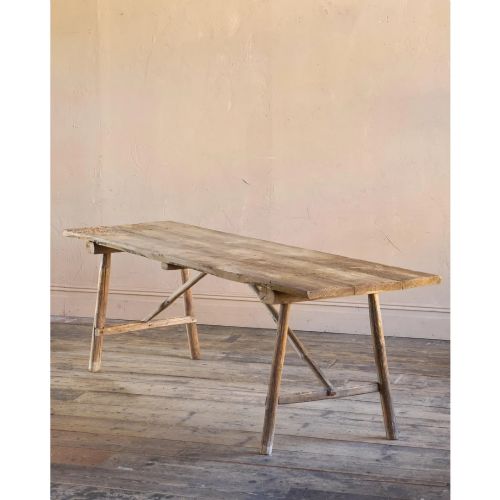
When you search for a rustic wooden trestle desk, you encounter heavy working surfaces supported by distinct upright piers or trestles rather than standard corner legs. These pieces draw on forms recorded across the eighteenth and nineteenth centuries, spanning French, Spanish, Scandinavian, and English provincial traditions.
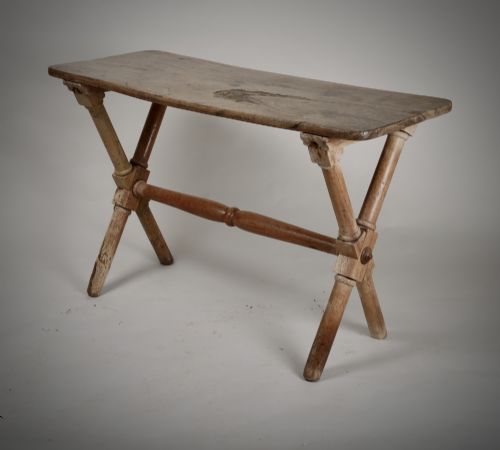
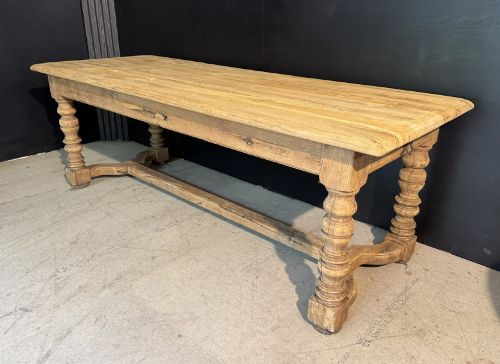
The selections available here range from solid oak and pine refectory designs to fruitwood and walnut tavern tables repurposed for writing and work. Many specimens reflect vernacular workshop practices from periods including the nineteenth century and the early twentieth century.
The functional design derives from domestic and commercial tables built for heavy daily use in farmhouses, kitchens, and institutions. Buyers find these surfaces valued for their generous proportions and straightforward timber construction.
Materials and construction
Makers utilised native and regional timbers including pine, oak, elm, walnut, fruitwood, and pitch pine, often selecting thick planks for the top boards. These woods show the grain, knots, and surface marks left by early hand-sawing and planing techniques.
Construction relies on straightforward joinery, pegged joints, and solid wood stretcher bars connecting the trestle supports beneath the main surface. Iron braces or brackets sometimes reinforce the underframes of pieces subjected to heavy daily wear.
Listings feature timbers like pine, oak, elm, walnut, and fruitwood spanning periods from the eighteenth century to the 1930s.
Judging quality in rustic desks
Quality rests in the integrity of the timber framing and the balance between the heavy top and its supporting trestles. Superior examples display dense, well-seasoned hardwood or sturdy softwood planks that remain stable without excessive warping.
The character of the surface finish distinguishes exceptional vernacular pieces, whether showing unpretentious scrubbed timber, historic painted layers like Falu red, or naturally bleached patination accrued over decades of use.
The Rustic Wooden Trestle Desk Glossary
- Trestle
- A structural support consisting of a horizontal beam fixed to two splayed vertical legs. This design provides sturdy under-clearance for seating and legroom.
- Refectory
- A long dining or working table traditionally found in communal halls and monasteries. These forms provide deep surfaces suitable for extensive writing or gathering.
- Vernacular
- Everyday utilitarian furniture built by local craftsmen using regional materials rather than following formal high-style architectural designs. These objects reflect local practical needs.
- Scrubbed
- A timber surface washed and scrubbed repeatedly with water and soap over generations, leaving a pale, clean grain. This finish reveals the natural texture of pine, sycamore, or elm.
- Patina
- The surface sheen and colour developed on wood through decades of handling, polishing, and exposure to light. It serves as a visual indicator of age and genuine use.
Rustic Wooden Trestle Desk: Frequently Asked Questions
How do I use a trestle desk?
These large timber surfaces accommodate laptops, monitors, books, and writing materials comfortably while providing ample legroom underneath. The open trestle ends mean you can slide chairs or storage units freely beneath the top.
Position the desk away from direct heat sources to prevent the solid timber planks from drying out or splitting. Use felt pads beneath heavy office equipment to protect the historic surface patination.
Are these desks sturdy enough for daily work?
The heavy oak, pine, and walnut construction used in these pieces provides a stable platform for writing and computing. The cross-stretcher bars linking the trestle feet prevent lateral wobble during intensive typing.
Periodic checking of any pegged joints or stretcher wedges helps maintain structural rigidity over years of regular office use.
How do I care for antique wood surfaces?
Dust the timber regularly with a soft, dry cloth to prevent grit accumulation in the grain. Avoid using silicone-based polishes that can build up a sticky residue on scrubbed or waxed wood.
Applying a traditional beeswax occasionally helps nourish dry pine, oak, or fruitwood surfaces without altering their historic character.
What distinguishes regional table styles?
French and Spanish variants often incorporate walnut or fruitwood with shaped stretchers, while English and Scandinavian pieces favour sturdy pine, elm, and oak construction. Painted finishes, such as Swedish Falu red or Italian pigments, appear on specific regional vernacular pieces.
Examining the choice of secondary woods and joint construction helps identify the likely geographic origin of provincial furniture.