
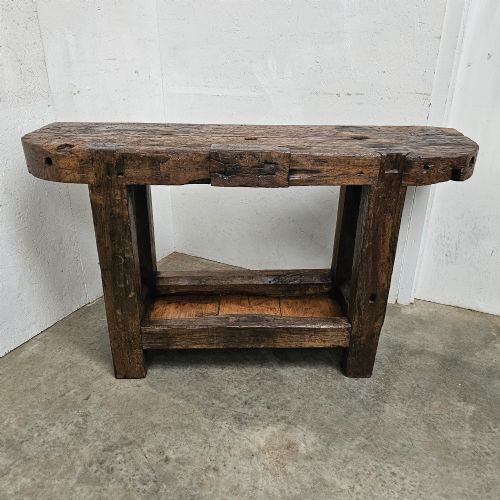
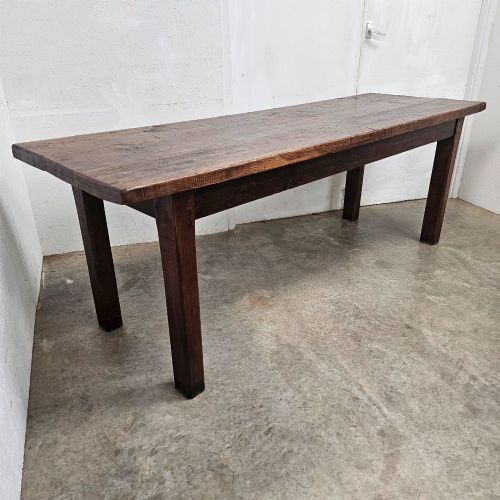
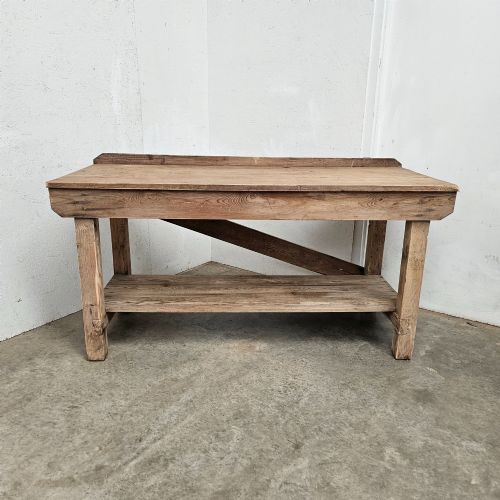


Rustic Timber Workbench
A rustic timber workbench brings genuine working history and heavy structural character straight into a modern interior.
Rustic Timber Workbench
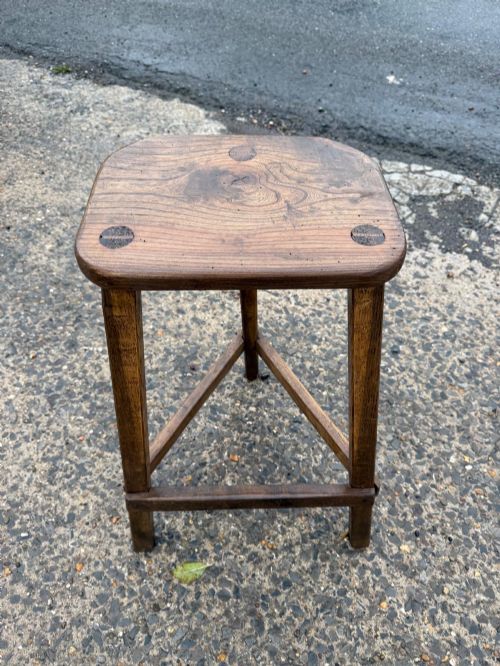
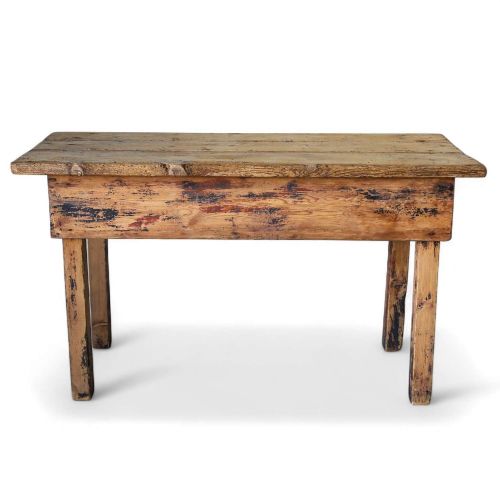
A rustic timber workbench is a utilitarian surface designed originally for manual trades, maker workshops and domestic tasks. When you search for this phrase, you encounter heavy functional furniture that served joiners, jewellers, machinists and country house cooks. The examples on this page span the nineteenth century, the Edwardian era and the early twentieth century.
You are most likely to meet French and English pieces built for artisans, alongside Scandinavian and Welsh examples. Forms range from dedicated craft benches fitted with vices and clamping bars to trestle tables and potting tables. They function today as kitchen islands, console pieces, dining tables and coffee tables.
Materials and construction
Construction relies heavily on robust domestic and European hardwoods and softwoods. Joiners utilised pine, oak, elm, sycamore, beech, ash and poplar, often pairing thick timber tops with sturdy iron hardware.
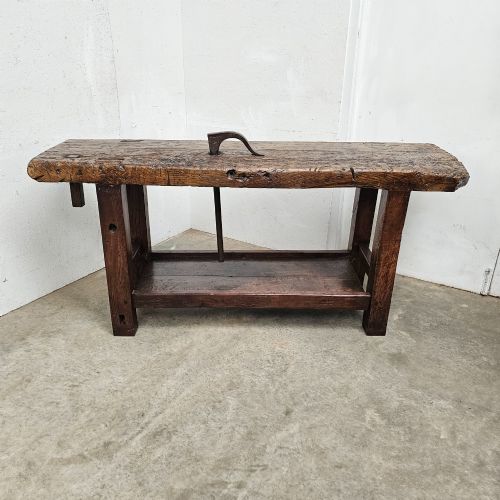
Surfaces bear the physical evidence of their former working lives through heavy scoring, scrubbed patinas and structural clamping bars. Many retain integrated vices, trestle supports and lower shelves designed to withstand rigorous daily labour.
Many benches still retain stubborn drops of nineteenth-century glue and deep axe scars from forgotten workshops.
Assessing quality and character
Quality in a rustic timber workbench rests in the integrity of the original timber and the honesty of its wear. Pieces retaining authentic working mechanisms like functional wooden vices and heavy clamping bars carry superior utilitarian interest.
The distinction between a top-tier example and a simpler one lies in the depth of the patina and the substance of the timber top. Thick, uncompromised boards and regional provenance elevate the piece far beyond standard utility.
The Rustic Timber Workbench Glossary
- Clamping bar
- A heavy wooden beam running through or across a bench top to secure materials during woodworking. This device is a defining feature of a traditional artisan bench.
- Trestle table
- A table structure composed of horizontal beams supported by pair-matched vertical frame feet. This design allows for maximum legroom and stability.
- Scrubbed finish
- A surface repeatedly washed with water and harsh brushes to clean the wood. This treatment leaves a pale, matte texture characteristic of vernacular furniture.
- Primitive
- A descriptive term for vernacular pieces built by local makers without academic stylistic restraint. These objects prioritise absolute utility over refined decorative convention.
- Potting table
- A utilitarian bench utilised for gardening and horticultural tasks. They frequently incorporate lower slatted shelves for storing pots and soil.
Rustic Timber Workbench: Frequently Asked Questions
Can I use a workbench as a kitchen island?
These pieces make exceptional kitchen islands due to their heavy timber construction and generous working height. Their original purpose as workspaces suits food preparation and daily domestic gathering.
Ensure the surface is properly sealed to handle moisture and daily kitchen use while preserving the historic patina.
How do I clean a scrubbed timber top?
Clean scrubbed timber using a dry or barely damp brush to remove surface dust without raising the grain. Avoid harsh chemical polishes that alter the natural matte texture of the aged wood.
Regular gentle maintenance preserves the dry, historic character acquired through decades of physical labour.
What is the difference between a workbench and a trestle table?
A workbench typically incorporates dedicated joinery hardware such as vices, dogs and thick clamping bars intended for manual trades. A trestle table relies on simple framed supports designed primarily for dining or general display.
Both forms share robust vernacular construction methods from the nineteenth and early twentieth centuries.
How do I date an antique timber workbench?
Dating relies on examining tool marks, timber species, iron hardware types and construction joints. Nineteenth-century examples often display hand-sawn boards and forged iron components.
Regional styles and maker provenance further help narrow the period of origin between the early eighteen-hundreds and the Edwardian era.