

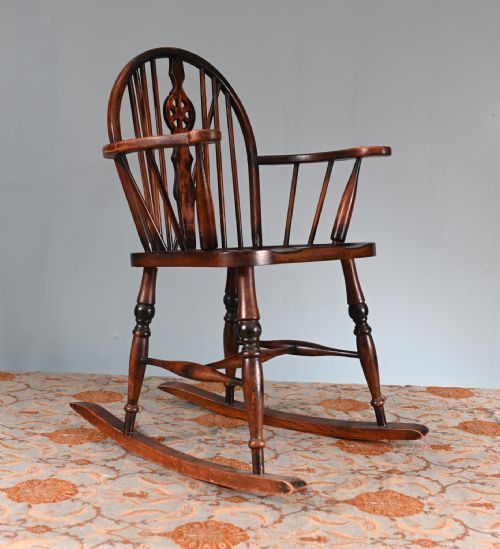


Rustic Wooden Rocking Armchair
These rustic wooden rocking armchair pieces offer honest country craftsmanship and gentle motion, built to last generations.
Rustic Wooden Rocking Armchair
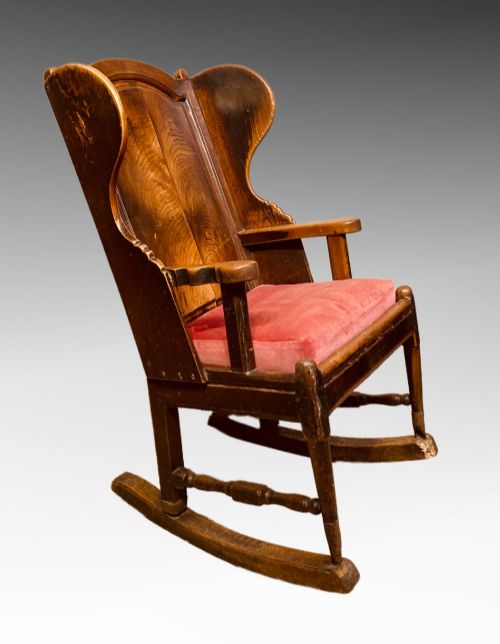
A rustic wooden rocking armchair brings traditional countryside utility straight into the sitting room, combining sturdy seating with a curved rocker base. When people search for a rustic wooden rocking armchair, they generally seek vernacular seating shaped by local hands rather than metropolitan workshops.
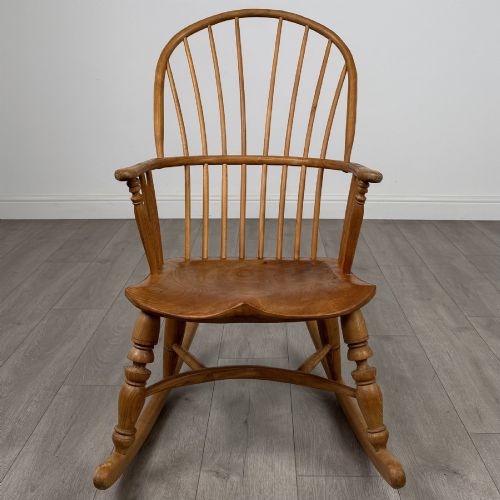
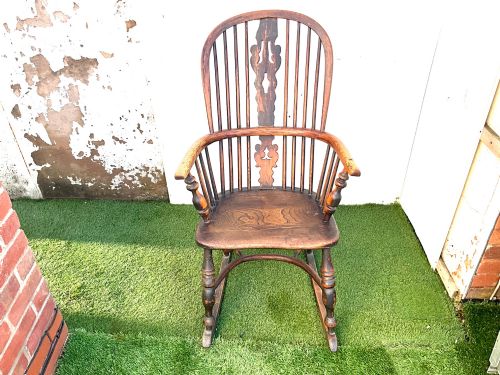
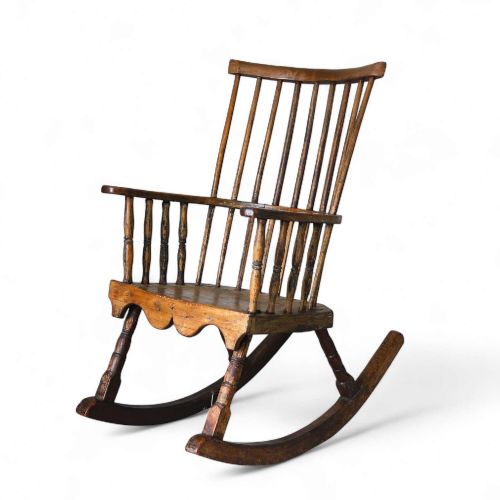
The versions most commonly met on this page span the 19th Century and Victorian eras, alongside select 1800, 1930, Regency, and 1850 pieces. They appear in forms such as high-backed Windsor rockers, wheelback and spindle back designs, comb-back variants, and Scottish vernacular bobbin chairs.
Makers working within English Country, Victorian Country, Georgian, and Primitive Vernacular traditions produced these sturdy items. They utilise timber frames designed for daily service, often incorporating armrests for added comfort.
Materials and construction
Makers built each rustic wooden rocking armchair using native hardwoods like elm, oak, beech, ash, and sycamore. These timbers provided the structural strength needed to withstand continuous movement and weight.
Construction methods relied on traditional joinery, turning, and steam-bending techniques to shape spindles, comb-backs, and curved rockers. Certain examples incorporate sea grass for seating, while others utilise painted and ebonised surface treatments.
Rustic Wooden Rocking Armchair Retail Price Guide 2026
Typical asking prices for rustic wooden rocking armchair among the pieces listed under this phrase on Sellingantiques today, from the lower quarter to the upper quarter. They describe what is for sale here now, not the wider market.
The inventory spans the 18th century, Regency, Victorian era, and 1930.
Assessing quality and character
Quality in a rustic wooden rocking armchair rests upon the selection of timber and the harmony of its proportions. Finer examples display thoughtful grain matching and comfortable spindle arrangements that show the maker had an eye for balance.
The integrity of the structural joints and the retention of original surface patination determine the standing of an individual piece. Lesser items may suffer from mismatched repairs or replaced rockers that disturb the original line of the chair.
The Rustic Wooden Rocking Armchair Glossary
- Windsor
- A chair built with a solid wooden seat into which the legs, back spindles, and arms are directly socketed. This method creates a rigid and durable frame.
- Vernacular
- An architectural and craft term describing objects made by local tradespeople for everyday regional use, free from high-style academic design.
- Comb-back
- A Windsor chair variation where the top rail resembles the teeth of a comb, often featuring extended arm posts that rise through the crest.
- Spindle back
- A chair back filled with numerous thin, turned wooden rods that support the sitter's spine. This technique distributes weight evenly across the frame.
- Bobbin
- A style of furniture turning characterised by a series of rounded wooden spheres resembling textile bobbins, common in Scottish vernacular pieces.
- Ebonised
- Timber treated with stain or pigment to imitate ebony wood. This finish creates a deep dark appearance on the surface of the chair.
Rustic Wooden Rocking Armchair: Frequently Asked Questions
How were these rocking chairs used?
Families used these armchairs in farmhouses, cottages, and country houses for relaxing by the hearth or nursing children.
The gentle motion provided a practical way to soothe infants and rest after a long day of physical labour.
How do I live with a wooden rocking chair?
Position your chair in a room with stable humidity away from direct heat sources to prevent the timber from drying out or splitting.
Allow clearance behind the rockers so the chair can move freely without striking walls or surrounding furniture.
How do I tell different periods apart?
Earlier pieces from the 18th century and Regency period often display simpler, heavier turning and pegged construction. Victorian and later 19th-century examples frequently feature wheelbacks, comb-backs, or refined spindle arrangements.
Examining the tool marks and the type of timber helps establish whether a chair belongs to the Georgian era or the later Victorian period.