





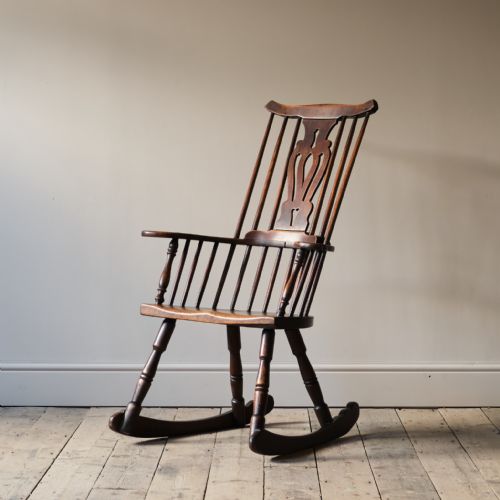
High Back Rocker
These high back rocker pieces are robust seated comforts built for steady motion, bridging centuries of domestic craft.
High Back Rocker
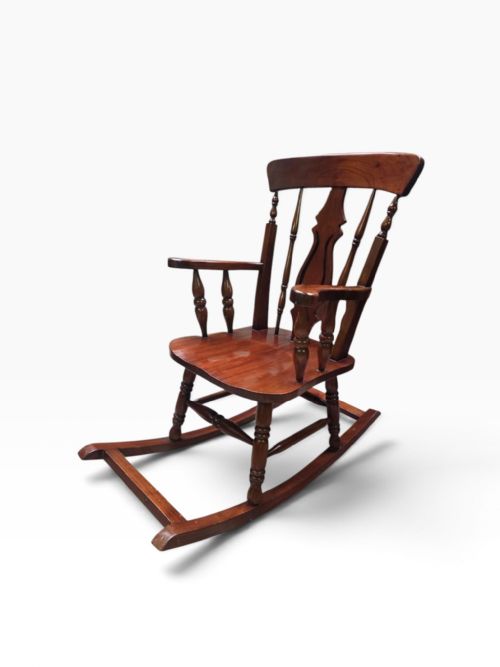
A high back rocker offers an extended support for the head and shoulders, designed for long hours of seated repose by the hearth or in the nursery. These chairs are substantial seating forms, engineered with curved rockers attached to the base of the legs to provide a gentle swaying motion.
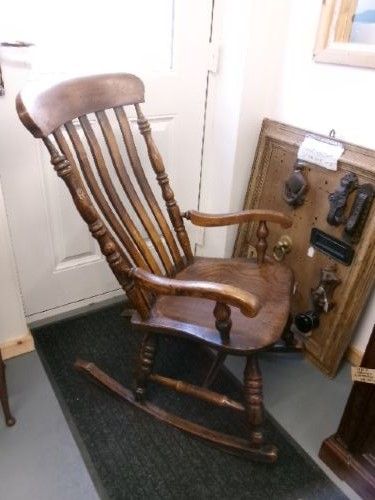
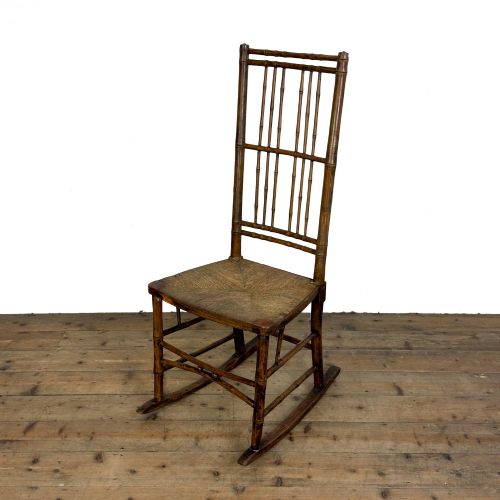
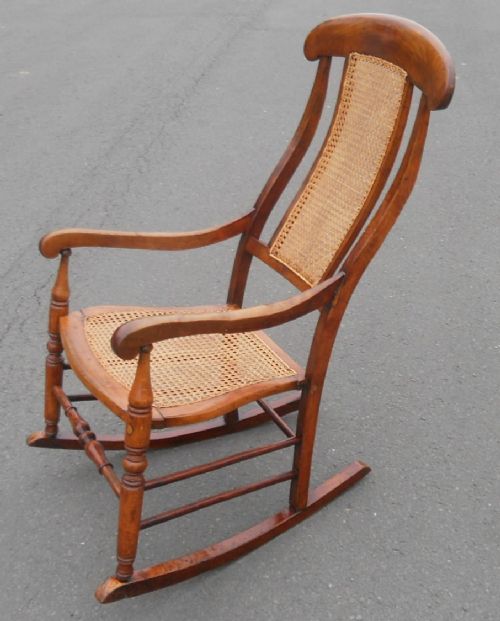
The regional variety ranges from Thames Valley and Yorkshire farmhouse pieces to faux bamboo creations and cane-seated armchairs. Each high back rocker carries the distinct structural vernacular of its maker, utilising native timbers like elm, ash, and oak alongside polished mahogany.
How they were made
Makers constructed these frames using traditional timber combinations, frequently pairing elm or ash seats with beech spindles and oak framework. Solid wood construction ensured the immense strength required to withstand the constant stress of rocking.
Techniques relied on Windsor framing methods, turning spindles on lathes and bending wood under steam for the high arched backs. Seats were often shaped from single blocks of elm or fitted with woven cane and sea grass inserts for flexible support.
High Back Rocker Retail Price Guide 2026
Typical asking prices for high back rocker among the pieces listed under this phrase on Sellingantiques today, from the lower quarter to the upper quarter. They describe what is for sale here now, not the wider market.
Some nineteenth-century makers utilised sea grass for seating, proving that even a kitchen rocker occasionally required a touch of seaside comfort.
What varies in quality
Quality reveals itself in the harmony of the timber selection and the integrity of the spindle turnings. Superior pieces display carefully matched grain patterns across the solid elm or mahogany components, with tight, uncompromised joinery at every mortise and tenon.
The elegance of the high back silhouette and the fluid sweep of the rocking base dictate the aesthetic standing of the chair. Finer examples retain their original structural balance, where the weight distribution ensures a smooth, even roll without listing to one side.
The High Back Rocker Glossary
- Windsor
- A chair built with a solid wooden seat into which the legs and back spindles are inserted directly. This technique creates a sturdy, unified frame typical of country furniture.
- Spindle back
- A chair back composed of numerous thin, turned vertical wooden rods. These rods provide flexible support along the height of the high back rocker.
- Cane
- Woven material made from the peeled bark of rattan palms, used to create breathable seat inserts. It adds a lighter textural element to heavy wooden frames.
- Thames Valley
- A regional English style known for high-quality Windsor chair production using native timbers like yew, elm, and beech. These pieces often exhibit refined turning and generous proportions.
High Back Rocker: Frequently Asked Questions
What is a high back rocker?
A high back rocker is a seated furniture piece featuring an extended upright backrest and curved wooden runners for motion. They were traditionally used in kitchens, nurseries, and parlours for comfortable rest.
These chairs draw on centuries of regional woodworking traditions, particularly Windsor and farmhouse vernacular styles. The extended height provides crucial head support during long periods of sitting.
How do I date a rocking chair?
Dating relies on examining the timber species, construction methods, and stylistic markers such as spindle turnings or inlay work. Earlier pieces from the Georgian and Regency periods often show distinct country workshop traits.
Victorian and Edwardian examples introduce machine-turned components and different wood combinations like beech and cane. Comparing the wear patterns and joinery helps place the chair within its nineteenth or early twentieth-century context.
Were these chairs used outdoors?
These chairs were strictly intended for interior domestic use within the farmhouse kitchen, parlour, or nursery. The native timbers and traditional glues would degrade rapidly if exposed to damp outdoor conditions.
Inside the home, the rocking action provided solace for mothers nursing infants or workers resting after long days. Their sturdy wooden construction ensured they remained central pieces of family life for generations.
What woods were used?
Makers utilised a wide variety of native and imported hardwoods depending on the region and the intended finish of the chair. Elm and ash provided tough, resilient timber for seats and bentwood parts.
Beech, oak, and mahogany appeared in the frames, spindles, and decorative inlays of later Victorian and Edwardian pieces. This mixing of woods was standard practice to balance structural strength with visual appeal.