

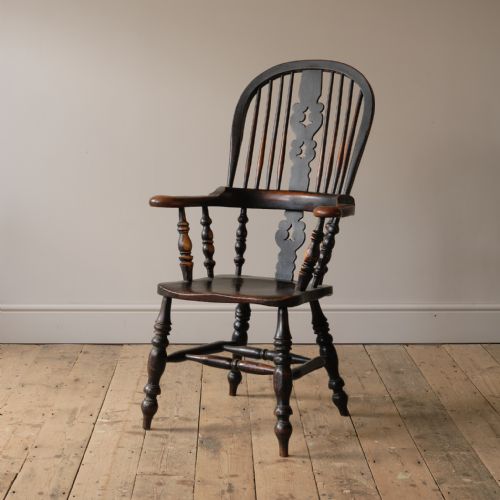
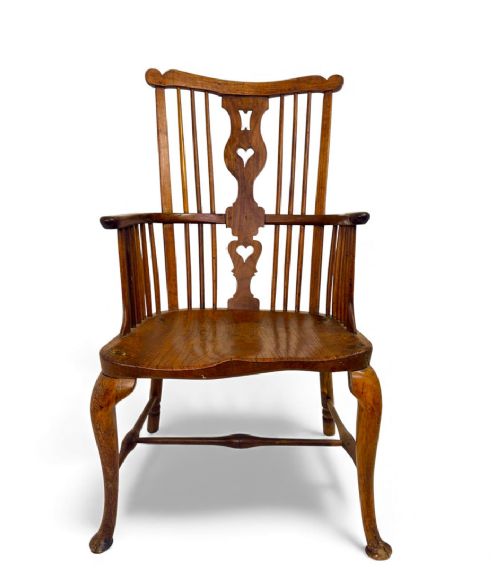
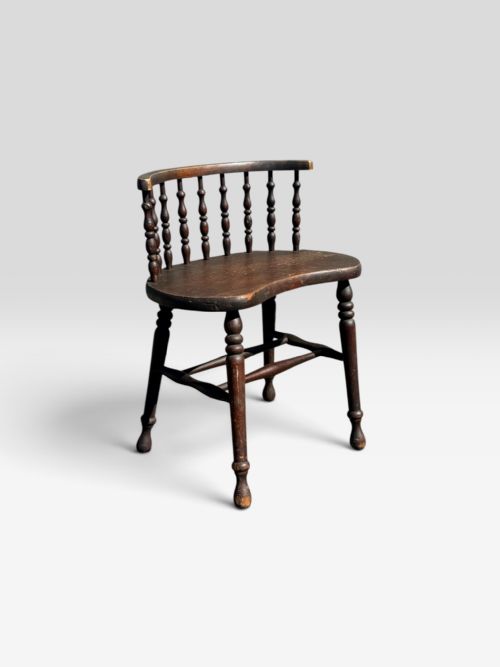
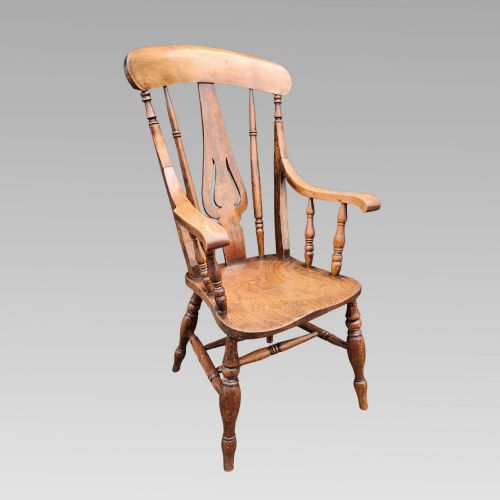
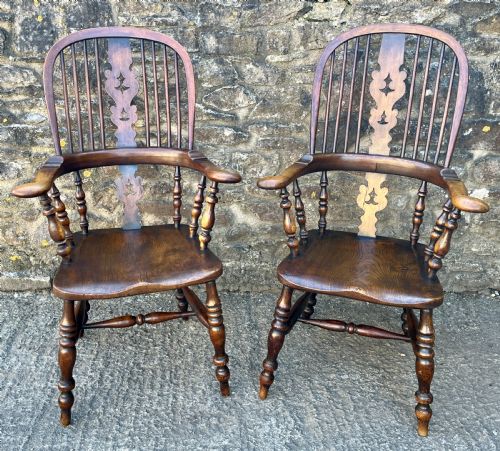


Elm Windsor Arm Chair
When you search for an elm windsor arm chair, you seek a traditional timber seat built for comfort.
Elm Windsor Arm Chair
An elm windsor arm chair brings vernacular seating tradition into domestic spaces through stick construction and saddle seats. These chairs emerge from periods spanning the eighteenth through the nineteenth centuries, incorporating Georgian, Regency, and Victorian vernacular styles.
You will most frequently encounter nineteenth-century Victorian examples featuring elm seats combined with ash frames, alongside distinct regional variants like Thames Valley or Yorkshire pieces. These utilitarian seats include high back, low back, and broad arm configurations suited to fireside or dining use.
Materials and construction
Makers utilised solid elm primarily for the thick saddle seat because its interlocking grain resisted splitting under heavy daily use. Ash, beech, and yew wood formed the turned spindles, legs, and bentwood bows that locked into the bored seat.
Traditional bodgers and regional joiners shaped green timber using drawknives and pole lathes before assembling the components with wedges and through-tenons. This pegged framework allowed the wood to move naturally with seasonal humidity changes.
Elm Windsor Arm Chair Retail Price Guide 2026
Typical asking prices for elm windsor arm chair among the pieces listed under this phrase on Sellingantiques today, from the lower quarter to the upper quarter. They describe what is for sale here now, not the wider market.
Listings feature items from the eighteenth, nineteenth, and early twentieth centuries, incorporating ash, beech, yew, and oak.
Evaluating craftsmanship
Quality separates through the balance of proportions, the depth of the sculpted elm seat, and the elegance of the steam-bent bow. Superior examples display carefully tapered spindles and well-turned legs rather than heavy, uniform replacement parts.
The choice of secondary timbers also elevates certain pieces, with yew wood grain and burr elm figuring marking out superior regional workshops from standard farmhouse production.
The Elm Windsor Arm Chair Glossary
- Broad arm
- A chair featuring wide, flattened elbow rests that provided writing surfaces or extra comfort. These are commonly found on nineteenth-century country armchairs.
- Comb back
- A style where the vertical back spindles rise to meet a horizontal top rail resembling a traditional hair comb. This primitive form often dates to the eighteenth century.
- Saddle seat
- A thick timber seat base sculpted into a concave depression for ergonomic comfort. Elm was the preferred wood for this purpose due to its toughness.
- Spindle back
- A design incorporating multiple slender turned wooden rods supporting the upper back rail. These provide lightweight yet sturdy structural support.
- Hoop back
- A continuous steam-bent wooden rail that forms both the arms and the upper back of the chair in a single sweeping curve.
Elm Windsor Arm Chair: Frequently Asked Questions
What is an elm windsor arm chair?
An elm windsor arm chair is a traditional wooden seat where the legs and back spindles are wedged directly into a thick sculpted plank seat.
These pieces developed through English vernacular traditions, appearing in various regional forms from the eighteenth century onward.
How do I date an elm windsor chair?
Dating relies on examining the construction methods, tool marks on the underside of the elm seat, and the turning style of the legs.
Earlier eighteenth-century variants often feature primitive comb backs and fruitwood accents, while Victorian models frequently pair elm with beech or ash.
Where were these chairs made?
These seats originated in rural workshops across England, with distinct regional styles developing in places like the Thames Valley and Yorkshire.
Local bodgers prepared the timber components near woodland areas before assembly in town joinery shops.
How should I care for an elm windsor chair?
Maintain the wood by applying traditional beeswax periodically to nourish the dry elm and preserve the historic surface patina.
Keep the chair away from direct heat sources and sudden humidity shifts to prevent the pegged joints from loosening.