

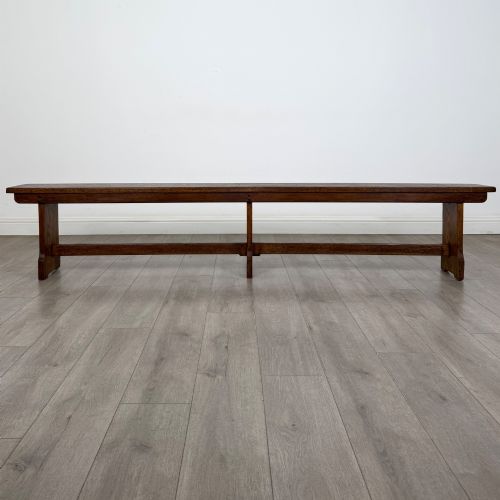
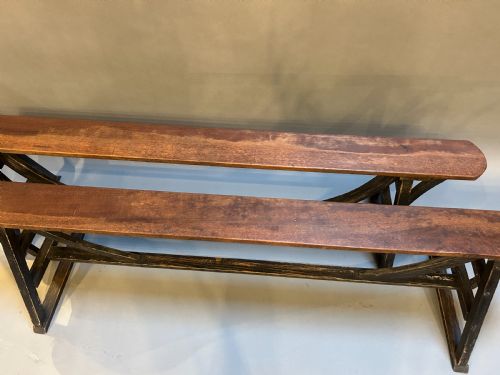
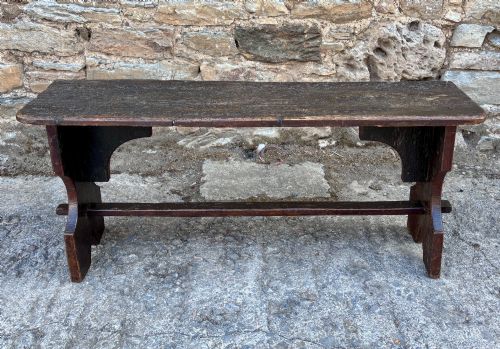
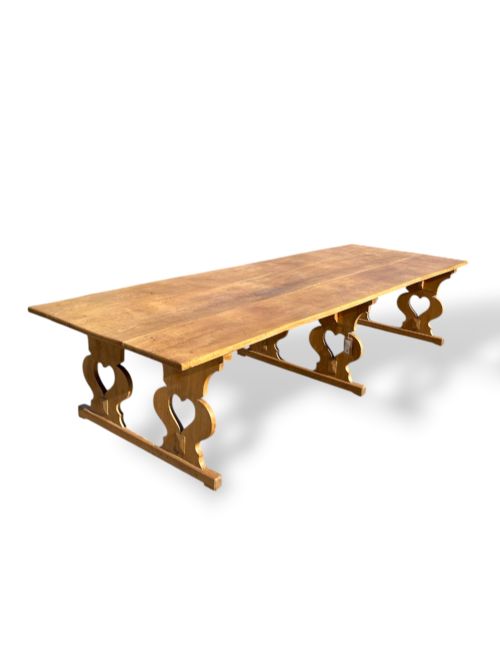



Rustic Wooden Plank Bench
These rustic wooden plank bench examples offer honest utility and hard-wearing timber construction for everyday interiors.
Rustic Wooden Plank Bench
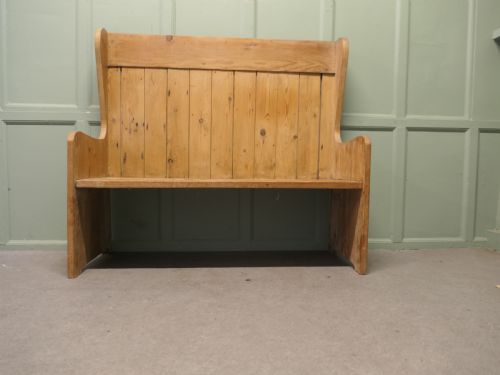
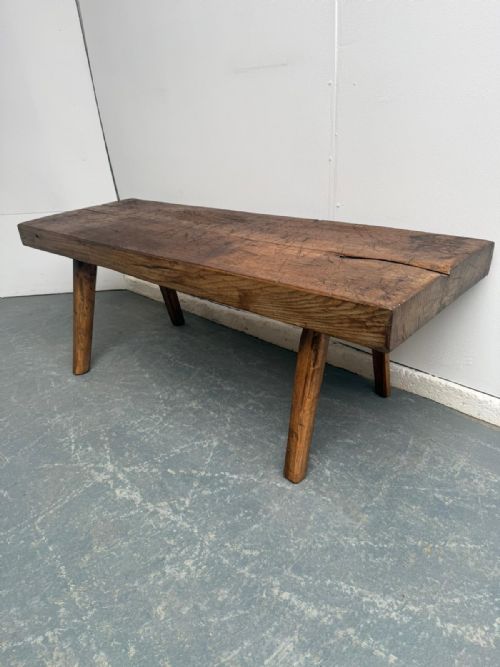
A rustic wooden plank bench provides straightforward seating shaped by practical domestic, tavern, or institutional demands across multiple centuries. Buyers searching for a rustic wooden plank bench encounter forms ranging from long pine school examples to heavy oak tavern seating and high back settles.
The material origins draw heavily on native timbers, predominantly pine and oak, alongside cherry and assorted hardwoods. Pieces emerge from periods spanning the sixteenth century through the Edwardian era and the early twentieth century.
Most entries favour utilitarian designs, including pegged construction and trestle ends. Surviving items often show decades of honest wear that highlights their functional history.
Materials and construction
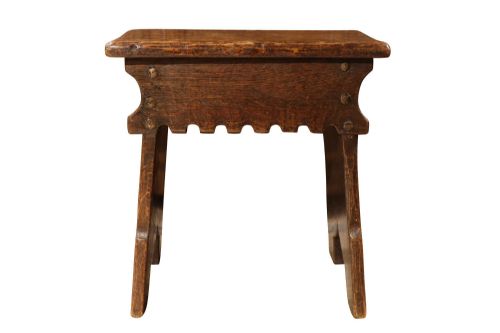
Makers built these pieces using solid timber planks of oak, pine, and cherry, assembled with pegged joints and sturdy trestle supports. Wrought iron reinforcements occasionally appear to secure heavy loads on tavern and refectory seating.
Surfaces frequently display plain stripped wood or traces of historic paint, reflecting straightforward workshop methods without elaborate veneer work. Construction prioritises structural endurance, utilising thick boards joined to withstand heavy daily use.
Rustic Wooden Plank Bench Retail Price Guide 2026
Typical asking prices for rustic wooden plank bench among the pieces listed under this phrase on Sellingantiques today, from the lower quarter to the upper quarter. They describe what is for sale here now, not the wider market.
Listings feature timbers including English oak, pine, and cherry, spanning periods from the sixteenth century to the 1930s.
Judging quality in plank seating
Quality rests in the integrity of the timber planks and the honesty of the construction, such as untouched pegged joints and original surface patination. Superior examples retain their full structural thickness without excessive board thinning from historic sanding.
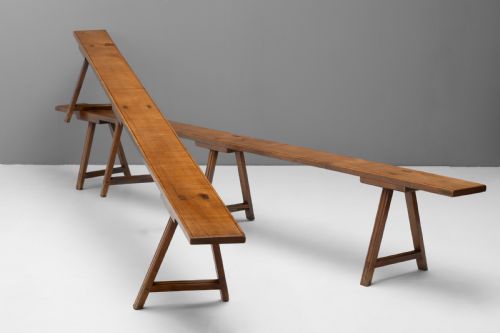
Proportion and scale dictate desirability, with longer tavern benches and matched pairs carrying greater presence than standard single seating. The choice of denser hardwoods like English oak or cherry elevates a piece above standard utility pine.
The Rustic Wooden Plank Bench Glossary
- Plank construction
- A method of building furniture using wide boards joined together, often seen in early tables and benches. This technique defines the primary structure of simple historic seating.
- Pegged construction
- A traditional joinery method using wooden pins instead of metal nails to secure joints. It allows timber to expand and contract naturally with seasonal humidity changes.
- Settle
- A wooden bench with high backs, solid arms, and a closed base designed to block drafts in domestic rooms and pubs. These pieces offer enclosed seating for fireside use.
- Trestle
- A structural support consisting of a horizontal beam fixed to two splayed legs, commonly used for long benches and tables. This design provides maximum legroom along the length of the seat.
- Refectory
- A term describing long tables and associated benches traditionally used in communal dining halls. Such forms are built to accommodate multiple diners simultaneously.
Rustic Wooden Plank Bench: Frequently Asked Questions
How do I date a wooden plank bench?
Dating relies on examining the tool marks, timber species, and joint construction methods visible on the piece. Earlier examples utilise hand-sawn boards and pegged joinery, while later nineteenth and twentieth-century versions display machine-cut elements.
Contextual clues like historic paint remnants and wear patterns around footrests also help establish the approximate period of manufacture.
Were these benches used outdoors?
Most surviving historic benches served interior roles in domestic kitchens, taverns, schools, or public halls. Their construction prioritised indoor utility rather than resistance to weather.
Placing them outside subjects the historic timber and pegged joints to moisture damage that degrades the original material.
What is the difference between a bench and a settle?
A standard bench provides simple open seating on legs or trestle supports without backrests or arm enclosures. A settle incorporates a high solid back and enclosed sides designed to shield occupants from drafts.
Settles function more like architectural seating units within historic tavern and fireside settings.
How do I care for antique pine and oak?
Maintenance requires keeping the timber away from direct heat sources and sudden humidity shifts that cause wood to split. Applying occasional neutral wax helps nourish dry surfaces without sealing the historic pores.
Avoid harsh chemical cleaners that strip away the accumulated patination built up over centuries of use.