


Rustic Wooden Decoy
A rustic wooden decoy brings honest craft and the quiet of the wetlands straight into a room.
Rustic Wooden Decoy
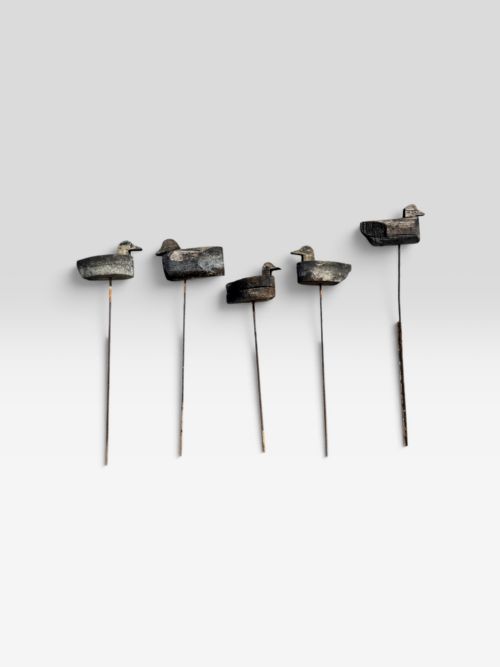
A rustic wooden decoy is a carved and painted bird figure made to attract waterfowl or pigeons in the field. When you search for this phrase, you find working birds and decorative carvings shaped by hand from timber. These pieces span the nineteenth century, the Edwardian era, and the early decades of the twentieth century.
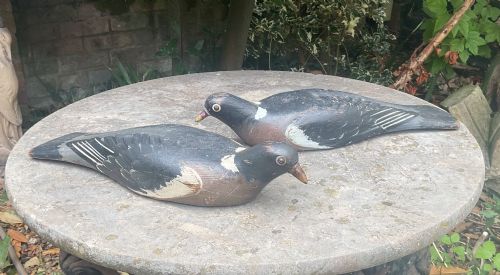
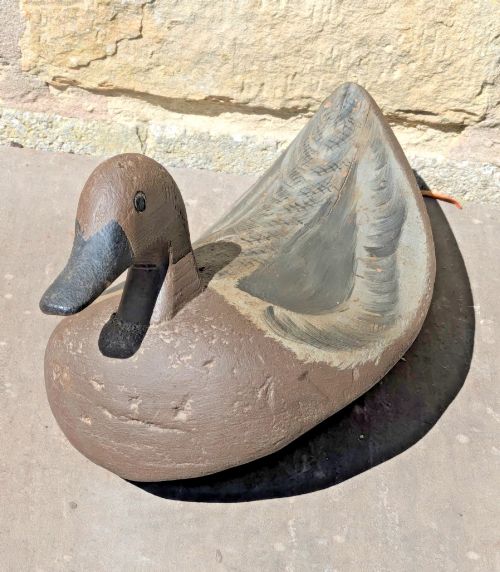
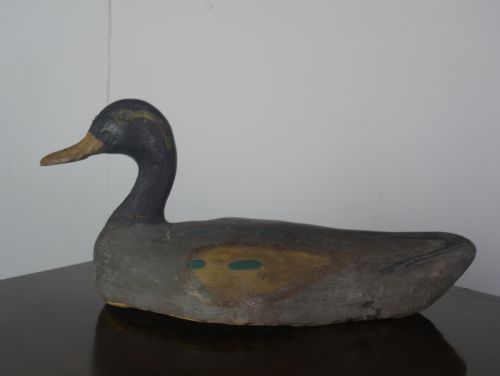
The selection here leans heavily towards ducks, pigeons, geese, and doves. Most examples emerge from English and French traditions of folk art. You encounter single birds, pairs, and small sets shaped for simple utility.
Makers fashioned these objects from carved wood, timber, and occasionally papier-mâché with straw. Their forms range from simple waterfowl to country house dovecote decoys and sculptural ducklings. Each object carries the honest marks of its working life.
How they were made
Surfaces received layers of hand-applied paint to mimic the plumage of ducks, pigeons, and geese. Some pieces combine carved wood with papier-mâché and straw to build up lighter sculptural forms. The resulting texture reflects decades of exposure to working environments.
Recorded periods span the nineteenth century, Edwardian era, 1900, 1920, and 1930.
What varies in quality
The strength of a rustic wooden decoy lies in the confidence of its carving and the character of its surface. Stronger examples show bold, unpretentious tool marks that define the posture of the bird without unnecessary detail. Surviving layers of original paint hold more appeal than later overpainting.
Proportion and stance separate a simple utilitarian block from a piece with strong sculptural presence. The balance between the head and body reveals the maker's eye for form. Wear and weathering add depth when the underlying structure remains honest and sound.
The Rustic Wooden Decoy Glossary
- Decoy
- A carved bird figure used historically to lure wildfowl or game within range. These objects now serve primarily as decorative sculptures in domestic interiors.
- Folk art
- Utilitarian or decorative objects made by self-taught or traditional craftsmen outside academic fine art traditions. These pieces prioritize practical function and direct expression over formal convention.
- Dovecote
- A structure or shelter for domesticated pigeons, often associated with country houses. Decoys made for these environments served specialised estate functions.
- Papier-mâché
- A composite material consisting of paper pieces or pulp bound with glue or paste. Craftsmen moulded this mixture over armatures to create lightweight decorative studies.
Rustic Wooden Decoy: Frequently Asked Questions
How were rustic wooden decoys used?
Hunters placed these carved birds on water or in fields to attract real flocks within shooting range. Their simple profiles and painted surfaces tricked passing birds into landing nearby.
Over time, many of these working objects transitioned from marshes and fields into country houses as decorative sculptures.
What birds do these decoys represent?
The listings feature ducks, pigeons, geese, and doves. Duck decoys appear most frequently, alongside pigeons and larger geese.
Each bird type reflects the specific game hunted in the regions where the carvers worked, spanning English and French country traditions.
How do I date an antique decoy?
Dating relies on the tool marks left by the carver, the composition of the wood, and the layering of the paint. Nineteenth-century examples often display heavier hand-shaping and worn patinas.
Early twentieth-century pieces can show slightly more standardised forms while retaining genuine surface wear from the field.
Where should I display a wooden decoy?
These sculptures suit tabletops, bookshelves, and mantelpieces where their simple silhouettes can stand clear. Pair single birds with books or ceramics to ground their rustic texture.
Keep them away from direct heat sources and strong sunlight to protect the historic painted surfaces.