




Rustic Wood Wall Mirror
A rustic wood wall mirror brings natural texture and warmth to a room, offering practical reflection through distinctive timber and carved frames.
Rustic Wood Wall Mirror
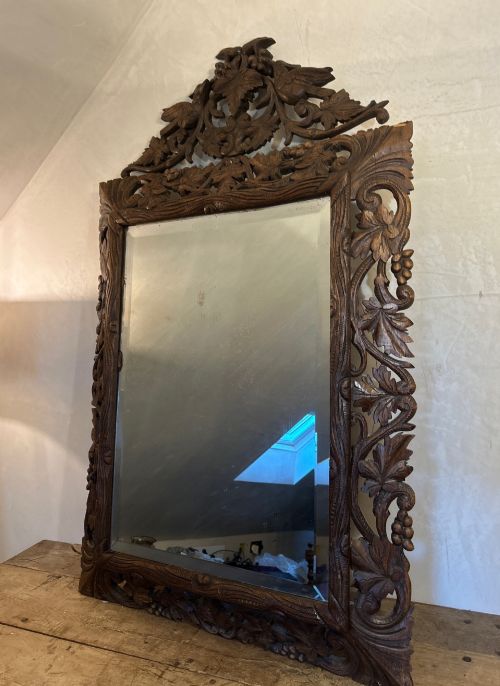
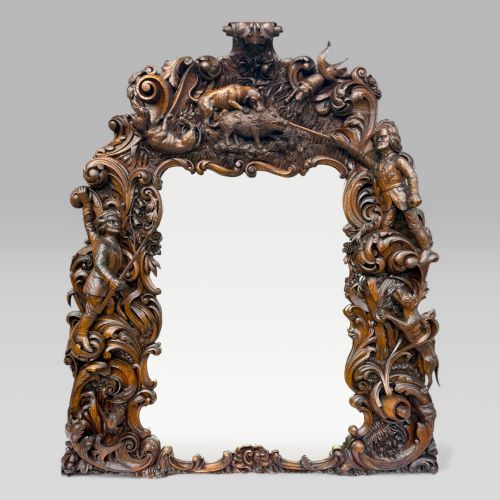
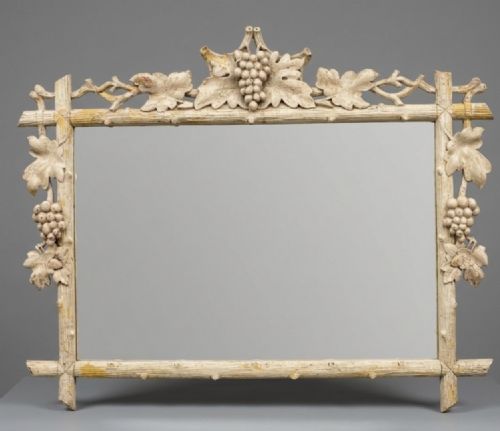
A rustic wood wall mirror is selected for its characterful timber frame, often showing the natural grain, knots, and age of the material. These pieces range from simple country designs to heavily carved Black Forest and French provincial examples.
Buyers searching for a rustic wood wall mirror will most frequently encounter nineteenth-century oak, pine, and painted frames. These include overmantel mirrors, tall pier mirrors, and smaller wall-hanging designs suitable for hallways and living spaces.
Materials and construction methods
Frames are constructed from solid timbers such as oak, pine, maple, and carved wood, sometimes enhanced with gesso and paint or giltwood details. Makers utilised traditional joinery techniques to form rectangular, arched, and architectural shapes.
Surfaces exhibit varying treatments, from scrubbed and bleached wood to faux bamboo, faux bois, and tramp art corkwork. Mirror glass is set within these robust wooden structures, occasionally featuring bevelled edges.
Hunting lodge mirrors bring fierce carved stags and woodland creatures straight to the drawing room.
Factors determining quality
Quality in these pieces is dictated by the depth and execution of the carving, particularly on Black Forest and French Renaissance revival frames. Crisp, detailed hand-carved foliage or animal motifs elevate an object above simpler vernacular work.
The integrity of the original materials, such as untouched painted surfaces, gesso details, and period mirror glass, distinguishes superior examples. The balance of proportions and the weight of the timber frame also influence the overall standard.
The Rustic Wood Wall Mirror Glossary
- Trumeau
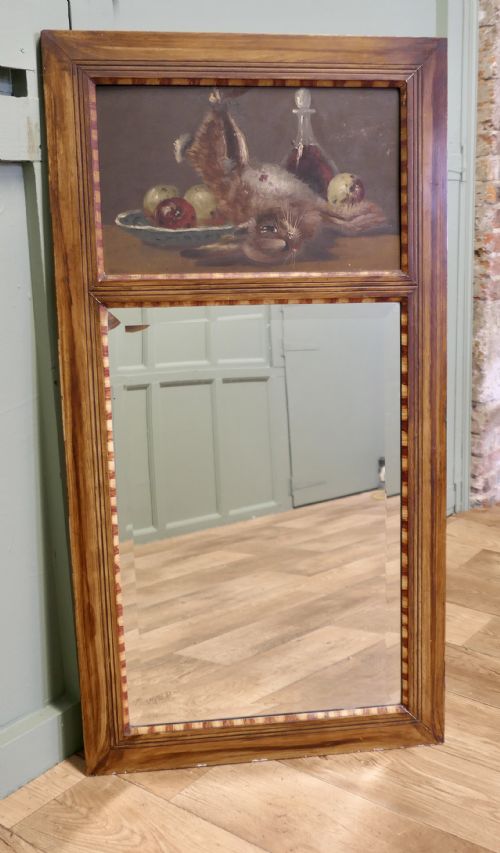
- A decorative wall mirror combined with a painted panel or carved artwork above the glass. These tall French pieces were traditionally designed to sit between windows.
- Black Forest
- A style of deeply carved wooden items originating in central Europe during the nineteenth century. These pieces frequently incorporate naturalistic motifs such as leaves, branches, and wildlife.
- Faux bamboo
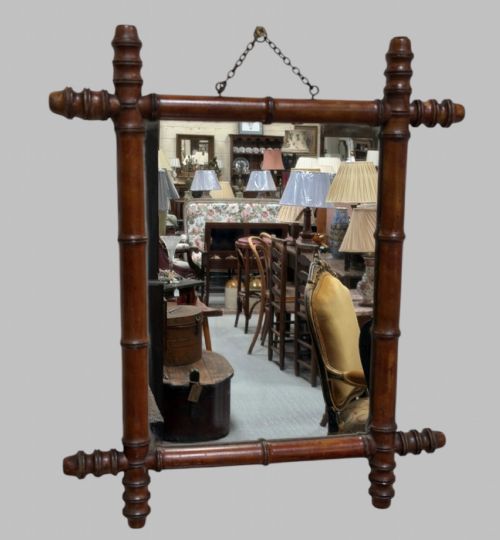
- A decorative technique where wood is carved or painted to imitate the segmented stalks of bamboo. This finish was particularly popular in nineteenth-century French and English mirrors.
- Gesso
- A plaster-based material applied to wood frames to provide a smooth surface for painting or gilding. It allows for crisp, moulded decorative details around the mirror border.
- Overmantel mirror
- A large horizontal mirror designed to hang above a fireplace mantelpiece. They often feature arched tops and substantial wooden or painted frames.
Rustic Wood Wall Mirror: Frequently Asked Questions
How do I hang a heavy wooden wall mirror safely?
Heavy nineteenth-century wooden mirrors require secure fixing directly into wall studs or masonry using appropriate brackets. Professional installation is recommended given the substantial weight of solid oak and carved frames.
Ensure the hanging wire or D-rings on the back of the frame are robust enough to support the vertical load. Distribute the weight evenly across multiple fixing points to protect the antique structure.
Are the mirror plates original?
Many pieces retain their original mirror glass, which often displays charming foxing, light oxidation, and minor blemishes. These surface characteristics confirm the age and authenticity of the object.
Replacement glass is occasionally fitted during conservation or when the original plate has deteriorated beyond practical use. Examining the backing and the bevel helps determine whether the glass is period-appropriate.
How do I clean a painted and carved wooden frame?
Dust the carved wooden surfaces gently with a soft, dry brush to prevent dirt accumulation in the recesses. Avoid harsh chemical cleaners that can strip historic painted or scrubbed finishes.
Use a mild, lint-free cloth slightly dampened with water for stubborn marks, drying the timber immediately afterwards. Glass cleaner should be applied to a cloth rather than sprayed directly to protect the surrounding wood.
What is tramp art?
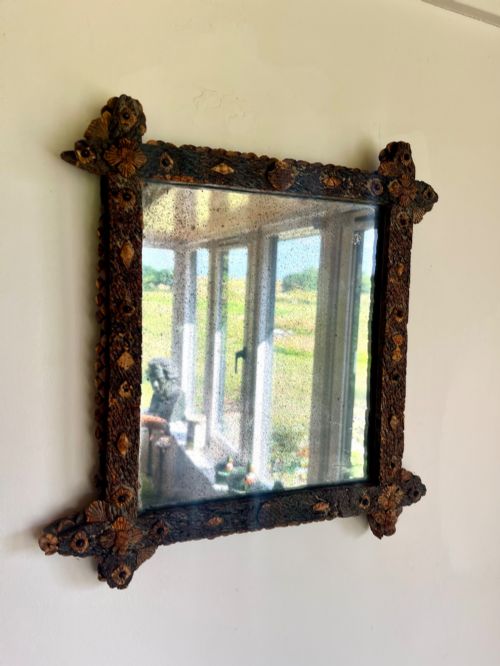
Tramp art is a style of woodworking where small chips of wood, or alternative materials such as cork, are notched and layered to create geometric relief patterns. It emerged in the nineteenth and early twentieth centuries as a form of folk art.
Mirrors decorated in this style feature heavily textured, multi-dimensional frames built from carved elements. Each piece reflects the patience and skill of the maker through intricate chip-carved detailing.